 Birch Bay Window
 Roof Repair Built for Custer's Weather, Not Just Any Roof
Custer sits in that in-between stretch of Whatcom County — close enough to Birch Bay and the Strait of Georgia to catch salt-laden marine air, but with enough tree cover and open farmland that shaded roof sections stay damp for days after a storm passes. That combination is hard on roofing. It's not one dramatic failure that gets most Custer roofs into trouble; it's the slow, cumulative kind — moss working into shingle mat, fasteners corroding a little more each winter, flashing that's flexed one too many times in a windstorm. A roof repair here needs to account for all of that, not just patch the spot that's currently leaking.
This page covers what roof repair actually involves for homes in and around Custer, what we look for on a proper inspection, and how we approach the job so the fix holds through the next few wet seasons instead of just the next one.
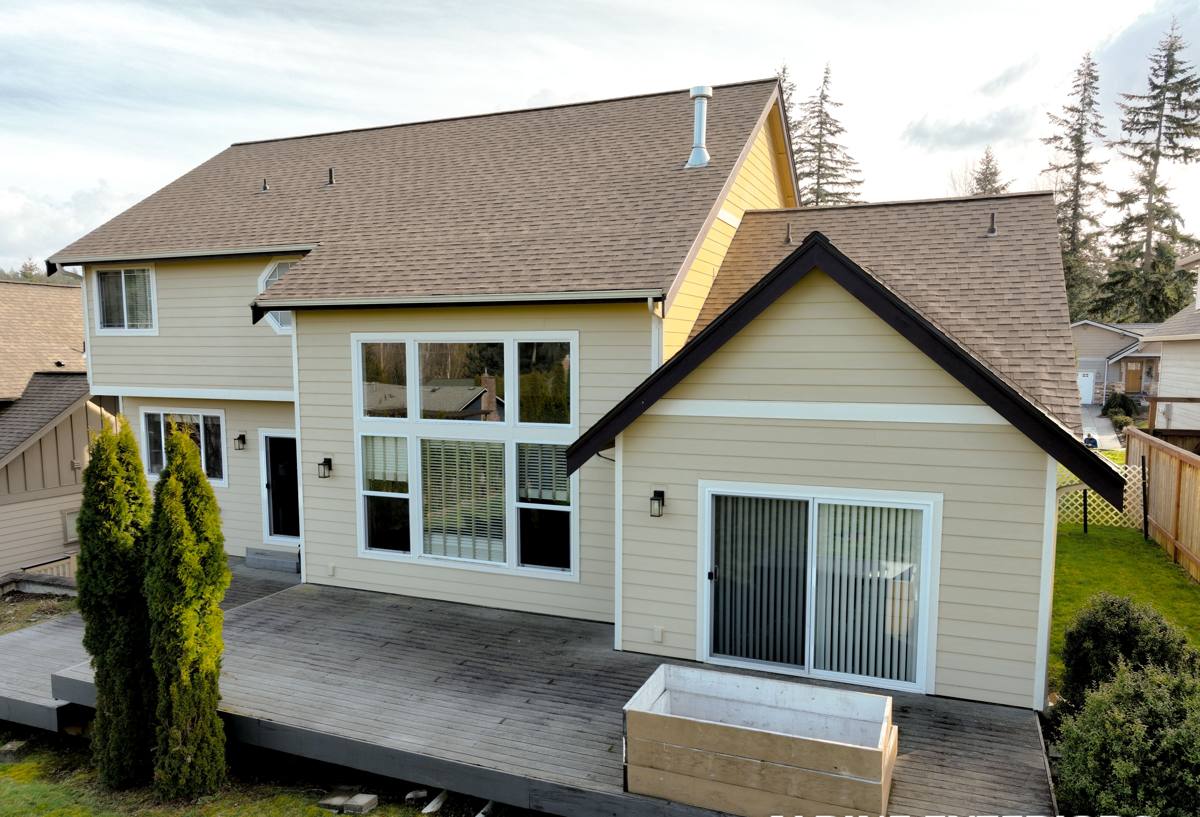
Why Custer Roofs Wear the Way They Do
Salt Air and Metal Fatigue
Homes closer to Birch Bay and the water get a steady dose of salt-carrying wind. Salt air speeds up corrosion on anything metal — nail heads, drip edge, flashing, and the fasteners holding ridge caps down. A galvanized nail that would last decades inland can start bleeding rust through shingles years sooner out here. This matters most around chimneys, plumbing vents, and skylights, where the metal-to-shingle transition is already the weakest point on any roof.
Driving Rain and Wind-Driven Water
Storms coming off the water don't just drop rain straight down — they push it sideways, up under shingle tabs, and into laps and valleys that were never designed to handle water moving uphill. A roof that's fine in a light, straight rain can still leak in a driving windstorm if the underlayment, valley flashing, or shingle overlap has any weakness at all.
The Long Moss Season
Whatcom County's wet season runs long, and shaded or north-facing roof slopes in Custer — especially under fir and cedar cover — rarely get enough sun to dry out fully between storms. Moss and algae take hold in that moisture, and moss doesn't just sit on top of shingles; it grows into the granule layer, lifts tabs, and holds water against the roof deck. Left alone, it turns a cosmetic issue into a structural one.
The Roof Repair Problems We See Most Often Around Custer
- Moss and algae staining on shaded slopes, often worse on the north and east-facing sections of a roof
- Flashing failures around chimneys, skylights, and roof-to-wall transitions, usually from corrosion or old sealant that's dried and cracked
- Valley leaks where wind-driven rain overwhelms an aging or improperly lapped valley
- Nail pops and lifted tabs from years of wind exposure and thermal movement
- Gutter-line rot where trapped moisture from moss or debris sits against fascia and roof edge longer than it should
- Skylight and vent boot leaks, often the rubber gasket on a pipe boot cracking from age and UV exposure
Spot Repair vs. Full Section Replacement
Not every leak means a new roof, and not every repair should be a five-minute patch. The honest answer depends on the roof's age, how localized the damage is, and what's happening underneath the surface. Here's how we think through it:
| Situation | Spot Repair Usually Works | Section Replacement Is Better |
|---|---|---|
| Roof age | Under 15 years, shingles still flexible | Approaching or past expected lifespan |
| Damage extent | Isolated to one flashing point or a few shingles | Spread across a slope or multiple areas |
| Underlying deck | Dry, solid, no soft spots | Soft, stained, or spongy underlayment/decking |
| Moss condition | Surface growth, shingles intact underneath | Moss has lifted tabs or degraded granule loss |
| Cause of leak | Single identifiable failure point | Multiple failure points or unclear origin |
A repair that's done right accounts for what's underneath, not just what's visible. That's why we open up the area around a leak rather than just resealing the surface — a bead of sealant over a symptom doesn't fix the cause, and it rarely lasts a full wet season here.
Our Roof Repair Process
- Inspection and leak tracing. We look at the roof from the attic side first when possible, since water often travels along rafters or sheathing before it shows up as a stain inside the house. Then we inspect the exterior — flashing, valleys, vent boots, and the shaded slopes where moss tends to concentrate.
- Diagnosis and options. We tell you plainly whether this is a contained repair or a sign of broader wear, and what each option involves. No pressure toward the bigger job if the smaller one is the honest answer.
- Repair. Damaged shingles, decking, or flashing get replaced — not just covered. Fasteners and flashing metal are chosen to hold up against salt air rather than the cheapest galvanized option.
- Moss and drainage check. If moss contributed to the problem, we address the growth and talk through simple prevention steps so it's not back in two years.
- Follow-up. We check our own work after a real rain event whenever that's practical, especially on repairs done during a dry stretch.
Materials We Use — and Why
For fasteners and flashing on Custer-area roofs, we lean toward corrosion-resistant options — stainless steel or heavier-gauge aluminum — over standard galvanized, especially on homes closer to Birch Bay's salt air. It costs a little more up front and saves a callback in five years when standard hardware starts bleeding rust. For moss-prone slopes, we'll talk through zinc or copper control strips, which release trace metal ions that discourage regrowth as rain washes over them — a maintenance-reducing step, not a one-time miracle fix. None of this is about chasing the newest product; it's about matching materials to what actually holds up in this specific climate.
Signs Your Custer Home Needs Roof Repair Now
- Dark streaking or visible moss on shaded roof slopes
- Water stains on interior ceilings, especially after a windy storm
- Granules collecting in gutters or at downspout outlets
- Shingle tabs that look lifted, curled, or cracked
- Daylight visible through the attic roof deck
- Rust streaks running from nail heads, vents, or flashing
- Soft or spongy spots when the roof is walked (a sign for a professional to check, not a DIY test)
Any one of these on its own might be minor. Two or more together, especially heading into another wet season, is worth a proper inspection before it turns into an interior repair on top of the roof work.
Ventilation: The Repair Step Homeowners Miss
A leak repair that ignores attic ventilation is only half done. Poor airflow traps moisture under the roof deck, which feeds the same moss and rot problems from the inside that salt air and driving rain cause from the outside. When we're already up on a roof for a repair, we check soffit and ridge ventilation as a matter of course — it's a five-minute look that can be the difference between a repair that lasts and one that reappears as a "new" leak eighteen months later.
Why a Crew That Already Works Custer Matters
Roofing crews that mostly work drier inland climates don't always think about salt-air fastener corrosion or how far wind-driven rain can travel up a valley — because they don't see it as often. A crew that regularly works Birch Bay and the surrounding Whatcom County communities has already seen how a particular flashing detail performs after a few winters of driving rain, and which moss treatments actually reduce regrowth versus just bleach the surface for a season.
There's also the practical side: local crews know Whatcom County permitting requirements when a repair crosses into replacement territory, and can typically respond faster when a storm-damage repair needs to happen before the next system rolls in off the water. That responsiveness matters more here than in a climate where a tarped roof can safely wait a couple of weeks for dry weather.
What a Fair Roof Repair Costs
Roof repair pricing depends on more than square footage. The factors that actually move the number:
| Cost Factor | Why It Matters |
|---|---|
| Roof pitch and accessibility | Steep or high roofs need more safety setup and take longer to work safely |
| Extent of hidden damage | Rotted decking under a small visible leak can turn a quick patch into a larger repair |
| Material match | Matching existing shingle color and profile can affect sourcing, especially on older roofs |
| Flashing complexity | Chimneys, skylights, and multiple roof planes take more time than a simple gable |
| Moss remediation scope | Light cleaning is quick; heavy growth removal and treatment adds time |
We give a straight, itemized estimate after the inspection — no inflated "while we're up there" add-ons unless we actually find something that needs attention, and we'll show you what we found before we recommend it.
If you're dealing with a leak, moss buildup, or storm damage on a Custer or Birch Bay area roof, we're happy to take a look and give you a straightforward, no-pressure estimate. The form below gets you on our schedule — no obligation either way.