 Birch Bay Window
 Building Decks for the Nooksack Area's Particular Weather
A deck in the Nooksack area of Whatcom County lives outside year-round in conditions that are harder on wood, fasteners, and finishes than most homeowners realize until problems show up. Salt-laden air moving in off the water, long stretches of driving rain, and a moss season that can run from fall through spring all work on a deck differently than they would in a drier climate. None of that means a deck can't last decades here — it means it has to be built with those specific stresses in mind from the footings up, not treated as a generic outdoor structure.
We build custom decks for homes in and around Birch Bay and the Nooksack area, and the calls we get about failing decks almost always trace back to the same handful of shortcuts: undersized or wrong-grade fasteners, ledger boards that trap water against the house, decking laid without enough airflow underneath, or railings that looked fine going in but started corroding within a couple of seasons. This page is about what a deck actually needs to hold up here, and how we build to that standard.
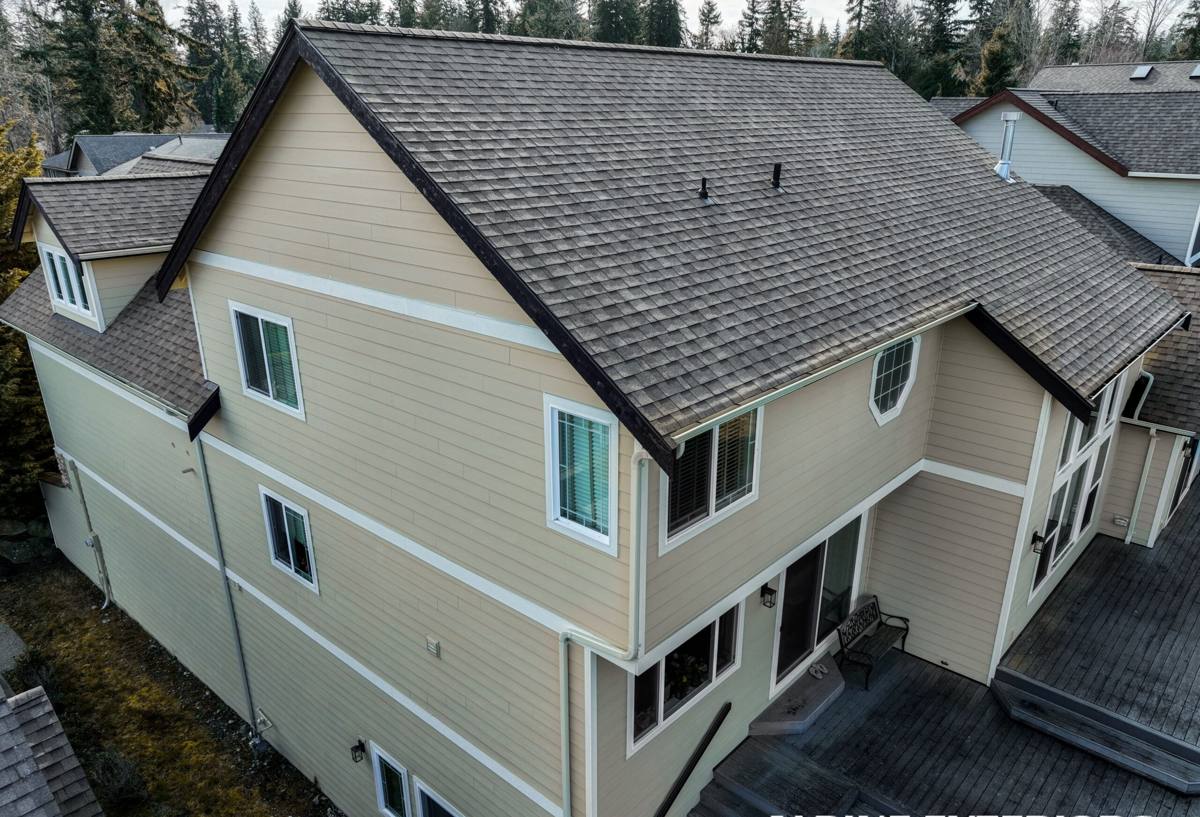
What Local Conditions Do to a Deck Over Time
Salt Air and Metal Fasteners
Coastal proximity means airborne salt reaches structures further inland than people expect, especially with prevailing winds. Salt accelerates corrosion in any fastener, bracket, or connector that isn't rated for it. A deck built with standard interior-grade screws or under-spec'd hardware can show rust streaks and weakened joints well before the decking itself wears out — and once a structural connector corrodes, it's a safety issue, not a cosmetic one.
Driving Rain and Water Management
Wind-driven rain doesn't just fall on a deck, it pushes into every gap, seam, and ledger connection at an angle. Flat, poorly flashed ledger boards or decking with no drainage gap trap moisture against the house and framing, which is where rot actually starts — usually hidden from view until a board is soft underfoot or a railing post wiggles.
Moss and Extended Damp Season
A long stretch of cool, wet months gives moss and algae plenty of time to establish on any surface that stays shaded or doesn't dry out between rains. Beyond looking bad, moss holds moisture against the decking surface and turns walking areas slick and slippery, which is a real fall hazard on stairs and ramps.
What a Correctly Built Deck Requires Here
Building for this climate isn't about one special product — it's a set of details that all have to be right together. The framing, fasteners, ledger connection, and decking material all need to be matched to wet, salt-exposed, moss-prone conditions, or the weakest link determines how long the whole structure lasts.
| Deck Component | What It Needs to Handle Here | What We Do |
|---|---|---|
| Framing lumber | Repeated wet/dry cycling without warping or rot | Pressure-treated framing rated for ground contact where applicable, properly sized for spans and loads |
| Fasteners and connectors | Salt air corrosion resistance | Stainless steel or coated hardware rated for coastal/corrosive exposure, not standard interior-grade screws |
| Ledger attachment | Keeping wind-driven rain out of the house-to-deck connection | Proper flashing, spacing, and fastening at the ledger — the single most common failure point we see |
| Footings | Frost movement and saturated soil | Footings sized and set to local frost depth and soil conditions, not guessed at |
| Decking surface | Moss growth, slip resistance, moisture cycling | Material selection and gap spacing that lets the deck actually dry out between rains |
Choosing the Right Decking Material
There's no single "best" decking material for every house — the right choice depends on how much shade the deck gets, how much maintenance the homeowner wants to do, and budget. What matters is being honest about the trade-offs instead of pushing one product as a cure-all.
Wood Decking
Cedar and pressure-treated lumber remain popular because of upfront cost and a natural look. The trade-off in this climate is that wood needs regular cleaning, sealing, and moss removal to hold up — skip a season or two of maintenance and moss and moisture damage can get ahead of you fast, especially on shaded sections.
Composite Decking
Composite boards resist rot and don't need staining, which cuts down on maintenance significantly. Our standard is not to install composite over framing or fastening details that weren't upgraded to match — composite is more forgiving on the surface, but it still depends entirely on correctly treated framing and corrosion-resistant hardware underneath. We also pay close attention to gap spacing and airflow, since composite can hold surface moisture differently than wood and still needs room to dry.
PVC and Capped Polymer Decking
Fully synthetic decking offers the strongest moisture and moss resistance of the common options, with a higher material cost. It's a good fit for shaded or low-airflow areas where wood or standard composite would need constant upkeep. Installation sensitivity is higher with these products — manufacturer spacing and fastening specs matter more, since mistakes are harder to correct after the fact.
Framing, Footings, and the Ledger Connection
The parts of a deck nobody sees are the parts that determine whether it's still solid in fifteen years. Footings need to be sized and placed for the actual soil and frost conditions at the site, not a generic minimum. Framing needs correct spans, blocking, and treated lumber rated for the exposure it'll actually get, including any ground contact. And the ledger board — where the deck ties into the house — needs proper flashing and fastening so wind-driven rain can't work its way behind it. We treat the ledger connection as the highest-priority detail on every build, because it's the one spot where a small mistake causes damage to the house itself, not just the deck.
Railings and Hardware Built for Coastal Air
Railings take direct weather exposure on all sides and get handled constantly, so any corrosion or looseness shows up fast — and matters, since railings are a safety component. We use fasteners, brackets, and post connectors rated for corrosive coastal exposure rather than standard-grade hardware, and we pay attention to post attachment methods that won't loosen as wood framing goes through normal seasonal movement.
Design Choices That Matter for Nooksack-Area Homes
Beyond materials, a few design decisions have an outsized effect on how a deck performs in this climate:
- Board spacing and orientation that promote airflow and drainage instead of trapping standing water
- Positioning multi-level or shaded sections with moss and slip resistance in mind, since these areas dry out slowest
- Stair and landing surfaces treated as safety-first zones, with attention to traction in wet and mossy conditions
- Sizing the structure to actual usage — a deck built for entertaining needs different framing and layout than a small utility deck off a kitchen door
- Planning railing and post placement around sightlines and how the space will actually be used, not just code minimums
Our Process, Start to Finish
We start with an on-site visit to look at the actual conditions — sun and shade exposure, drainage, soil, and how the deck ties into the house — because those specifics drive material and framing decisions more than personal preference does. From there we walk through material options honestly, including maintenance expectations, so the homeowner is choosing based on real trade-offs rather than a sales pitch. Once a design and material plan is set, we handle permitting where required, build to correct footing and framing specs for the site, and finish with fastening and hardware rated for the exposure the deck will actually see. We stand behind the work and are straightforward about what maintenance, if any, the finished deck will need going forward.
Why It Matters to Hire a Crew That Already Works This Area
A contractor who builds decks regularly in the Nooksack area and around Birch Bay already knows what fails here and why — it's not theoretical. That familiarity shows up in decisions that aren't always visible to a homeowner during the build: which hardware grade to spec, how to detail a ledger connection against driving rain, where moss is going to be a persistent problem versus a minor one. A crew unfamiliar with Whatcom County's coastal and wet-climate conditions is more likely to build to a generic standard that looks fine on day one and starts showing problems within a few seasons.
If you're planning a new deck or replacing one that's showing its age, we're happy to come take a look and talk through what makes sense for your property — no pressure, no obligation. Use the form below to request a free estimate.