 Birch Bay Window
 Building Decks for Semiahmoo's Particular Climate
Semiahmoo sits close enough to the water that every deck built here has to deal with three things at once: salt-laden air off the bay, long stretches of driving rain through the fall and winter, and a moss season that seems to start earlier every year. None of these are unusual for Whatcom County, but together they change how a deck should be designed, framed, and finished compared to a deck built twenty miles inland. A deck that would hold up fine in a drier part of the state can start showing corrosion, soft spots, or slick green growth within a few seasons out here if it wasn't built with this specific exposure in mind.
We work on decks throughout Birch Bay and the surrounding shoreline communities, and Semiahmoo's mix of waterfront exposure and mature tree cover is one we see often. That combination means a deck project here isn't just about picking a nice board — it's about the fasteners under the boards, the way water is encouraged to leave the structure, and how much shade the site gets during the wettest months of the year.
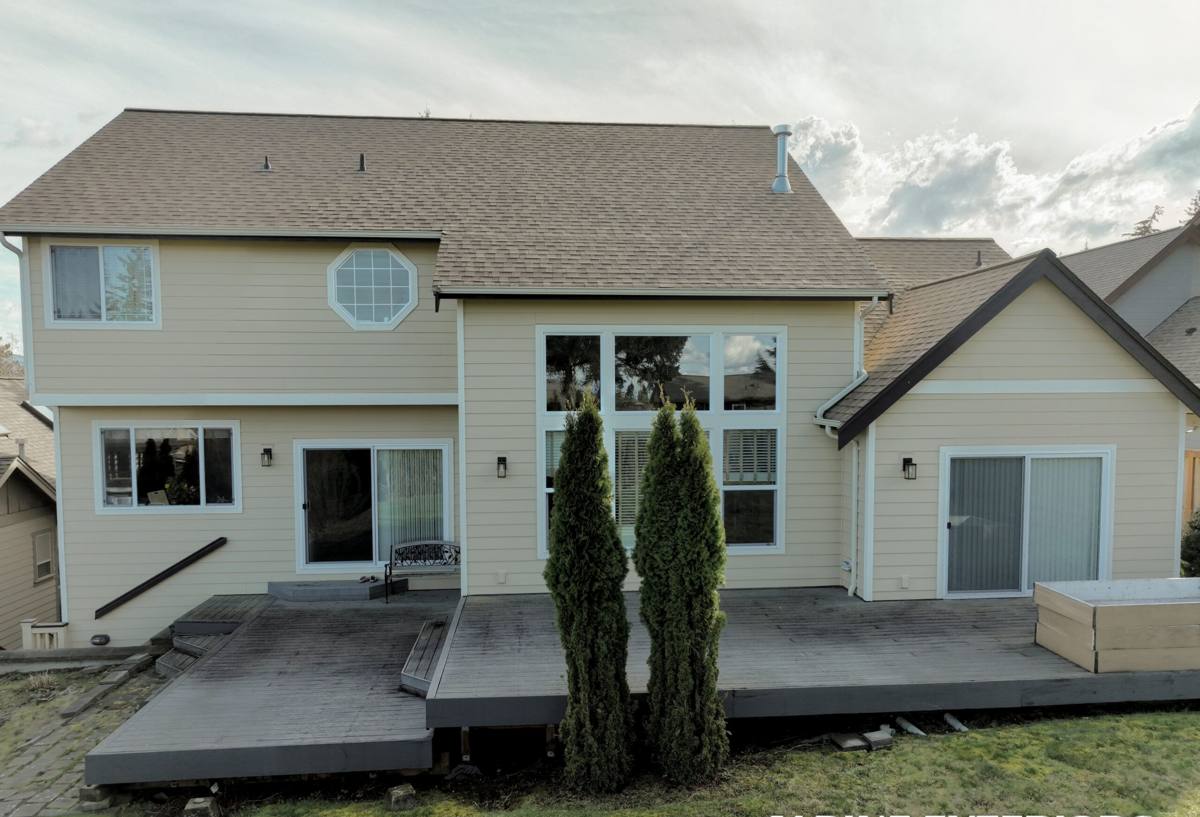
What Salt Air and Rain Actually Do to a Deck
Salt Air and Metal Hardware
Airborne salt accelerates corrosion on any exposed metal — screw heads, joist hangers, bolts, and railing brackets. On a standard-grade fastener, that corrosion can start as surface rust within a year or two in a bay-exposed location and eventually weaken the connection itself, not just the appearance. This is one of the most common failure points we find on older decks near the water: the decking looks fine, but the hardware holding it together has been quietly deteriorating underneath.
Driving Rain and Standing Water
Rain that comes in sideways off the bay doesn't just fall on the deck surface — it drives into gaps, under railing posts, and against the house where the deck ledger board attaches. Without the right flashing and gap spacing, that water works its way into places it shouldn't be, leading to rot in framing members that are hidden from view until a board finally gives way.
Moss, Algae, and Shade
Combine consistent moisture with the shade many Semiahmoo lots get from mature trees or neighboring structures, and you get ideal conditions for moss and algae growth on deck surfaces. Beyond looking neglected, a mossy deck surface gets genuinely slippery — a real slip hazard on stairs and near entry points, especially in winter.
Choosing Decking Material for a Bay-Exposed Lot
There's no single "best" decking material for every Semiahmoo property — it depends on how close you are to the water, how much sun the deck gets, and how much upkeep you want to take on. Here's how the common options actually compare for this specific climate:
| Material | Salt Air Resistance | Moss/Algae Tendency | Maintenance Reality |
|---|---|---|---|
| Pressure-treated wood | Good if properly sealed and re-sealed | Higher — porous surface holds moisture | Annual cleaning and periodic re-sealing needed |
| Cedar | Naturally decent, but finish still matters | Moderate — benefits from good airflow underneath | Needs regular oil/sealant to hold color and resist checking |
| Composite decking | Very good — doesn't absorb moisture like wood | Lower on quality composites, still needs cleaning | Low — periodic washing, no sealing or staining |
| PVC/cellular decking | Excellent — fully synthetic, no organic material to feed rot | Lowest of the group | Lowest — occasional cleaning only |
Composite and PVC boards cost more upfront than wood, but for a deck sitting in consistent salt air and shade, the reduced maintenance and lower rot risk usually make the higher material cost a reasonable trade-off over the life of the deck. That said, a well-built and properly maintained wood deck is a legitimate choice too — it just asks more of the owner in upkeep.
The Framing Details That Matter More Here Than Elsewhere
Ledger Attachment and Flashing
Where the deck attaches to the house is the single most important connection on the whole structure, and it's also the spot most exposed to wind-driven rain coming off the bay. Proper flashing at this joint — installed so water sheds outward and down rather than pooling against the house wall — is not optional in this climate. This is one of the details that separates a deck that lasts decades from one that develops hidden rot behind the siding within a few years.
Fasteners and Hardware Grade
Given what salt air does to standard hardware, we spec corrosion-resistant fasteners and connectors for framing, ledger attachment, and railing hardware on decks in this area. It costs a bit more than standard-grade hardware, but replacing a rusted-through joist hanger after the decking is already installed is a far bigger job than getting the hardware right the first time.
Joist Spacing and Board Gaps
Correct joist spacing depends on the decking material chosen — composite and PVC boards often have different span requirements than wood, and undersized framing shows up later as bounce or sag. Gap spacing between boards also needs to account for this climate: too tight, and debris and moisture get trapped, feeding rot and moss; too wide, and small items (and small feet) can catch.
Drainage, Grading, and Keeping Moss From Taking Over
A big part of building a deck that resists moss isn't the decking material at all — it's what happens underneath and around it. Water needs a clear path away from the structure, not a place to sit and soak into framing or the ground below the deck.
- Grade the ground under and around the deck so water flows away from the house, not toward it
- Leave adequate clearance between the ground and the framing for airflow, which helps everything dry out between rain events
- Use board gap spacing and fastener placement that don't trap standing water or organic debris
- Where the site is heavily shaded, factor that into material choice and expect a more regular cleaning schedule
- Keep gutters and downspouts near the deck functioning properly — misdirected roof runoff is a common hidden contributor to a wet deck
None of these steps are complicated, but they're easy to skip during construction if the builder is focused only on the visible surface. They're also the details that determine whether a deck needs power-washing once a year or once every few months.
Our Process for a Semiahmoo Deck Project
We approach every custom deck build the same structured way, adjusted for the specifics of the site:
- On-site assessment — we look at sun exposure, shade patterns, proximity to the water, existing drainage, and how the deck will connect to the house
- Design and material selection — sizing, layout, and material recommendations based on how the space will actually be used and what the site's exposure calls for
- Permitting — decks typically require permits through the applicable local jurisdiction; we handle that process as part of the project
- Framing and structural work — footings, ledger attachment and flashing, joists, and corrosion-resistant hardware installed to spec
- Decking, railing, and finish work — installed with the gap spacing and fastening approach appropriate to the chosen material
- Final walkthrough — reviewing the finished deck and going over what maintenance it will actually need going forward
Keeping a Semiahmoo Deck in Good Shape Long-Term
Even a well-built deck needs some ongoing attention in this climate. A short, honest maintenance checklist for homeowners in this area:
- Sweep off leaves and debris regularly, especially in fall — trapped organic matter feeds both rot and moss
- Rinse or wash the deck surface at least once or twice a year to keep moss and algae from establishing
- Check railing posts and stair connections annually for any looseness — a sign hardware may be corroding underneath
- Re-seal or re-stain wood decking on the manufacturer's recommended schedule, not "when it looks like it needs it"
- Keep an eye on the ledger board area where the deck meets the house for any signs of staining or soft wood
- Clear debris from under the deck periodically to maintain airflow and drainage
Why Local Experience on This Coastline Matters
A deck built to a generic regional spec can look identical to one built specifically for a bay-exposed, shaded Whatcom County lot — right up until the first few wet winters reveal the difference. The hardware grade, the flashing detail at the ledger, the drainage path underneath, and the material choice all need to reflect the actual conditions on that specific piece of ground, not a one-size-fits-all approach.
Working regularly in Birch Bay and Semiahmoo means we're not guessing at how this coastline treats a deck over time — we're building to account for it from the first footing. That's the difference between a deck that needs real repair work in five years and one that's still solid and low-maintenance in twenty.
If you're planning a new deck or replacing one that's showing its age, we're happy to take a look at your Semiahmoo property and put together a straightforward, no-pressure estimate. Use the form below to get started.