 Birch Bay Window
 Building a Deck in Point Roberts Isn't a Generic Job
Point Roberts sits on its own point of land, cut off from the rest of Whatcom County by an international border, with water on three sides. That geography means a deck out here takes a beating that a deck twenty miles inland never sees. Salt-laden wind comes off the water almost daily, rain drives in sideways more often than it falls straight down, and the shoulder seasons stay damp long enough for moss and algae to get a real foothold on any horizontal surface that doesn't shed water fast. A deck built to a generic spec sheet will look fine for a year or two and then start showing problems — cupped boards, rusted fastener heads, slick green film on the walking surface — well before it should.
We build decks specifically for this kind of exposure. That means different material choices, different fastening hardware, different flashing details at the ledger board, and a framing layout that drains instead of holding water. None of this is exotic — it's standard coastal-construction practice — but it does mean the job differs from what a crew used to drier, inland conditions would default to.
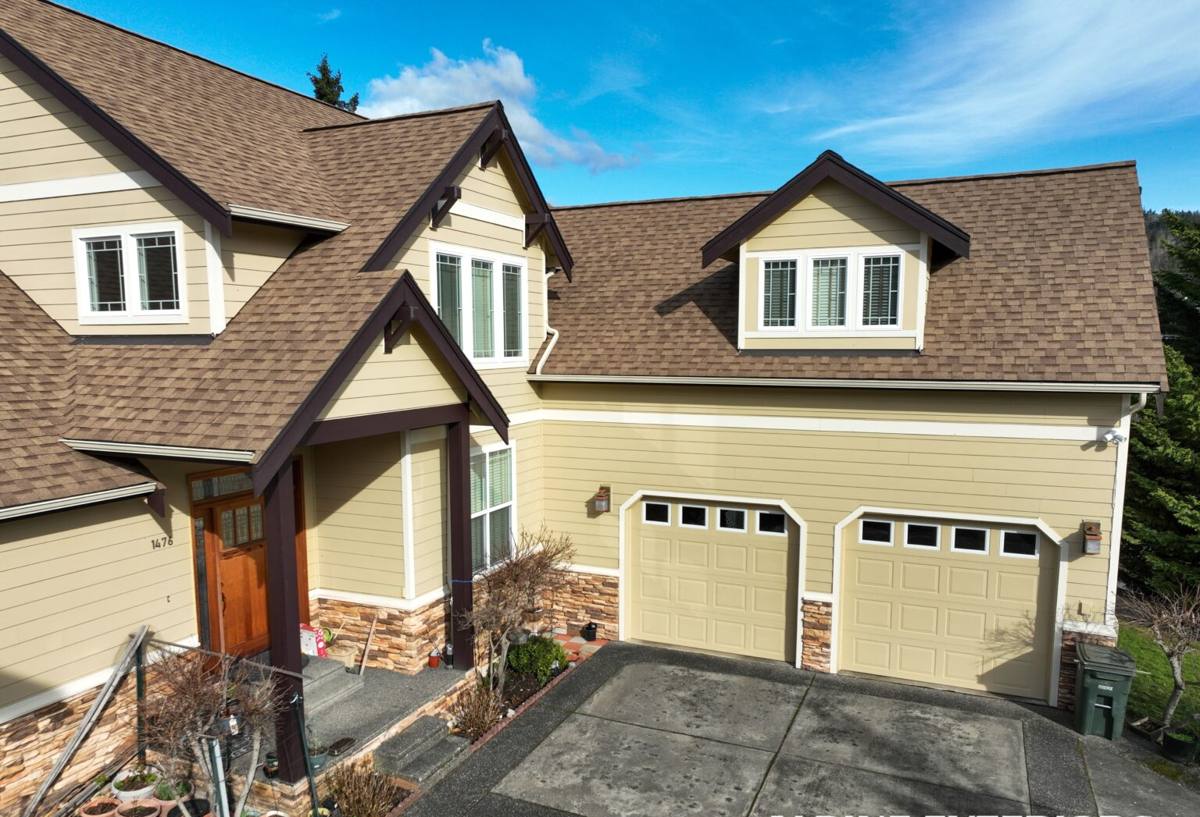
What the Local Climate Actually Does to a Deck
Salt Air
Airborne salt accelerates corrosion on anything metal — fasteners, joist hangers, post bases, railing hardware. Standard electro-galvanized screws and connectors that would hold up fine away from the water can start rusting within a season or two here. Rust stains bleed into the wood or composite around the fastener head, and a corroded hanger is a structural problem, not just a cosmetic one.
Driving Rain
Wind-driven rain doesn't just fall on a deck, it gets pushed sideways into every gap, seam, and ledger connection. Where the deck attaches to the house is the single most important place to get flashing right, because water forced behind an improperly flashed ledger board is what causes rot in the rim joist and, eventually, in the house framing itself.
The Long Moss Season
Whatcom County's marine climate keeps surfaces damp for long stretches of fall, winter, and spring. On a deck, that dampness plus shade equals moss and algae, which make boards slippery and, on real wood, hold moisture against the surface long enough to feed rot. Board spacing, gap width, and how well the structure ventilates underneath all affect how bad this gets.
Framing and Footings: The Part You Don't See
A deck's long-term performance is decided mostly below the decking boards. Footings need to be sized and set to local frost depth and soil conditions, and in a high-moisture environment, ledger attachment and joist protection matter more than they would somewhere dry.
- Ledger board flashed with a proper drip-cap and self-adhering membrane, never just caulked and bolted
- Joists and beams protected with a taped or coated top edge so end-grain and cut edges aren't absorbing water
- Post bases set above grade and finish level, never buried, so water doesn't wick into the post end grain
- Beam and joist spacing set for the actual decking material's span rating, not a generic 16-inch default
- Adequate slope away from the house and airflow underneath so the structure can dry out between storms
None of this is visible once the deck is finished, which is exactly why it's worth asking a contractor to walk through it before the boards go down.
Choosing a Decking Material for This Climate
There's no single "best" decking material — the right call depends on budget, how much upkeep the homeowner wants to do, and how exposed the deck is to wind and salt spray. Here's how the common options actually perform out here.
| Material | How It Handles Salt Air & Moisture | Maintenance | Typical Lifespan |
|---|---|---|---|
| Pressure-treated wood | Fine if sealed and re-sealed on schedule; end grain and fastener holes are the weak points | Annual cleaning, re-sealing every 1-2 years | 10-15 years before major repair |
| Cedar | Naturally rot-resistant but still needs finish maintenance in driving rain | Regular cleaning and staining/sealing | 15-20 years with upkeep |
| Capped composite | Doesn't absorb water or salt; shrugs off the moss season much better than wood | Occasional washing, no sealing or staining | 25+ years, manufacturer-warrantied |
| PVC decking | Fully synthetic, no wood fiber to hold moisture or feed algae | Lowest maintenance of the group | 25+ years, manufacturer-warrantied |
We're honest with homeowners about the trade-off: capped composite and PVC cost more up front, but in a climate that stays damp this many months of the year, the maintenance savings and resistance to moss staining usually make up the difference over the life of the deck. Wood is a legitimate choice too, especially for homeowners who like the look and don't mind the upkeep — we just make sure they know what that upkeep actually involves before they commit.
Fasteners and Hardware: Where Cheap Materials Fail First
On a coastal deck, the hardware fails before the lumber does if it's the wrong spec. We use stainless steel or heavy hot-dip galvanized fasteners and connectors rated for coastal/marine exposure, not the standard electro-galvanized hardware sold as a general-purpose default. It costs more per box. It also doesn't turn into a streak of rust down your fascia board in two winters.
The same logic applies to joist hangers, post bases, and railing brackets — anything embedded in or touching pressure-treated lumber also needs hardware rated to resist the chemicals in modern treated wood, which are more corrosive to bare steel than older treatments were.
Our Process for a Point Roberts Deck Build
- On-site assessment — we look at sun/shade exposure, prevailing wind direction, existing drainage, and the condition of the ledger wall before quoting anything
- Design and material selection — sized to the actual footprint and use, with material options and honest cost/maintenance trade-offs explained up front
- Permitting — decks over a certain size or height typically require a permit through Whatcom County; we handle that paperwork as part of the job
- Footings and framing — built to the flashing and hardware standards above, not a stripped-down minimum spec
- Decking and railing installation — installed with the gap spacing and fastening pattern appropriate to the material chosen
- Final walkthrough — we show the homeowner exactly what maintenance (if any) their new deck needs and on what schedule
Maintaining a Deck in a Marine Climate
Even a well-built deck needs some seasonal attention out here. A short checklist goes a long way toward keeping moss from getting established and catching small problems before they become expensive ones.
- Sweep off standing debris (leaves, needles) regularly — trapped organic matter is what feeds moss and algae
- Rinse or scrub the surface at least once or twice a year, more often on shaded sections
- Check railing hardware and fastener heads annually for early rust staining
- Keep gutters and downspouts near the deck clear so runoff isn't dumping extra water onto the structure
- For wood decks, re-seal on the schedule recommended for the specific product used
- Watch for soft spots near the ledger board or post bases, which can indicate hidden moisture intrusion
Why a Crew That Already Works Point Roberts Matters
Point Roberts is geographically part of Whatcom County but physically separated from it by the Canadian border, which means getting a crew and materials on-site takes real planning — border crossing logistics, scheduling around wait times, and making sure everything needed for the job is loaded before the trip out. A contractor unfamiliar with that reality can end up with delayed timelines or incomplete material orders discovered mid-project. We already build that logistics planning into how we schedule and staff Point Roberts jobs, so it doesn't become the homeowner's problem.
Familiarity with the local exposure conditions matters just as much. A crew that's built decks up and down this stretch of coastline already knows which corners of a lot catch the worst wind-driven rain, how much moss pressure to expect on a north-facing deck under tree cover, and which hardware specs actually hold up here versus what a spec sheet says should work in theory.
Get a Straight Answer on Your Deck Project
If you're planning a new deck or replacing one that's showing its age, we're happy to take a look and give you a straightforward, no-pressure estimate — including an honest read on which materials make sense for your specific site and budget. Fill out the form below and we'll get back to you.