 Birch Bay Window
 Why Point Roberts Decks Wear Out Faster Than You'd Expect
Point Roberts sits on its own peninsula, surrounded on nearly every side by the waters of the Salish Sea. That location is part of what makes it a beautiful place to have a deck — and part of why decks there take more punishment than similar structures a few miles inland. Salt-laden air corrodes fasteners and hardware faster than it does in drier parts of Whatcom County. Driving rain off the water finds every gap in flashing and every unsealed board end. And the long, damp moss season that settles over this stretch of Washington coastline keeps deck surfaces wet for weeks at a time, even when it isn't actively raining.
None of that means a deck in Point Roberts is destined to fail early. It means the repair work has to account for conditions that a generic "deck fix" doesn't. We've worked on homes throughout the Birch Bay area and out on the Point Roberts peninsula long enough to know which failure points show up here again and again, and we build our repairs around preventing them from coming back.
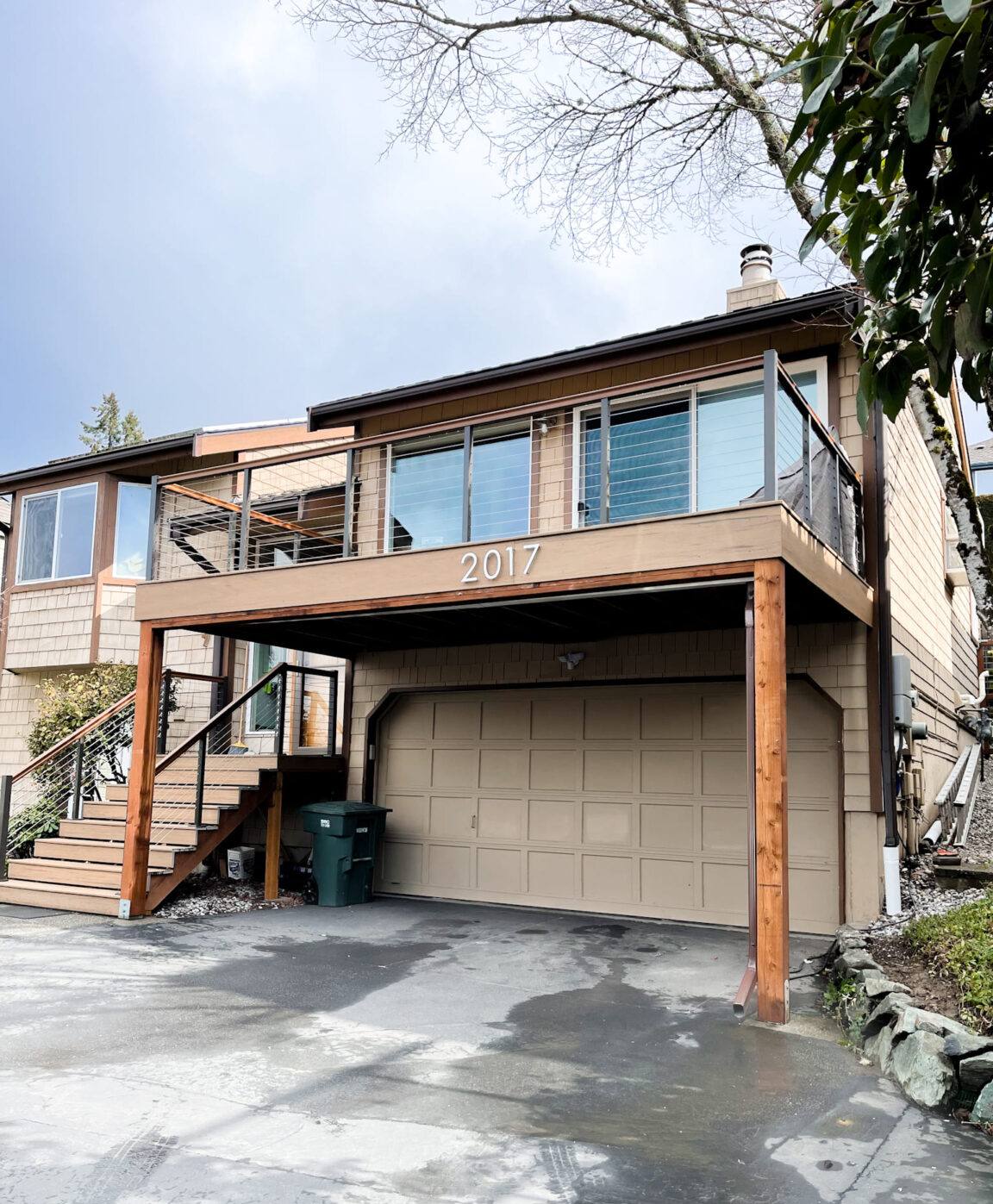
The Repair Signs Point Roberts Homeowners Should Watch For
Most deck problems don't start with a dramatic collapse — they start small and get ignored because the deck still looks usable. By the time a board feels genuinely soft underfoot, the damage underneath is usually further along than it looks from the surface.
Surface-Level Warning Signs
- Boards that feel spongy, springy, or noticeably different from the boards around them
- Persistent green or black staining that comes back within days of cleaning
- Fasteners that have backed out, rusted, or left dark streaks down the board face
- Gaps opening up between deck boards or where the deck meets the house
- Railings that wiggle more than they did a year ago
Structural Warning Signs
- Visible sagging anywhere along the deck's span, especially near the middle
- A ledger board (where the deck attaches to the house) that shows water staining or gaps behind it
- Support posts that have shifted, tilted, or show soft wood near ground contact
- Stairs that feel less solid than the deck itself
Any one of these on its own might be a minor fix. Several at once usually points to a moisture problem working its way through the whole structure, which is where a proper inspection earns its keep.
What an Honest Deck Repair Actually Involves
A repair that only replaces the board you can see is a repair that gets called back out in a year or two. On the Point Roberts peninsula, where moisture has more opportunities to get into a structure and fewer chances to dry back out, we treat every repair as a chance to check the parts of the deck nobody sees from the yard.
Structural Components
This means checking the ledger board attachment, the joists underneath, and the posts and footings for rot or movement before we touch a single visible board. A deck is only as good as the framing under it, and framing failures are almost always moisture failures — water getting into a joint and staying there.
Fasteners and Hardware
In a salt-air environment, the wrong fastener corrodes from the inside out long before the wood around it fails. We use fasteners and connectors rated for exterior and coastal exposure, not the standard hardware that's fine for a dry inland deck but starts rusting within a couple of seasons here.
Flashing and Water Management
Most of the serious rot we find at ledger boards traces back to missing or failed flashing — the metal or membrane barrier that's supposed to keep water from running behind the deck and into the house's rim joist. Correcting this properly, rather than just caulking over the symptom, is often the difference between a repair that lasts and one that doesn't.
Decking and Railings
Once the structure underneath is sound, we address the surface: replacing damaged boards, resetting loose railings, and making sure the finished repair matches the surrounding deck rather than looking like a patch.
Repair or Replace? A Practical Look
Not every deck problem calls for a full rebuild, and not every deck is worth chasing repairs on indefinitely. The honest answer depends on where the damage is and how much of the structure it's reached.
| Factor | Leans Toward Repair | Leans Toward Replacement |
|---|---|---|
| Extent of rot | Isolated to a few boards or one section | Spread through multiple joists or the ledger |
| Age of structure | Under 10-12 years old | Original deck is 20+ years old |
| Footings and posts | Solid, no shifting | Settling, heaving, or undersized for current code |
| Fastener condition | Localized corrosion | Widespread rust and failing connections |
| Budget goal | Extend usable life a few years | Want a long-term, low-maintenance solution |
We'll walk the whole deck with you and point out exactly what we find, including the parts that are still in good shape. If a repair genuinely solves the problem, that's what we'll recommend — a bigger job isn't a better job if it isn't the one your deck actually needs.
How Our Deck Repair Process Works
1. On-Site Inspection
We start underneath the deck as much as on top of it, checking joists, the ledger connection, posts, and footings before forming an opinion about what's needed. This is also when we probe suspect boards to see how far rot has actually traveled.
2. Clear Scope and Straightforward Pricing
You get a written explanation of what's failing, why, and what it takes to fix it correctly — not a vague estimate that leaves room to pad the invoice once work is underway.
3. Repair the Structure First
Framing, flashing, and fasteners get addressed before any cosmetic work happens. Covering up a structural problem with new boards is how decks end up needing the same repair twice.
4. Match the Finish
Replacement boards, railing sections, and stair components are selected to work with what's already there, so the repaired area doesn't stand out as an obvious patch job.
5. Walk-Through
Before we consider the job done, we walk the deck with you, point out what was replaced and why, and explain anything you should keep an eye on going forward.
Choosing Materials for a Coastal Peninsula
Material choice matters more here than in a lot of Whatcom County, simply because Point Roberts decks spend more of the year wet and salty than decks further inland. Pressure-treated lumber remains a solid, economical choice for framing and is what most existing decks in the area are built on — the key is making sure treated lumber is properly sealed at cut ends and fastened with compatible, corrosion-resistant hardware, since mismatched hardware is a common source of early failure.
For visible decking boards, composite and PVC decking products have become popular because they don't absorb water the way wood does and hold up well against the area's moss and algae growth. We're glad to install these where a homeowner wants that lower-maintenance route, though it's worth knowing composite decking still needs a properly built and flashed frame underneath — it solves a surface maintenance problem, not a structural one. Real wood decking, kept up with regular cleaning and refinishing, remains a perfectly reasonable choice too; it just asks for more of the homeowner's attention over time. We'll talk through the honest maintenance trade-offs of each option rather than pushing whichever is easiest for us to install.
Keeping a Repaired Deck in Good Shape
A correct repair buys you years, but the region's climate keeps working on the deck every season after we leave. A few habits go a long way toward protecting that investment:
- Clean moss and algae off the surface at least once or twice a year, not just when it becomes visibly slick
- Keep gutters and downspouts near the deck clear so water isn't dumping directly onto it
- Check railings and stair connections for looseness each spring after the wet season
- Reseal or refinish wood decking on the schedule the product calls for, rather than waiting until it looks weathered
- Look underneath the deck once a year for new staining, soft spots, or standing water that wasn't there before
Why Local Experience on the Point Roberts Peninsula Matters
Point Roberts' geography — an exclave reached through Canada, wrapped by water, exposed to weather coming straight off the Salish Sea — means it doesn't behave exactly like the rest of Whatcom County when it comes to how buildings age. A crew that mainly works drier, more sheltered sites can misjudge how far rot has traveled in a coastal structure, or specify hardware that isn't really suited to salt exposure. We've done repair work across the Birch Bay area and out to Point Roberts specifically, so we're not guessing at how this peninsula's climate treats a deck — we've seen it firsthand and built our repair approach around it.
That local familiarity also means fewer surprises during the job itself. We know to expect certain ledger and flashing issues before we even open up the structure, which keeps inspections efficient and estimates accurate.
If you've got a deck in Point Roberts that's showing any of the signs above, we're happy to come take an honest look. The estimate is free, there's no pressure to book anything on the spot, and you'll walk away knowing exactly what your deck needs — whether that's a targeted repair or something bigger. Fill out the form below to get started.