 Birch Bay Window
 Windows Built for the Cherry Point Stretch of Whatcom County
Cherry Point sits in one of the more exposed pockets of Whatcom County shoreline, where homes take a steady beating from salt-laden air, wind off the water, and long stretches of driving rain through fall and winter. If you own a home out here, you already know your windows work harder than windows fifteen miles inland. Frames take on moisture they can't always shed, glass fogs from temperature swings, and anything with exposed wood or unprotected metal starts showing wear years before it should. Energy-efficient windows aren't a luxury upgrade in this environment — they're the difference between a home that stays dry and comfortable and one that's fighting a losing battle against the marine climate every single season.
This page covers what energy-efficient window replacement actually looks like for a Cherry Point home: what the climate demands, what a correct installation involves, and why hiring a crew that already knows this stretch of coastline matters more than it would somewhere less exposed.
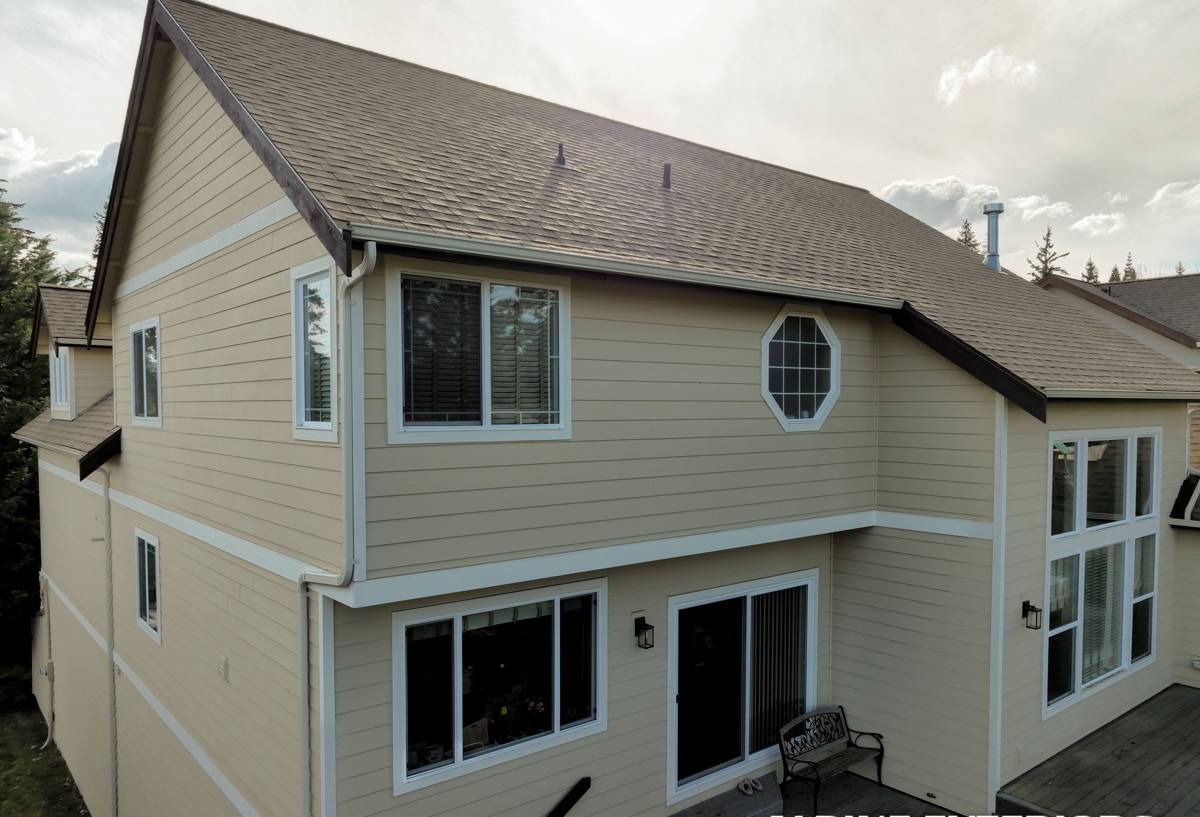
What Cherry Point's Climate Does to Windows
A few things set this area apart from a typical inland Whatcom County install:
- Salt air corrosion: Airborne salt accelerates the breakdown of unprotected metal hardware, hinges, and cheaper aluminum components. Over years, this shows up as pitting, stiff locks, and seals that fail early.
- Driving rain and wind-driven moisture: Storms coming off the water don't just fall straight down — wind pushes rain sideways into window assemblies. Flashing and sealing details that would be fine in a calmer setting aren't good enough here.
- Long moss and mildew season: The same damp, mild conditions that grow moss on your roof and siding also encourage mildew growth around window sills and frame joints, especially anywhere water is slow to drain or dry out.
- Temperature swings between marine layer and sun breaks: Glass and frame materials expand and contract more than homeowners expect, which stresses seals over time if the original installation wasn't done with enough tolerance.
None of this means windows fail quickly out here — it means the margin for error in materials and installation is smaller. A window and installation method that's "good enough" in a drier, calmer part of the state can underperform on this stretch of coastline.
What "Energy-Efficient" Actually Means
Energy efficiency in a window comes down to a handful of measurable factors, not marketing language. For Cherry Point homes, the ones that matter most are:
| Factor | What It Does | Why It Matters Here |
|---|---|---|
| U-Factor | Measures how well the window resists heat loss (lower is better) | Keeps heating costs down through our long, damp winters |
| SHGC (Solar Heat Gain Coefficient) | Measures how much solar heat passes through the glass | Balances winter sun gain against summer overheating on south/west exposures |
| Low-E Coating | A microscopically thin coating that reflects heat while letting light through | Reduces both heat loss and UV fading on interior finishes |
| Gas Fill (argon/krypton) | Inert gas between panes that slows heat transfer | Improves insulation without adding bulk to the frame |
| Weatherstripping & Seal Design | Physical barrier against air and water infiltration | The single biggest factor in resisting wind-driven rain |
Any window that carries an ENERGY STAR rating for our climate zone has already been tested against these factors. But the rating only tells you about the window unit itself — it says nothing about how well it will perform once it's installed in your specific wall, facing your specific exposure to wind and rain. That installation step is where most performance is won or lost.
Double-Pane vs. Triple-Pane for This Climate
Triple-pane glass offers a modest efficiency edge over a quality double-pane unit, but the difference is smaller than most homeowners expect in the Pacific Northwest's relatively mild temperature range. For most Cherry Point homes, a well-built double-pane window with good Low-E coating and proper gas fill delivers strong performance for a lower cost. Triple-pane makes more sense on homes with unusually high heating bills, north-facing exposures that get little solar gain, or for homeowners prioritizing noise reduction along with efficiency. We'll walk through this trade-off honestly during your estimate rather than upselling glass you don't need.
Signs Your Current Windows Are Costing You
Homeowners in this area often live with underperforming windows longer than they need to because the signs creep in slowly. Watch for:
- Noticeable drafts near the frame, especially during wind events off the water
- Condensation or fogging between panes — a clear sign the seal has failed
- Sashes that stick, won't stay open, or are hard to lock
- Visible gaps, soft spots, or discoloration in the surrounding trim or sill
- Heating bills that feel high relative to your home's size and insulation
- A musty smell or visible mildew at the corners of the frame
Any one of these on its own might just need a repair or re-caulk. Several together, especially on windows that are original to the home or over 15-20 years old, usually mean the unit itself has reached the end of its useful life.
What a Correct Installation Involves
The window product matters, but installation quality is what actually determines whether that product performs for the next 20-30 years, especially in a wind-and-rain-exposed area like Cherry Point. A correct job includes:
- Removing the old unit without damaging the surrounding framing or siding
- Inspecting the rough opening for hidden rot, moisture staining, or pest damage before anything new goes in
- Installing proper flashing that directs water away from the opening, not into it
- Applying a continuous weather-resistive barrier tie-in so the new window integrates with the home's existing moisture management, not just sits inside a hole
- Shimming the unit level, plumb, and square — misalignment stresses seals and causes premature failure
- Sealing with the correct sealant and backer rod, not just a bead of caulk over gaps
- Insulating the gap between the frame and rough opening without overpacking, which can bow the frame
- Finishing interior and exterior trim so the whole assembly sheds water correctly
Skipping or rushing any one of these steps is usually invisible on install day and becomes a moisture problem two, five, or ten years later — often hidden inside the wall where you won't see it until there's real damage.
Our Process for Cherry Point Homes
1. On-Site Assessment
We walk the home, check existing window condition and framing, and talk through which openings actually need replacement versus which might just need repair. Exposure to prevailing wind and rain direction factors into our recommendations for each side of the house.
2. Product Selection
We go over frame material, glass package, and hardware options based on your budget, the window's exposure, and how the home is used. No pressure toward the most expensive option — we'll tell you plainly where the upgrade is worth it and where it isn't.
3. Installation
Our crew handles removal, flashing, air-and-water-barrier integration, and finish work as one continuous process, not a rushed one-day swap. We protect your landscaping and interior finishes throughout.
4. Walkthrough and Follow-Up
Before we consider the job done, we walk every window with you — operation, locks, and seals — and make sure you know how to maintain them for this climate.
Frame Material Considerations for a Marine Environment
| Frame Material | How It Handles Salt Air & Moisture | Maintenance Load |
|---|---|---|
| Vinyl | Doesn't corrode or rot; performs consistently in salt air | Low — occasional cleaning |
| Fiberglass | Excellent moisture and corrosion resistance; stable in temperature swings | Low |
| Wood-clad | Exterior cladding protects the wood, but any breach in the cladding exposes wood to rot risk | Moderate — cladding seams need periodic inspection |
| Bare Aluminum | Prone to pitting and corrosion in salt air over time; conducts cold | Higher — hardware and finish need regular attention |
We're generally cautious about recommending bare aluminum frames for homes this close to the water — not because the material is inherently bad, but because salt air accelerates corrosion on unprotected metal faster than most homeowners want to deal with. Vinyl and fiberglass tend to be the more maintenance-friendly choices for this specific exposure, and we'll explain the honest trade-offs of each during your estimate rather than pushing one product line.
Living With Salt Air and Moss Season: Maintenance That Actually Helps
Even the best window installation benefits from a little seasonal attention out here:
- Rinse frames and glass periodically to clear salt residue, especially after storms
- Clear debris and moss buildup from sills and tracks so water can drain freely
- Check weep holes (the small drainage openings at the bottom of the frame) to make sure they're not clogged
- Inspect exterior caulk lines once a year and touch up before small gaps become water paths
- Lubricate hardware annually to keep locks and rollers from seizing in the damp air
None of this is complicated, but skipping it is how a good window installation slowly turns into a problem. We're happy to walk you through a simple maintenance routine specific to your home's exposure when we finish a job.
Why a Crew That Already Works Cherry Point Matters
Window installation isn't identical from one part of Whatcom County to another. A crew that mostly works drier, more sheltered inland neighborhoods can still do competent work, but they're not necessarily thinking about wind-driven rain patterns, salt exposure, or moss-season drainage the way a crew that works this shoreline regularly does. We know which details can't be shortcuts out here — the flashing, the barrier tie-in, the material choices — because we see what happens when those details are skipped on older installs we get called to fix. That local familiarity shows up in fewer callbacks and windows that actually perform the way they're rated to, year after year, in the conditions you actually live with.
Get a Straight Answer for Your Home
Every home on this stretch of coastline faces the weather a little differently depending on orientation, tree cover, and how exposed it is to the water. If you're dealing with drafty, foggy, or hard-to-operate windows, or you're just planning ahead, we're glad to take a look and give you a clear, no-pressure estimate — what needs replacing now, what can wait, and what it'll actually cost. Fill out the form below and we'll get back to you to schedule a time.