 Birch Bay Window
 Why Blaine Homes Need Siding That Can Handle the Coastline
Blaine sits about as close to salt water and the Canadian border as a Whatcom County property can get, and that location comes with a specific set of exterior problems. Homes here take on salt-laden air off the water, long stretches of driving rain through fall and winter, and short, low-angle winter sun that keeps north-facing walls damp for days at a time. Add in the moss and algae that thrive in that dampness, and you have a climate that is genuinely harder on siding than most inland parts of the county.
Wood-based siding products struggle in this environment because they absorb moisture at the seams, fasteners, and cut edges, then swell, cup, or rot from the inside out before the surface even looks bad. Vinyl holds up to rain but softens and warps under sustained heat reflection and doesn't hold paint if a homeowner wants to change the look later. Fiber cement, when it's the right product installed correctly, is one of the few claddings that shrugs off salt air and repeated wetting without becoming a maintenance project every other year.
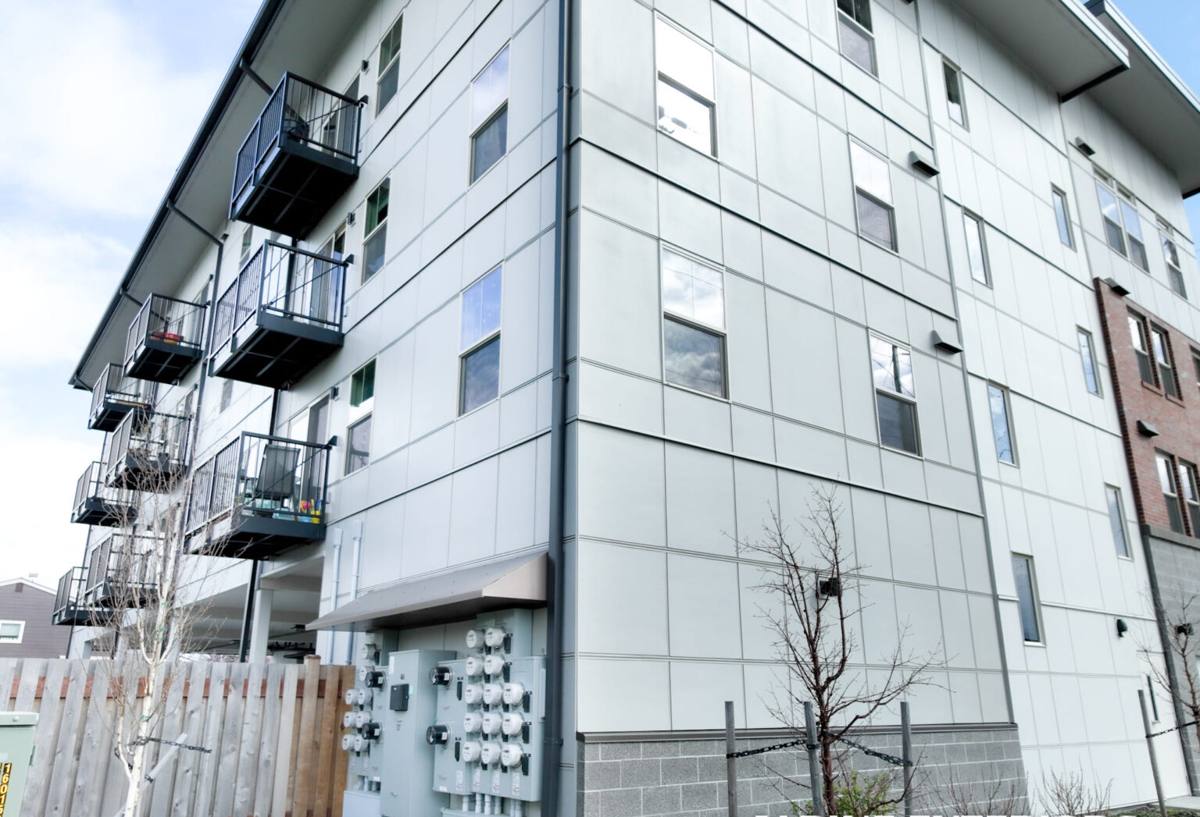
What "The Right Product Installed Correctly" Actually Means
We install James Hardie fiber cement exclusively, and we don't say that as a slogan — it's a decision based on how this specific product behaves over decades in coastal Pacific Northwest conditions. Hardie's fiber cement is non-combustible, dimensionally stable when wet, and finished at the factory with a baked-on ColorPlus coating rather than a job-site paint job that starts failing the moment it's exposed to salt spray and UV.
That said, fiber cement is not magic. It performs exactly as well as its installation. A siding job that ignores flashing details, caulks joints that should have been left to drain, or nails through the board face instead of the designated nailing zone will fail in this climate faster than in a drier one, because Blaine gives moisture more chances to find every mistake.
What Correct Installation Looks Like
- A minimum 1/4-inch rain screen gap or drainage plane behind the siding so bulk water has somewhere to go besides your sheathing
- Properly lapped and sealed weather-resistant barrier under every panel and board
- Flashing at every window, door, and horizontal trim transition — installed before siding goes up, not caulked in afterward
- Fasteners placed in Hardie's specified nailing zone, driven flush (not overdriven), into solid framing
- Factory-cut and factory-primed edges kept intact wherever possible; field cuts sealed per Hardie's published detail
- Joints and butt seams treated as points that need to shed water, not just look tight
Climate Factors Specific to Blaine and the Birch Bay Area
| Condition | Effect on Siding | What It Requires |
|---|---|---|
| Salt air off the water | Accelerates corrosion of fasteners and metal flashing; degrades unprotected coatings | Corrosion-resistant fasteners and flashing; factory-cured finish over field paint |
| Sustained driving rain | Drives water into seams, laps, and fastener penetrations | Rain screen drainage gap, correct lap sequencing, sealed penetrations |
| Long moss/algae season | Holds moisture against the wall surface, stains and softens porous materials | A cladding that resists organic growth and doesn't feed on trapped moisture |
| Low winter sun angle | North and east walls stay shaded and damp longer between dry spells | Dimensionally stable board that won't swell or cup with repeated wetting |
Why We Don't Install LP SmartSide, Vinyl, or Other Fiber Cement Brands Here
Homeowners in Blaine sometimes ask why we don't offer LP SmartSide or a lower-cost fiber cement alternative like Cemplank or Allura. The honest answer is that we've standardized on one product line because it lets us guarantee the installation detail work that actually determines how siding performs in this climate, and because Hardie's HZ product lines are engineered specifically for climate zones like this one — with moisture and impact performance tuned for wet regions rather than a one-size-fits-all national spec.
LP SmartSide is an engineered wood product with a resin-treated core, which means it depends on an intact factory coating and sealed cut edges to keep water out of the wood substrate. That's manageable in drier climates; in a location with this much sustained rain and salt exposure, any breach in that coating — a missed caulk joint, a scratch from a ladder, a poorly sealed field cut — gives water a path into a wood-based core. Other fiber cement brands may be chemically similar to Hardie's, but we don't have the same manufacturer training, warranty backing, or long-term track record with them in this region, and we'd rather stand fully behind one system we know inside and out than split our expertise across several.
Vinyl siding sheds water reasonably well but expands and contracts more than fiber cement across our temperature swings, which stresses seams and fastening over time, and it can't be repainted if a homeowner wants a different look down the road. Cedar and primed spruce look excellent when new but require the most ongoing maintenance of any option here — repainting, caulking, and moisture monitoring on a schedule most homeowners don't want to keep up with in a climate this wet.
Our Process for a Blaine Siding Job
1. On-Site Assessment
We walk the exterior with you, looking specifically at north- and west-facing walls, areas near grade, and any spots showing staining, soft spots, or existing moisture damage. Coastal properties often have wall assemblies that were never built with a drainage plane, so we check what's underneath the current siding before quoting the job.
2. Tear-Off and Substrate Check
Once the old siding is off, we inspect the sheathing and framing for rot or prior water damage. Any compromised wood gets replaced before a single new board goes up — covering damaged sheathing with new siding just hides a problem that will resurface.
3. Weather Barrier and Drainage Plane
We install a weather-resistant barrier with a rain screen gap behind the new siding, which is the single biggest factor in how well the wall assembly handles Blaine's rain load over the next 30-plus years.
4. Flashing and Trim
All window, door, and horizontal transitions get flashed before siding installation, following Hardie's published details rather than relying on caulk as a primary water barrier.
5. Siding Installation
Boards or panels go up per Hardie's fastening and clearance specifications, with attention to ground clearance, deck and porch intersections, and anywhere two dissimilar materials meet.
6. Final Walkthrough
We review the completed job with you, including where the warranty coverage applies and what upkeep — if any — is expected going forward.
What a Hardie Job Should Cost You in Upkeep
One of the practical arguments for Hardie in a moss-prone, salt-air environment is how little the homeowner has to do afterward. The ColorPlus finish is warranted against fading and doesn't need repainting on the schedule that field-painted wood or engineered wood siding does. Periodic rinsing to knock off algae or moss buildup on shaded walls is reasonable maintenance; repainting, recaulking every seam, or monitoring for swelling is not something a correctly installed Hardie wall should require.
Checklist: What to Ask Any Contractor Bidding a Blaine Siding Job
- Will you install a rain screen gap or drainage plane, not just siding directly over the old wall?
- Are you a manufacturer-certified installer for the product you're proposing?
- Will flashing be installed before siding, at every window, door, and trim transition?
- What is the fastening spec, and will fasteners be corrosion-resistant given the salt air here?
- What does the warranty actually cover, and is it transferable if you sell the home?
- Have you worked on homes in Blaine or Birch Bay specifically, and do you understand this coastline's wetting pattern?
Why Local Installation Experience Matters Here
A crew that already works Blaine and the broader Birch Bay area has seen how water actually moves across these walls over a full year — which elevations stay wet longest, where moss takes hold first, and which older homes were built without any drainage plane at all. That's the kind of judgment that doesn't come from a spec sheet; it comes from having stood on ladders here through a few winters. It shows up in small decisions during the job: where to add extra flashing attention, how much clearance to leave at grade, which walls need the most careful sequencing. Whatcom County's coastal stretch isn't identical to inland Bellingham or the drier east side of the state, and a siding job planned for "the Pacific Northwest" in general can still miss the specific conditions along the water here.
Get an Estimate
If you're planning a siding project in Blaine or anywhere around Birch Bay, we're happy to take a look at your home, walk you through what we'd recommend, and give you a straightforward, no-pressure estimate — use the form below to get started.