 Birch Bay Window
 Window Replacement Built for Lummi Island's Marine Climate
Lummi Island sits out in the salt air of the Salish Sea, and that changes what "good" window replacement looks like compared to an inland job. Homes here take on wind-driven rain off the water, near-constant marine humidity, and a moss season that stretches for months. Windows that would hold up fine in a sheltered neighborhood a few miles inland can fail early on the island if they're not selected and installed with that exposure in mind. This page covers what island homes actually need, what a correct installation involves, and how we handle the logistics of working on an island as part of our regular Whatcom County service area.
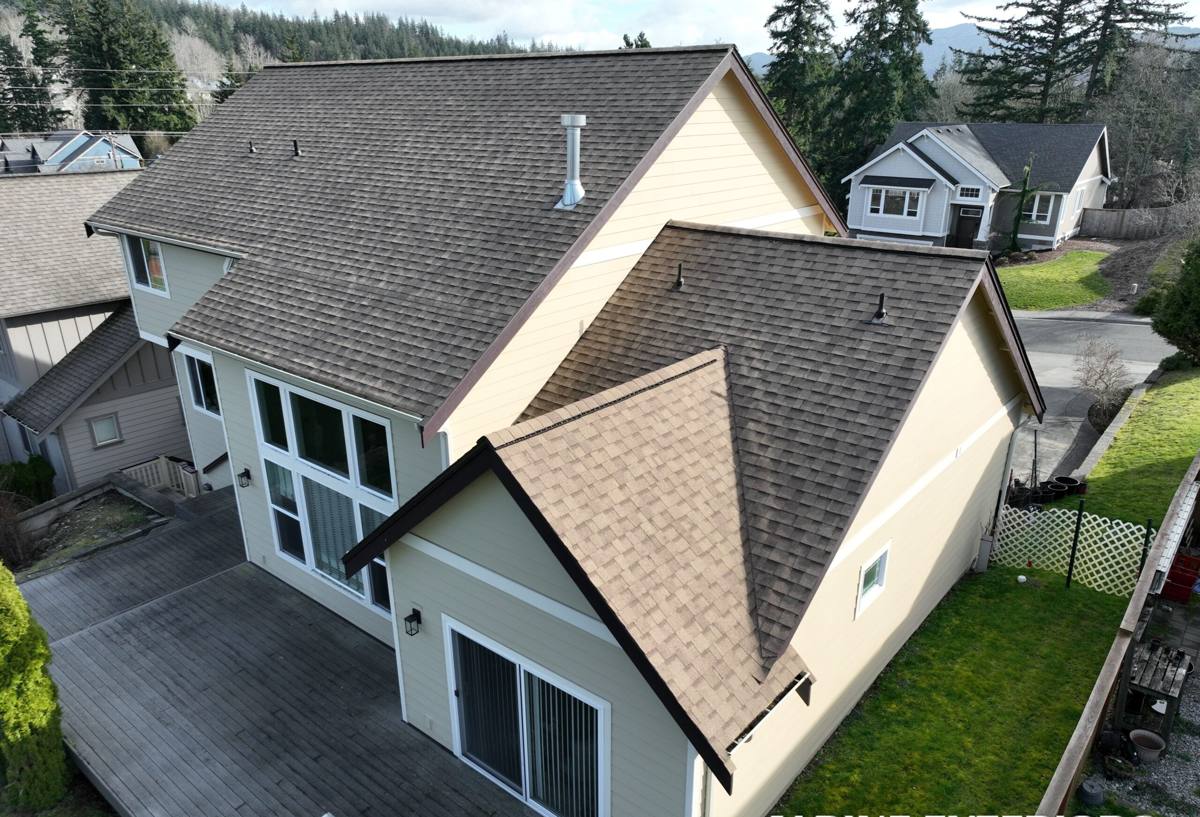
What Salt Air, Rain, and Moss Actually Do to Windows
These aren't abstract climate notes — each one causes a specific, predictable kind of window failure, and knowing which one you're dealing with helps explain why a repair keeps coming back.
Salt Air and Corrosion
Airborne salt settles on hardware, screens, and metal components and speeds up corrosion compared to a non-coastal home. Aluminum cranks, spring balances, and lesser-grade fasteners are usually the first things to show pitting or seizing. Vinyl and fiberglass frames don't corrode, but the metal hardware inside any window — locks, hinges, balance systems — is still exposed, so hardware quality matters more here than it would inland.
Driving Rain and Water Intrusion
Storms coming off open water don't just fall straight down — they drive rain sideways into a wall assembly under wind pressure. A window that's watertight in a light rain can still leak in a wind-driven storm if the flashing and sill pan weren't detailed to handle that pressure. This is the single biggest cause of hidden rot we find behind older window openings on exposed sites.
Extended Moss and Mold Season
Persistent dampness plus shade from trees or north-facing walls means moss and algae get a long head start here and often never fully dry out between rain events. On wood trim and sills, that constant moisture feeds rot even where the window unit itself is fine. It also means caulk and sealant joints break down faster, so a window that was properly sealed five years ago may already need attention.
What a Correct Replacement Job Involves
A window replacement is a water-management job first and a glass-and-frame job second. Getting the visible parts right while skipping the parts you can't see is how call-backs happen.
Flashing and the Sill Pan
Before a new window goes in, the rough opening needs a sloped sill pan and properly lapped flashing tape so any water that does get past the window sheds outward, not into the wall. On an exposed coastal opening, this step matters more, not less — it's the difference between a window that sheds a wind-driven storm and one that lets water track behind the siding.
Frame Material and Hardware Selection
We match the frame material and hardware grade to the exposure of that specific opening. A window on a sheltered, protected wall doesn't need the same spec as one facing open water. Marine-grade or corrosion-resistant hardware costs a little more up front and is worth it on exposed elevations.
Sealant and Glazing Details
The sealant used around the exterior perimeter needs to stay flexible through freeze-thaw cycles and constant damp without cracking or pulling away. We also check that weep holes and drainage paths in the frame itself aren't blocked by paint or debris — a common, easy-to-miss cause of interior fogging and sill staining.
Choosing Window Materials for Island Exposure
There's no single "best" window material — the right choice depends on the wall's exposure, your maintenance preferences, and budget. Here's how the common options hold up in a salt-air, high-moisture setting.
| Material | Salt/Moisture Behavior | Maintenance | Best Use |
|---|---|---|---|
| Vinyl | Won't corrode or rot; performs well in coastal exposure | Low — occasional cleaning | Most island homes, especially exposed walls |
| Fiberglass | Excellent stability and moisture resistance | Low | High-exposure walls, larger openings |
| Wood-clad | Exterior clad protects wood, but any breach lets moisture into the core | Higher — finish and seal upkeep | Interiors where wood look matters; needs disciplined maintenance |
| Aluminum | Prone to corrosion and condensation in marine air unless thermally broken and coated | Moderate to high | Generally not our first recommendation for direct water exposure here |
We're not against wood or aluminum outright — we're honest that they carry a higher maintenance burden and more installation sensitivity in this specific climate. If you want that look and are willing to keep up the finish, we'll install it correctly. We just want you choosing with full information, not finding out about the upkeep after year three.
Our Process for Lummi Island Projects
Working on an island isn't just "the same job, plus a ferry ride." It changes how we plan the day.
Assessment and Measurement
We start with an on-site visit to look at each opening's actual exposure — which walls take direct weather, where past water damage has shown up, and what condition the existing framing is in behind the trim. This is also when we take precise measurements, since ordering the wrong size means a delay waiting on a remake.
Materials Staging and Ferry Logistics
Because getting crew, tools, and full-size window units to and from the island depends on ferry capacity and schedule, we plan deliveries and crew trips to minimize back-and-forth. That means confirming measurements and material orders carefully up front, staging everything before the install day, and scheduling around ferry timing so the crew isn't stuck waiting on a missed sailing mid-project.
Installation Day
We remove the old unit, inspect the rough opening for hidden rot or prior water damage, repair anything compromised before the new window goes in, then flash, set, shim, and seal the new unit to spec. Any framing repair we find gets flagged and discussed with you before we close it back up — we don't cover up a problem to save a step.
Final Inspection and Cleanup
Every install gets a water-test check on the exterior seal and an operational check on the hardware before we call it done. We haul away the old units and debris — you're not left storing materials to deal with later.
Signs Your Windows Need Replacing
Not every window problem means full replacement, but on an exposed island home these signs tend to point that direction:
- Soft, spongy, or visibly rotted wood at the sill or lower frame corners
- Persistent fogging or moisture between double-pane glass (a failed seal)
- Windows that won't stay open, lock securely, or seal tight when latched
- Visible daylight or drafts around the frame even when closed
- Paint or finish that keeps failing at the same spot no matter how often it's redone
- Corroded, seized, or pitted hardware that's hard to operate
- Noticeable rise in heating costs with no other explanation
Why Hiring a Crew That Already Works on the Island Matters
Any contractor can quote a window job. Fewer are set up to actually run one efficiently once ferry logistics, exposure-specific material choices, and rough-opening surprises enter the picture. A crew unfamiliar with island scheduling can end up burning a full day's productivity on travel alone, or discover mid-job they didn't bring the right sealant or hardware for the exposure. We build ferry timing, material staging, and exposure-appropriate specs into the plan from the start, which keeps the project on schedule and keeps your costs tied to the work itself rather than logistics mistakes.
Cost Factors for Lummi Island Window Replacement
Every project is different, so we don't quote firm numbers without seeing the openings, but these are the main things that move the price up or down.
| Factor | Effect on Cost |
|---|---|
| Frame material (vinyl vs. fiberglass vs. wood-clad) | Fiberglass and wood-clad run higher than vinyl |
| Hidden rot or framing damage found at removal | Adds repair cost, discovered once the old unit is out |
| Number and size of openings | More and larger openings scale cost directly |
| Exposure level of the wall | High-exposure walls may need upgraded hardware/sealant, adding modest cost |
| Access and logistics | Ferry scheduling can affect crew days, factored into the overall bid |
We'll walk through these factors with you during the estimate so there are no surprises once the job starts.
Maintaining New Windows in a Marine Climate
A correctly installed window still benefits from a little seasonal attention out here. Rinse salt residue and grime off frames and glass a few times a year, especially after storms. Keep weep holes clear of debris and moss buildup so drainage paths stay open. Check exterior caulk lines annually for cracking or separation and have any gaps resealed before they let water behind the trim. And keep an eye on nearby vegetation — trimming back growth that shades a wall helps it dry out faster between rains, which goes a long way toward keeping moss and mold from getting a foothold again.
If you're dealing with drafty, foggy, or rot-prone windows on your Lummi Island home, we'd be glad to take a look. Reach out for a free, no-pressure estimate using the form below.