 Birch Bay Window
 Marietta's Windows Work Harder Than Most
Marietta sits close enough to the water that its homes take a different kind of weathering than houses even a few miles inland in Whatcom County. Salt-laden air off the bay, wind-driven rain, and long stretches of damp, low-sun winter all push on a window system at the same time. A window that performs fine in a drier, more sheltered part of the county can still underperform here — not because it's a bad product, but because it wasn't matched to this specific exposure. When we talk about "energy-efficient windows" for a Marietta home, we're not just talking about a U-factor on a label. We're talking about a whole system — frame material, glass package, flashing, and sealant — chosen and installed to hold up against what this particular stretch of Birch Bay throws at a house year-round.
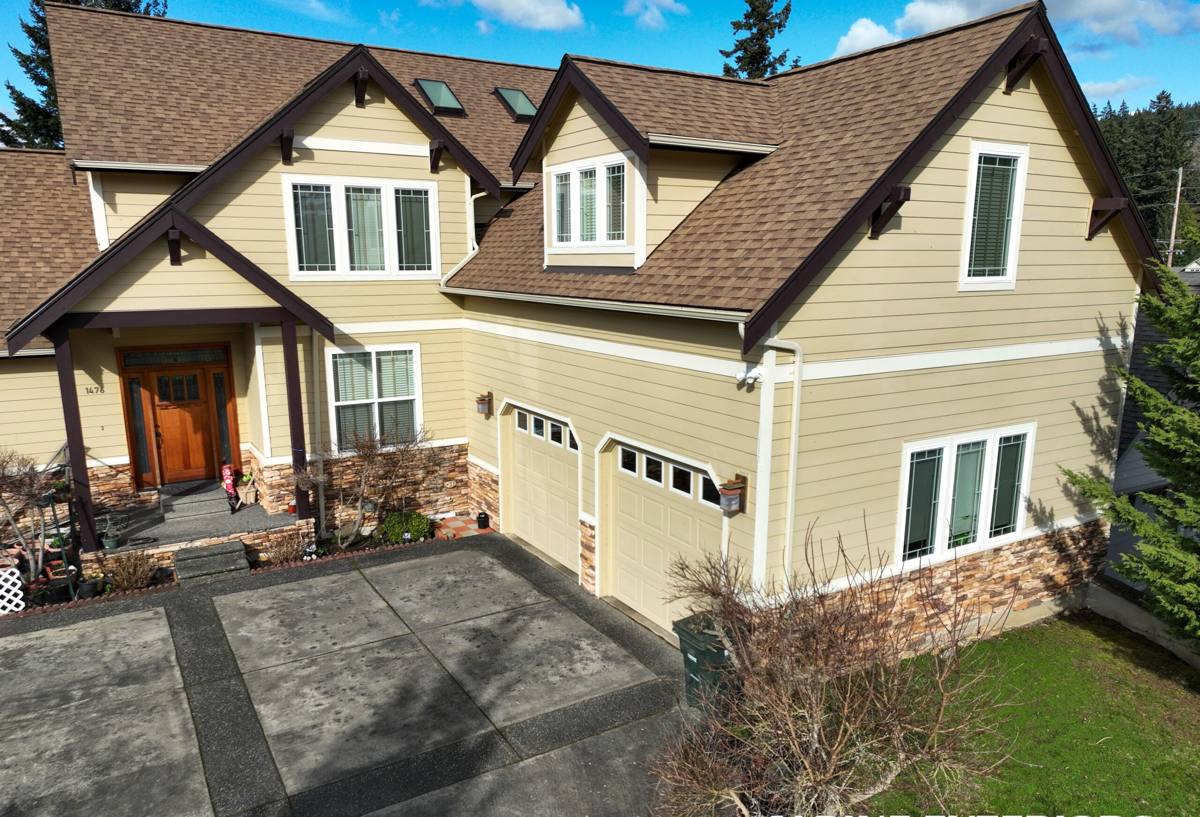
What Birch Bay's Marine Climate Does to Windows Over Time
Three things drive most of the window problems we see in this area, and they compound each other.
Salt air. Airborne salt accelerates corrosion on hardware, fasteners, and lower-grade metal components. It also breaks down certain sealants and finishes faster than a standard manufacturer warranty assumes, especially on windows facing the water or prevailing wind.
Driving rain. Wind off the Strait pushes rain sideways into a home's exterior, not just straight down. Any weakness in flashing, sill pan design, or perimeter sealant becomes a path for water intrusion. This is less forgiving than the vertical rainfall a window might handle fine in a calmer climate.
Moss season. Extended damp, shaded periods let moss and algae take hold on trim, sills, and anywhere water sits instead of shedding. Beyond the cosmetic issue, moss holds moisture against wood trim and cladding, which shortens the life of anything not properly detailed to shed water away from the building.
None of these are exotic problems — they're just the normal cost of living near the water in Whatcom County. The fix isn't a miracle product; it's choosing materials and installation details that are actually suited to this environment, rather than a generic spec sheet.
What "Energy-Efficient" Should Mean for a Marietta House
Energy efficiency in a window comes from several things working together: the glass package, the frame material, the spacer between panes, and how tightly the whole unit is sealed into the rough opening. A high-performance glass package installed with a poor seal will still leak air and, eventually, water. We look at the whole assembly, not just the glass rating.
| Factor | Why It Matters Near the Water | What We Look For |
|---|---|---|
| Frame material | Salt air and constant damp stress joints and finishes | Corrosion-resistant hardware, stable frame material, factory finish rated for coastal exposure |
| Glass package | Marine layer and overcast winters mean less solar gain to rely on | Low-E coating tuned for our climate, insulated (often dual or triple pane) glazing |
| Spacer system | Cheap spacers fail faster under repeated damp/dry and temperature swings | A warm-edge spacer designed to resist seal failure over time |
| Installation seal | Wind-driven rain finds any gap in flashing or sealant | Proper sill pan flashing, correct sealant type, tested fastening pattern |
| Drainage detailing | Water that gets past the primary seal needs somewhere to go | Weep paths kept clear, sill sloped correctly, no trapped moisture pockets |
The honest answer on frame material is that there's no single "best" choice for every home — vinyl, fiberglass, and clad-wood all have a place, and each comes with different maintenance expectations, cost, and appearance trade-offs. We'll walk through what fits your home's exposure and your budget rather than pushing one product for every job.
What a Correct Installation Actually Involves
Removal and Inspection
Before any new window goes in, we remove the old unit and inspect the rough opening. This is where a lot of hidden problems in older Marietta homes show up — soft framing, old flashing that was never properly lapped, or trim that's been holding moisture for years. We flag anything that needs repair before proceeding, rather than sealing a new window over a compromised opening.
Flashing and Water Management
Given how much of our regional water damage comes from wind-driven rain rather than straight-down rainfall, flashing sequence matters as much as the window itself. A sill pan and properly lapped flashing (water-resistive barrier over the top flange, never under it) directs water back out instead of into the wall cavity.
Sealing and Insulation
The gap between the window frame and the rough opening gets insulated and air-sealed — not just caulked on the outside. A window can look perfectly sealed from the street and still be leaking air or trapping moisture inside the wall if this step is rushed.
Frame, Glass, and Hardware Selection
Based on the home's exposure — how close to open water, how much direct wind, how much shade and moss risk — we recommend a frame and glass combination suited to that specific exposure rather than a one-size spec.
Our Process, Start to Finish
- On-site assessment — we look at each window's current condition, exposure, and any signs of past water intrusion or moss buildup.
- Honest recommendation — we explain the trade-offs between frame and glass options for your specific home, in plain terms, including where a lower-cost option is genuinely fine and where it isn't.
- Written estimate — a clear scope and price before any work starts, no surprise add-ons once the job is underway.
- Removal and opening prep — old units come out, framing is inspected and repaired as needed.
- Flashing and installation — proper water management sequence, correct fastening, and air-sealing per the window manufacturer's specification.
- Final walkthrough — we check operation, sealant lines, and finish work with you before calling the job done.
Signs Your Windows Are Already Costing You
Homeowners in Marietta often live with early warning signs for years before addressing them, mostly because none of them seem urgent on their own.
- Visible fogging or moisture between panes (a failed seal on insulated glass)
- Cold drafts near the frame even when the window is fully latched
- Sills or trim that stay damp or grow moss well after rain has stopped
- Difficulty opening, closing, or locking due to swollen or warped frames
- Visible corrosion or staining on hardware and hinges
- A noticeable jump in heating costs during winter months without another clear cause
- Soft or discolored drywall/trim near a window, which can indicate water getting past the seal
Any one of these on its own isn't an emergency, but they tend to compound. A failed seal that lets in cold air this winter is often the same weak point that lets in water next storm season.
Why Working With a Crew That Knows Marietta Matters
A window installer who mostly works drier, more sheltered parts of Whatcom County isn't wrong about windows in general — they're just working from a different baseline. Details that are optional inland, like sill pan flashing or salt-resistant hardware, aren't optional for a home exposed to Birch Bay's wind and salt air. Knowing which homes in this area tend to need extra attention at the sill, which exposures shed moss fastest, and how the local weather pattern actually behaves through the fall and winter changes how a job gets scoped and installed. That local pattern recognition is something you only get from doing the work here repeatedly, not from a general spec sheet.
Maintenance That Actually Extends Window Life Here
Even a correctly installed, well-matched window benefits from a bit of seasonal attention in this climate. Rinsing accumulated salt residue off frames and glass periodically helps slow corrosion and finish breakdown, particularly on windows facing open water or prevailing wind. Keeping weep holes and drainage paths clear of debris, moss, and dirt prevents water from backing up where it shouldn't sit. A quick visual check of exterior sealant lines once a year — looking for cracking, gaps, or separation — catches small issues while they're still a five-minute fix instead of a wall repair. None of this is complicated, but skipping it is how a good installation ends up with an avoidable problem five or ten years down the road.
Getting This Right the First Time
Windows are one of the few home improvements where doing it wrong doesn't just mean redoing it later — a poor seal or bad flashing detail can cause hidden damage well before the problem becomes visible. That's especially true in an environment like Marietta's, where wind-driven rain and salt air don't give a marginal installation much room for error. Getting the flashing sequence, sealing, and product selection right the first time costs less in the long run than fixing water damage after the fact.
If you're weighing whether your current windows are still doing their job, or you're planning ahead for a home in Marietta, we're happy to take a look and give you a straightforward assessment — no pressure, no hard sell. Use the form below to request a free estimate, and we'll walk you through what your home actually needs.