 Birch Bay Window
 Metal Roofing Built for Marietta's Coastal Conditions
Marietta sits close enough to the water that salt air is part of daily life, not an occasional nuisance. Add Whatcom County's long wet season, frequent driving rain off the Strait, and the deep shade that keeps north-facing slopes damp for weeks at a time, and you have a roofing environment that punishes shortcuts. A metal roof installed correctly for this specific stretch of coastline can outlast two or three asphalt roofs. A metal roof installed with the wrong fasteners, the wrong underlayment, or careless flashing details can fail in ways that are expensive to fix and sometimes hard to even diagnose until water is already inside the wall.
This page is about what a correct metal roofing job looks like for a Marietta home specifically — not a generic overview of metal roofing everywhere. If you're weighing a new roof, a re-roof, or you inherited a metal roof with an install you're not sure about, this is the detail that actually matters here.
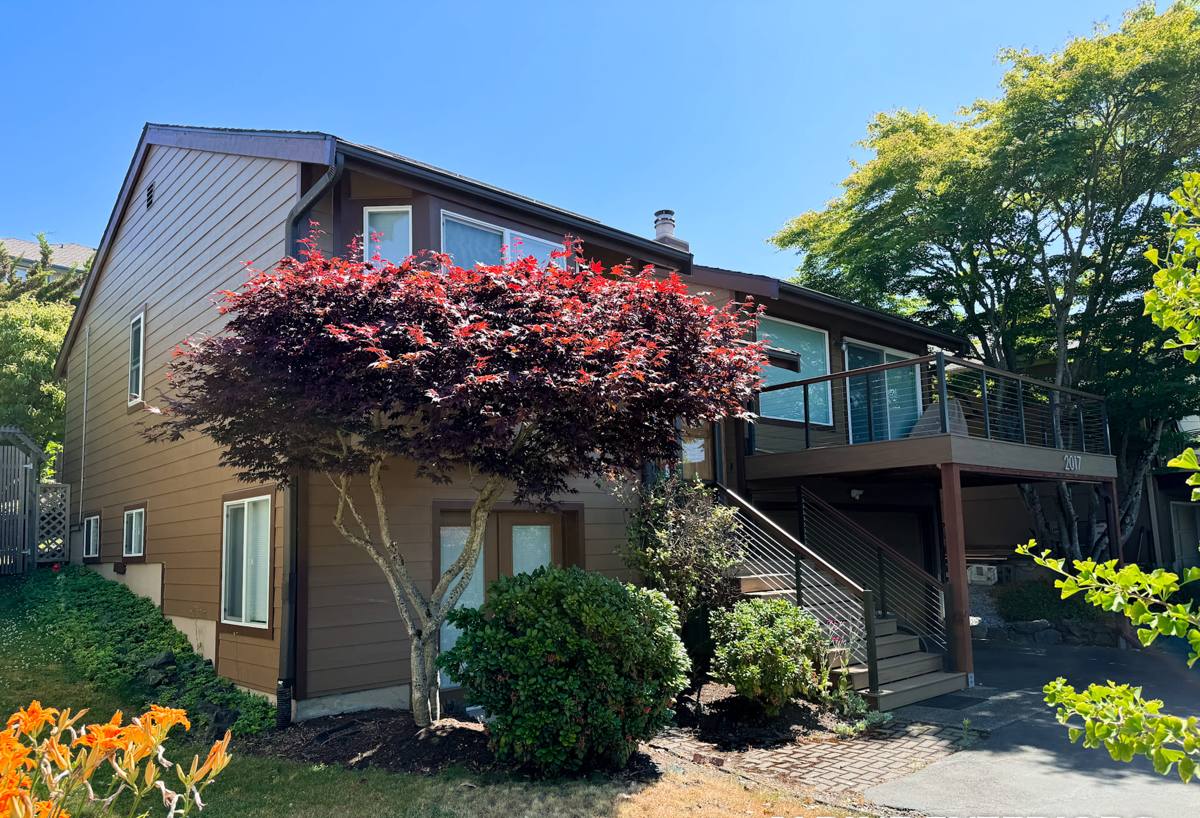
What Marietta's Climate Actually Does to a Roof
Salt Air and Corrosion
Being close to Drayton Harbor and the open water means airborne salt is a constant, low-level factor on every exposed metal surface — fasteners, flashing, panel edges, and any exposed cut ends. Salt doesn't need a storm to do damage; it works quietly, year-round, on anything that isn't rated for a marine or near-marine environment. Standard interior-grade hardware and mismatched metals corrode faster here than they would twenty miles inland, and once corrosion starts at a fastener head or a cut edge, it spreads.
Driving Rain
Rain in this part of Whatcom County rarely falls straight down. Wind off the water pushes it sideways and up under laps, at ridge caps, and around any penetration — vent pipes, skylights, chimneys. A roof system that only handles vertical rain well will leak here eventually. The details that stop wind-driven rain (lap direction, sealant placement, underlayment overlap) matter more in Marietta than they would in a calmer inland location.
Moss and Sustained Moisture
Shaded, north-facing slopes and roofs under overhanging trees stay damp for extended stretches through fall, winter, and spring. That's exactly the environment moss and algae need to take hold. On asphalt shingles, moss lifts the mat and holds water against the roof. On metal, the risk is different — trapped moisture and organic debris in valleys, behind snow guards, or in poorly ventilated ridge details, held against the panel finish or fastener long enough to start corrosion or finish breakdown.
What a Correct Metal Roof Install Involves Here
A metal roof is only as good as the assembly underneath it. For Marietta homes, we treat the following as non-negotiable, not upgrades:
- Corrosion-appropriate fasteners and flashing metals matched to the panel material, so you don't get galvanic corrosion between dissimilar metals
- A full underlayment system rated for high-wind, wind-driven rain exposure — not just a basic felt layer
- Ice-and-water shield or equivalent self-adhered membrane at eaves, valleys, and all penetrations, where wind-driven rain is most likely to work its way underneath
- Properly lapped and sealed ridge, hip, and rake details, oriented and sequenced so prevailing wind can't drive water up under a seam
- Ventilation that lets the roof deck dry out between wet stretches, rather than trapping moisture against the underside of the panels
- Panel and trim seams sized and sealed for the specific wind exposure of the site, not a one-size-fits-all spec
None of this is exotic. It's standard, well-understood roofing practice — the difference is whether it's actually followed on every square foot, or skipped where it's least visible.
Choosing a Metal Roofing System for This Area
There are a few common metal roofing approaches, and the right one depends on your roof's pitch, exposure, and how the home is used. Here's how they generally compare for a coastal Whatcom County property:
| System | Best For | Coastal Considerations |
|---|---|---|
| Standing seam (concealed fastener) | Most Marietta homes, especially higher-wind or fully exposed sites | No exposed fastener heads to corrode; seams can be engineered for high wind uplift; higher upfront cost, longest expected service life |
| Exposed-fastener metal panels | Budget-conscious re-roofs, secondary structures, sheltered sites | Fastener washers age faster in salt air and need periodic inspection; lower upfront cost but more long-term maintenance |
| Metal shingles or shakes | Homes wanting a traditional look with metal's durability | More seams and laps than standing seam, so flashing detail at valleys and penetrations is critical near the water |
We'll walk through which of these fits your specific roof rather than defaulting to one system for every job — pitch, tree cover, sun exposure, and how exposed the site is to wind off the water all factor in.
Coatings, Metals, and What We Recommend Skipping
Not every metal roofing product sold in this region is a good fit for a salt-air environment. Galvalume and quality painted steel systems with a proper coating (like a PVDF-based finish) hold up well against coastal salt exposure over the long run. Bare or lightly coated galvanized steel, and some lower-grade painted finishes, tend to show chalking, fading, and eventually surface corrosion faster this close to the water — not because the metal is defective, but because it wasn't built with a marine-adjacent environment in mind.
Our standard is to spec materials and finishes rated for the exposure your specific roof actually faces, and to be upfront when a cheaper option will cost you more in five years than it saves you today. That's a maintenance and longevity conversation, not a sales pitch — we'd rather you know the trade-offs before you decide.
Repair, Re-Roof, or Full Replacement?
Not every metal roof problem in Marietta means a full tear-off. We generally see three situations:
- Isolated repair — a single flashing detail failed, a fastener line is corroding, or a valley is holding debris and needs to be cleared and resealed. Often fixable without touching the rest of the roof.
- Partial re-roof — one slope (usually the most shaded, wettest-staying side) is showing wear well ahead of the rest of the roof and needs attention before the whole system is due.
- Full replacement — widespread corrosion at fasteners or seams, underlayment failure, or an original install that skipped the details above. At that point, patching just delays a bigger bill.
We'll tell you honestly which category your roof falls into. If it's a repair, we'll say so — a full replacement isn't the answer to every roof problem.
How We Approach a Marietta Metal Roofing Job
1. On-Site Assessment
We look at the whole roof, not just the area you're worried about — pitch, tree cover, exposure to prevailing wind and rain, existing flashing condition, ventilation, and any signs of moisture already working its way in.
2. Straight Answer on Scope
You get a clear read on whether you're looking at a repair, a partial re-roof, or a full replacement, along with the reasoning behind that call — not just a number.
3. System and Material Selection
We recommend a system and finish matched to your roof's actual exposure, and walk through the cost and longevity trade-offs so you're deciding with full information.
4. Installation With Coastal Detailing
Every flashing point, lap, ridge, and penetration gets built for wind-driven rain and salt exposure — the details covered above aren't optional add-ons in our process, they're the baseline.
5. Walkthrough and Follow-Up
We go over the finished work with you and make sure you know what routine maintenance (if any) the system needs going forward — debris clearing in valleys, checking fastener lines on exposed-fastener systems, that kind of thing.
A Homeowner's Pre-Winter Checklist
Whether your roof is new or has a few years on it, this is worth checking before the wet season sets in:
- Valleys and low points clear of needles, leaves, and moss growth
- No visible rust streaking at fastener heads or panel seams
- Flashing at chimneys, vents, and skylights sitting flat and fully sealed
- Gutters and downspouts clear, so water isn't backing up under the roof edge
- No sagging or soft spots visible from the ground near valleys or eaves
- Attic or roof deck free of musty smell or visible moisture staining
If any of these raise a question, it's worth having someone look before winter rain, not after a leak shows up on a ceiling.
Why It Matters That We Work Marietta Regularly
A roofing crew that mostly works drier, inland areas can install a technically correct roof and still miss the details that matter specifically for a site exposed to salt air and wind-driven rain off the water. Knowing which slopes in this area tend to stay damp longest, which fastener and flashing choices actually hold up here, and how to sequence an install around Whatcom County's wet-season weather windows comes from doing this work in this specific area repeatedly — not from a general roofing manual.
If you're considering a metal roof for your Marietta home, or you want an honest read on a roof that's already up there, we're happy to take a look. Reach out for a free, no-pressure estimate using the form below — we'll walk the roof, tell you what we see, and give you a straight answer on what it needs.