 Birch Bay Window
 Metal Roofing Built for Custer's Coastal Climate
Custer sits close enough to the water that homes here deal with a specific mix of weather most inland Whatcom County roofs never see: salt-laden air rolling off Birch Bay and the Strait of Georgia, long stretches of driving rain, and a moss season that can run nine months out of the year. A roof that would hold up fine in Bellingham's east side or out past Lynden doesn't always perform the same way a few miles from the shoreline. Metal roofing, installed correctly for this specific environment, is one of the better long-term answers we install in this area — but "correctly" is doing a lot of work in that sentence, and it's worth understanding why before you commit to a system or a contractor.
This page is about metal roofing specifically for Custer properties, not a generic rundown of metal roofing in general. The fastener choices, coating specs, and detailing that make sense on a dry-side roof aren't always the right call this close to salt water.
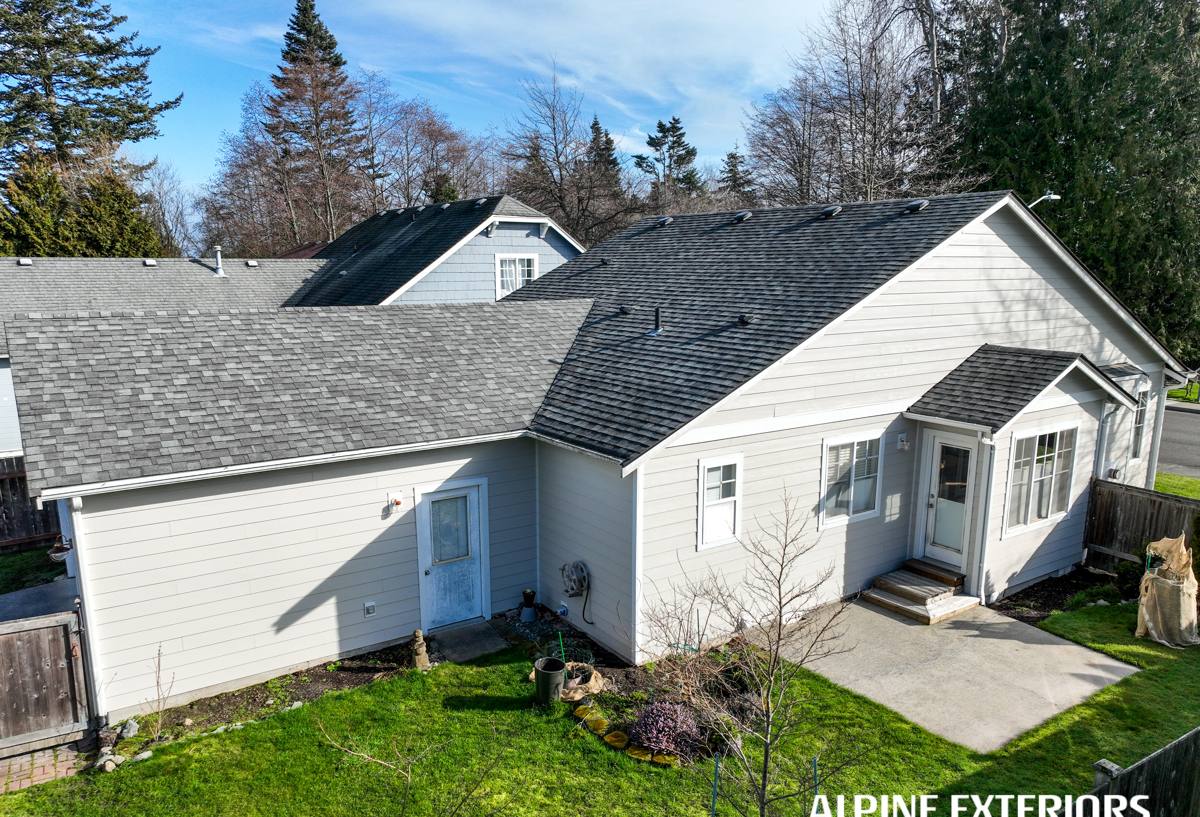
What Salt Air, Rain, and Moss Actually Do to a Roof
Each of these three factors stresses a roof in a different way, and Custer homes get all three at once.
Salt Air
Airborne salt accelerates corrosion on any exposed metal — fasteners, flashing, gutters, and the roofing panels themselves if the coating or metal grade isn't suited for it. On a standard roof, this shows up first at cut edges, screw heads, and anywhere the protective finish has been scratched during installation. It's slow and easy to ignore for years, right up until a fastener starts weeping rust down a panel seam.
Driving Rain
Wind-driven rain doesn't just fall on a roof, it pushes sideways and upward under laps, around penetrations, and into any gap a fastener pattern or flashing detail leaves open. A roof that's watertight in a straight-down rain can still leak in a Whatcom County wind-and-rain event if the underlayment, laps, and flashing weren't detailed for wind-driven water specifically.
Moss and Constant Moisture
Moss needs shade, moisture, and organic debris to get started, and Custer's tree cover and damp season give it all three. On composition shingles, moss roots into the granule surface and lifts shingles over time. On a properly installed metal roof, moss has almost nothing to hold onto — but debris still builds up in valleys and against any obstruction, and that debris holds moisture against the panel longer than it should.
Choosing the Right Metal Roofing System for This Area
Not every metal roofing product handles salt air and standing moisture the same way. We steer Custer homeowners toward systems and finishes that are built for coastal exposure rather than the cheapest option that happens to be labeled "metal roofing."
| System | How it Handles Salt/Moisture | Best Fit |
|---|---|---|
| Standing seam (concealed fastener) | No exposed screw heads through the panel field — the most corrosion-resistant fastening approach for coastal air | Full roof replacements, homes closest to the water |
| Exposed-fastener panel | Relies on gasketed screws that can loosen or corrode faster in salt air over time | Outbuildings, budget-driven projects, less exposed sites |
| Stone-coated steel | Heavier coating adds a layer of protection but seams and cut edges still need careful detailing | Homeowners wanting a shingle-like profile with metal's durability |
Coating and metal grade matter as much as the panel style. We favor coatings rated for coastal or marine exposure and fastener hardware matched to the panel metal, since mismatched metals in a wet, salty environment corrode faster through galvanic reaction. This is a detail that's invisible on install day and expensive to ignore later.
What a Correct Metal Roof Installation Actually Involves
Metal roofing rewards a careful installation and punishes a rushed one more than most roofing materials do, because a small mistake in flashing or fastening doesn't show up as a leak right away — it shows up as one two or three winters later.
- Full tear-off and deck inspection — metal goes over a sound, dry deck, not over existing rot or soft sheathing
- High-quality synthetic or self-adhered underlayment as the real waterproofing layer, sized for wind-driven rain exposure
- Proper panel overlap and seam direction relative to prevailing wind and water flow
- Fasteners and clips matched to the panel material to avoid galvanic corrosion
- Correctly formed flashing at every valley, wall intersection, chimney, and vent penetration
- Attic and roof ventilation checked and corrected, since trapped moisture underneath a metal roof causes problems the panel itself never will
- Ice-and-water shield or equivalent protection at eaves and valleys, where debris and standing water collect most
Every one of those items is a normal part of a well-run metal roof install anywhere. The difference in Custer is how little margin for error the salt air and rain leave — a flashing detail that's "close enough" inland tends to get tested harder here.
Our Process, From First Look to Final Cleanup
We keep the process straightforward because most homeowners just want to know what's happening and when.
1. On-Site Assessment
We walk the roof, check the deck and ventilation, and look at how exposed the home is to wind and salt air off the water. This tells us which system and coating make sense for that specific site.
2. Straight Written Estimate
You get a written scope and price before any work starts — what panel system, what underlayment, what flashing work is included, and what isn't. No pressure, no scare tactics.
3. Tear-Off and Deck Prep
We remove the old roofing, inspect the deck, and replace any damaged sheathing before anything new goes down. Metal roofing installed over a compromised deck fails early no matter how good the panels are.
4. Installation
Underlayment, flashing, and panels go in with the fastening and lap details suited to a coastal, high-rainfall site — not a generic install template.
5. Walkthrough and Cleanup
We walk the finished roof with you, cover maintenance basics specific to your system, and make sure the site is cleared of debris and old material before we leave.
Maintenance: What Custer Homeowners Should Actually Expect
One of the honest selling points of metal roofing is how little maintenance it needs compared to shingles — but "little" isn't "none," especially in this climate.
- Clear valleys and gutters of needles and leaf debris at least twice a year — this area's tree cover fills them faster than drier parts of the county
- Rinse accumulated grime or salt residue off the roof surface periodically if the home is close to the water
- Have flashing and sealant at penetrations checked every few years, since sealant ages faster than the metal itself
- Watch for any surface scratches from fallen branches or foot traffic and touch up the coating promptly to prevent a corrosion starting point
- Confirm attic ventilation is still working as intended — blocked vents lead to condensation issues under any roofing material, metal included
What Drives the Cost of a Metal Roof in This Area
| Factor | Why It Matters Here |
|---|---|
| Panel system chosen | Standing seam runs higher than exposed-fastener panel but holds up better against salt air over the long run |
| Roof complexity | Valleys, dormers, and multiple roof planes add flashing labor, which is where most leaks originate if rushed |
| Deck condition | Rot or soft sheathing found during tear-off adds repair cost but is far cheaper to fix now than after panels are on |
| Coating/finish grade | Marine-grade coatings cost more up front and cost less in premature corrosion repairs later |
| Access and pitch | Steeper roofs and tight lot access affect labor time and staging |
We give a broad range during the initial conversation and a firm number after the on-site assessment — every roof and every lot is different enough that a phone quote isn't a responsible number to give you.
Why It Matters That We Already Work in Custer
A roofing crew that mostly works drier, inland parts of Whatcom County isn't necessarily going to default to coastal-grade fasteners, marine-rated coatings, or flashing details sized for wind-driven rain — because most of their work doesn't demand it. Working Custer and the Birch Bay area regularly means those choices are the default for us, not an upsell or an afterthought. We've seen how salt air and long moss seasons age a roof in this specific pocket of the county, and we build the install to account for it from the first estimate rather than reacting to a problem five years in.
Ready for a Straight Answer on Your Roof?
If you're weighing metal roofing for a Custer home, we're happy to take a look, walk you through what your specific roof needs, and give you an honest, no-pressure estimate — no scare tactics, no upsell script. Use the form below to get started.