 Birch Bay Window
 Roofing in California Creek Comes With Its Own Set of Problems
California Creek sits close enough to the water that homes here deal with a different roofing environment than you'd find further inland in Whatcom County. Salt-laden air moves in off the bay, wind-driven rain finds its way under anything that isn't properly flashed, and the shaded, damp conditions that stick around much of the year give moss a long season to work with. None of that is dramatic on its own, but stacked together over ten or fifteen years, it wears roofs out faster than the manufacturer's warranty numbers suggest.
A new roof installation here isn't just about swapping old shingles for new ones. It's about building an assembly that accounts for the specific way this stretch of Whatcom County beats up a roof — moisture from below and above, corrosion at every metal component, and organic growth that holds water against the surface long after a storm has passed.
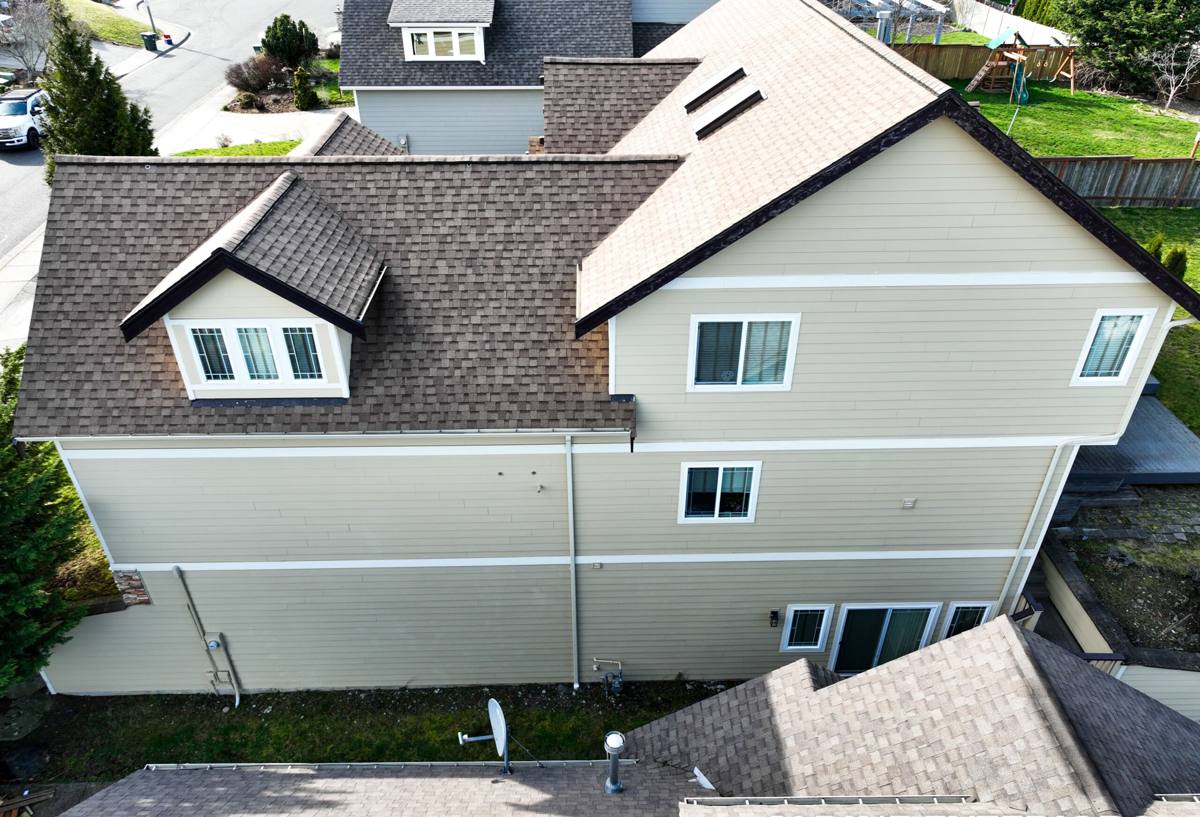
Signs a California Creek Roof Is Due for Replacement, Not Another Repair
We get calls every year from homeowners who've patched the same problem two or three times and are ready to stop throwing money at it. Some signs point clearly toward full replacement instead of another repair:
- Granule loss heavy enough that you're finding grit in the gutters every time you clean them
- Moss established in the shaded, north-facing slopes that keeps returning within a season of cleaning
- Soft or spongy decking felt underfoot during an inspection, usually near valleys or eaves
- Daylight visible through the attic sheathing, or consistent staining on the underside of the roof deck
- Shingles curling, cracking, or lifting at the edges, especially on the sides that catch the prevailing wind and rain
- A roof original to the house and now past 20-25 years old, regardless of how it looks from the ground
If a roof is only showing one or two isolated problem areas and the rest of the field is sound, targeted repair can still make sense. Replacement becomes the honest answer once the underlayment and decking are compromised in more than a few spots, because at that point you're paying repair labor rates to fix a roof that's already past its useful life underneath.
What a Correct Installation Actually Involves
A roof is a system, not a single layer of material. Skipping or shortcutting any one part of it is usually where the leaks that show up two winters later come from.
Tear-Off and Deck Inspection
We remove the old roofing down to the deck rather than layering over it. That's the only way to actually see what condition the sheathing is in — soft, delaminated, or water-stained plywood needs to be replaced before anything new goes down, and that's not something you can responsibly skip in a marine climate like this.
Underlayment
Given the amount of wind-driven rain California Creek sees, we use synthetic underlayment across the field and self-adhered ice-and-water membrane at the eaves, valleys, and any low-slope transitions. This is the layer that keeps the house dry if wind ever pushes rain up under the shingles, which happens more often here than in more sheltered inland areas.
Flashing
Flashing failure is the single most common cause of the leaks we get called out to fix. Chimneys, skylights, sidewall intersections, and vent penetrations all need properly formed, corrosion-resistant flashing — not just a bead of sealant over the old piece. Salt air accelerates corrosion on lower-grade metal flashing, so material choice here matters more than it would twenty miles inland.
Ventilation
Balanced intake and exhaust ventilation keeps the attic dry and temperature-regulated, which does two things: it protects the decking from condensation-driven rot, and it slows the moss and algae growth that thrives on a roof holding onto trapped moisture.
Field Material
The shingles, panels, or shakes themselves are the last thing installed and the first thing people notice — but they're only as good as everything underneath them.
Roofing Material Options for a Coastal Whatcom County Home
There isn't one right answer for every house. The table below reflects how each option actually performs under salt air, driving rain, and moss pressure, not just its price tag.
| Material | Coastal/Moss Performance | Maintenance | Typical Lifespan |
|---|---|---|---|
| Architectural asphalt shingle | Good with algae-resistant granules; moderate moss risk on shaded slopes | Periodic moss/debris removal recommended | 25-30 years |
| Standing seam metal | Excellent shedding of moisture and moss; needs corrosion-resistant fasteners and coatings near salt air | Low; occasional fastener and seam checks | 40-50+ years |
| Cedar shake | Attractive but holds moisture longer, higher moss and rot risk in shaded, damp areas | Higher; regular treatment and moss control needed | 20-30 years with upkeep |
| Composite/synthetic shake | Good moisture resistance without cedar's rot vulnerability | Low to moderate | 30-50 years |
We'll walk through the trade-offs for your specific roof pitch, sun exposure, and budget rather than pushing one product across every job — a heavily shaded lot near the creek and a sun-exposed lot a quarter mile away can reasonably end up with different recommendations.
How Our Installation Process Works
- On-site assessment — we inspect the existing roof, decking condition, ventilation, and flashing details, and take measurements for an accurate estimate
- Written proposal — material options, scope of work, and pricing laid out plainly, with no vague allowances hiding in the fine print
- Scheduling around weather — we plan installs to avoid leaving a torn-off roof exposed to an incoming system off the water
- Tear-off and deck repair — old material removed, decking inspected and replaced where needed
- Underlayment and flashing installation — ice-and-water membrane at vulnerable areas, new flashing at every penetration and transition
- Field material installation — shingles, panels, or shakes installed to manufacturer specification, not shortcuts
- Ventilation check — intake and exhaust confirmed balanced before we close out the job
- Final walkthrough and cleanup — job site cleared, magnetic sweep for stray fasteners, and a walkthrough of the finished roof with you
Ventilation and Moisture: Why It Matters More Here
California Creek's tree cover and proximity to the water mean roofs here often stay damp longer after a rain than roofs on more open, sun-exposed lots. That extended damp period is exactly what moss and algae need to establish. Good ventilation doesn't eliminate moss risk entirely, but it dries the roof deck out faster and reduces the conditions that let growth take hold in the first place. Combined with algae-resistant shingle granules or a naturally moss-resistant material like metal, it's the most effective long-term defense — far more effective than periodic cleaning alone, which treats the symptom rather than the cause.
What Affects the Cost of a New Roof
| Factor | Why It Matters |
|---|---|
| Roof size and pitch | Steeper roofs take longer to work safely and use more material per square |
| Decking condition | Rotted or delaminated sheathing found during tear-off adds material and labor |
| Number of penetrations | Each chimney, skylight, and vent needs its own properly formed flashing |
| Material selection | Asphalt, metal, and shake sit at very different price points and labor requirements |
| Access and site conditions | Tree cover, tight lots, or difficult staging areas near the creek can affect labor time |
We won't quote a firm number without seeing the roof, but we'll give you a realistic range up front and explain what could move it, rather than surprising you with change orders once the tear-off is underway.
Why It Matters That We Already Work in California Creek
A crew that's replaced roofs elsewhere in Whatcom County but hasn't worked this specific stretch of coastline can still do competent work — but there's real value in knowing, before we ever climb a ladder, how a particular pocket of California Creek tends to behave: which slopes hold moss longest, where the wind off the bay hits hardest, and which flashing details tend to fail first on homes of a certain age in this area. That local pattern recognition doesn't replace a proper inspection, but it does mean we're not guessing at problems specific to this coastal environment for the first time on your roof.
Get a Straightforward Estimate
If your roof is showing its age or you just want an honest read on how much life is left in it, we're happy to come take a look. The estimate is free, there's no pressure attached to it, and you'll get a clear explanation of what we see and what your options are — just fill out the form below to get started.