 Birch Bay Window
 Storm Damage in the Nooksack Area Isn't Like Storm Damage Everywhere Else
When a windstorm rolls through Whatcom County, the damage it leaves on a roof in the Nooksack area often looks different than what you'd find inland or in a drier climate. Roofs here are already dealing with salt-laden air off the Strait of Georgia, long stretches of driving rain, and a moss season that can run most of the year in shaded or north-facing sections. A storm doesn't just add new damage on top of a healthy roof — it usually exposes weaknesses that the salt air and moisture had already been working on for months or years.
That's the piece a lot of storm repair estimates miss. A crew that only shows up after big weather events, without regular experience on local roofs, tends to fix the obvious wind damage and move on. A crew that works this area routinely knows to look past the torn shingle or lifted flashing and check what the moisture and salt exposure did underneath it first.
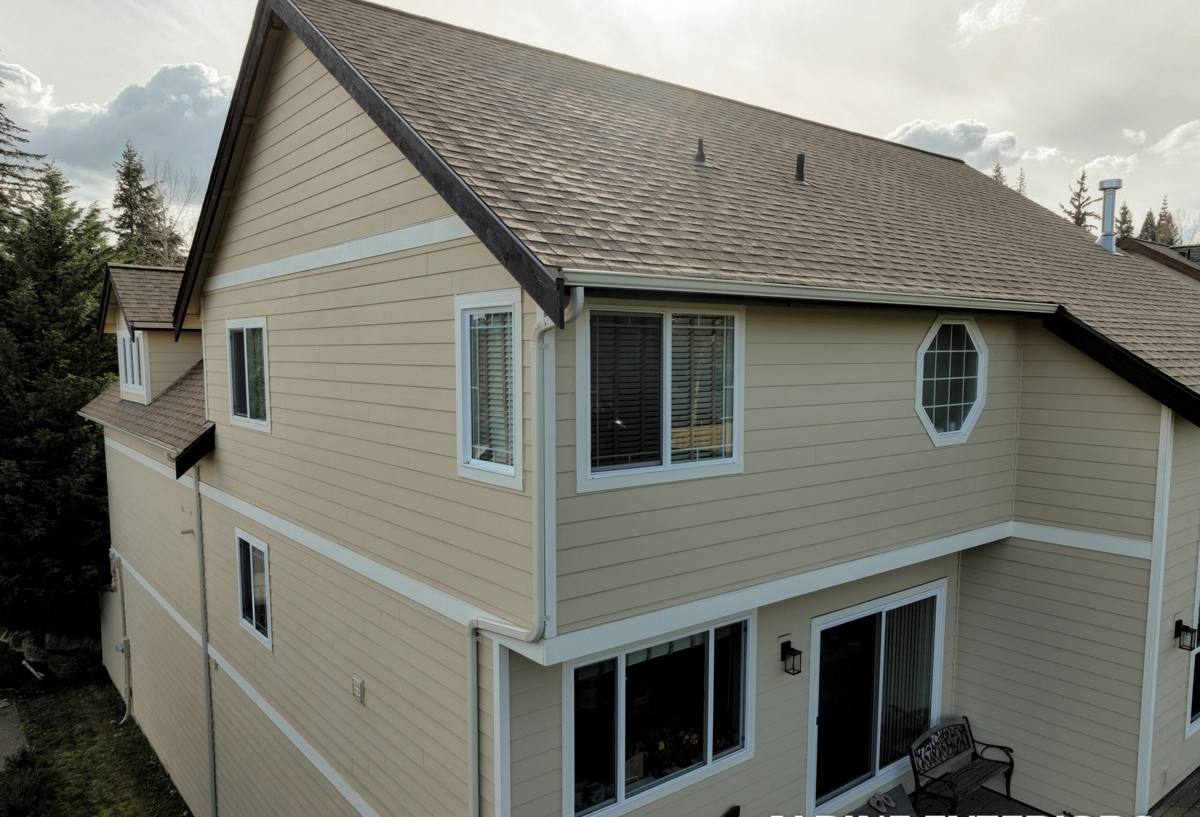
What a Correct Storm Damage Repair Actually Involves
Stabilize First
If a roof has active leaks, exposed decking, or missing shingles after a storm, the first job is stopping ongoing water intrusion — tarping, temporary flashing, or sealing exposed areas so the interior of the home isn't taking on more damage while a full repair is scheduled. This step is about preventing a roof problem from becoming a ceiling, insulation, and drywall problem.
Assess Beyond the Visible Damage
Once the roof is stable, a proper assessment covers more than the spot that's obviously torn or missing. That means checking the surrounding shingles for wind stress, examining flashing around chimneys, vents, and valleys, and looking at the decking itself for soft spots caused by moisture that had already been getting in slowly before the storm. In this climate, moss growth along shaded slopes and roof edges is a common contributor — moss holds moisture against the roofing material and can quietly compromise shingles and the decking below well before a windstorm finishes the job.
Match Materials and Reinstall Correctly
Storm repairs should use materials that match the existing roof in type, weight, and color as closely as possible, and every reinstalled section needs correct nailing patterns, proper overlap, and flashing that's actually sealed — not just laid back in place. A patch that looks fine from the ground but wasn't installed to the same standard as the rest of the roof is often the reason a homeowner is back on the phone after the next storm.
Storm Damage We Commonly See in This Area
- Wind-lifted or torn shingles along ridge lines and roof edges, where wind uplift is strongest
- Moss-related soft spots that get discovered only once wind or rain exposes them
- Corroded or failing flashing and fasteners around chimneys, skylights, and vent pipes, accelerated by salt air
- Gutter and downspout damage that lets water pool at the roofline or dump against the siding and foundation
- Granule loss on asphalt shingles from wind-driven rain and debris, which shortens the roof's remaining service life even where there's no visible hole
Our Process, Start to Finish
- Call and initial description. We ask what you're seeing — leaks, missing material, debris on the roof — so we can prioritize if there's active water intrusion.
- On-site inspection. We walk the roof (weather permitting) and check the attic or ceiling from inside where accessible, since interior signs often tell us more than what's visible from the ground.
- Written scope and estimate. You get a clear breakdown of what's damaged, what needs repair versus what's still sound, and the cost to fix it — no vague line items.
- Temporary protection if needed. If there's an active leak, we address that before anything else, regardless of when the full repair is scheduled.
- Repair work. Matching materials, correct flashing and fastening, and cleanup of debris and old material when we're done.
- Final walkthrough. We show you what was done and flag anything else on the roof worth keeping an eye on, even if it wasn't part of this repair.
Repair vs. Replace: How We Decide
Not every storm-damaged roof needs a full replacement, and not every roof is worth patching. The decision usually comes down to how much of the roof's remaining service life is left versus how localized the damage is.
| Factor | Leans Toward Repair | Leans Toward Replacement |
|---|---|---|
| Age of roof | Under 10-12 years, or well-maintained | Near or past typical material lifespan |
| Extent of damage | Localized to one section or slope | Spread across multiple areas of the roof |
| Decking condition | Solid, no rot found in the affected area | Soft or rotted decking discovered during inspection |
| Moss and moisture history | Minor, surface-level growth | Long-term moss coverage with underlying material breakdown |
| Prior repairs | First repair needed on this roof | Roof already has multiple patch repairs |
We'll give you an honest read on which category your roof falls into. If a repair is the right call, we won't push a replacement — and if the damage or underlying condition makes a repair a short-term fix at best, we'll tell you that too, along with why.
Materials and Fasteners for Coastal Whatcom County Conditions
What holds up on a dry-climate roof doesn't always hold up here. Salt air accelerates corrosion on standard fasteners and flashing over time, which is why we favor stainless steel or hot-dip galvanized fasteners and flashing in coastal-exposed sections rather than standard-grade hardware — it costs a little more up front but avoids the slow corrosion failures that show up as mystery leaks a few years down the road. We also pay close attention to underlayment quality and ventilation, since a roof that traps moisture underneath the shingles is going to grow moss and degrade faster regardless of what's on top, especially through a long Pacific Northwest wet season.
Where we steer homeowners away from a particular product or installation method, it's about trade-offs we've seen firsthand — maintenance demands, how a material handles sustained moisture, or how sensitive it is to installation errors that are easy to make and hard to catch later. It's never about running down a brand; it's about being straightforward regarding what performs reliably in this specific climate versus what looks good on paper.
Insurance and Storm Claims
Many storm damage repairs are covered under homeowners insurance, but coverage and the claims process vary by policy and insurer. We can document the damage with a clear written assessment and photos for your claim, and we're glad to walk you through what we're seeing on the roof so you understand what you're filing for. We don't handle the claim itself or promise a specific payout — that's between you and your insurer — but a clear, honest scope of damage makes that conversation a lot easier.
Why It Matters That We Already Work in This Area
A roofing crew that regularly works Nooksack, Birch Bay, and the surrounding Whatcom County communities has a working sense of how local weather actually behaves — the direction storms typically come from, which roof orientations take the worst wind-driven rain, and where moss tends to build up fastest given the tree cover and shade patterns common to this area. That local familiarity shows up in faster, more accurate assessments and repairs that account for conditions specific to this coastline rather than generic storm damage repair.
It also matters for response time. After a significant storm moves through, demand for roofing repair spikes across the whole region. A crew based locally, already scheduling work in the area, is generally able to get to your home sooner than a company dispatching from farther away — which matters most when there's active water getting into your home.
Reducing the Odds of Repeat Damage
A storm repair is a good moment to address the conditions that made the damage worse than it needed to be, not just patch what broke. A few things worth checking or discussing with your contractor:
- Whether moss buildup contributed to the damage, and whether moss treatment or removal should be part of the repair
- Whether gutters and downspouts are clear and properly pitched to move water away from the roofline
- Whether attic ventilation is adequate — poor ventilation traps moisture and accelerates both moss growth and material breakdown
- Whether flashing around penetrations (chimneys, vents, skylights) is original and due for an upgrade to more corrosion-resistant material
- Whether nearby tree branches are contributing to debris buildup or direct impact risk in future storms
None of these are urgent on their own, but addressing them alongside a storm repair is far more efficient than dealing with each one separately later.
Get a Straightforward Look at Your Roof
If a recent storm left you with missing shingles, a leak, or just some uncertainty about what's going on up there, we're happy to take a look and give you a clear, honest assessment — no pressure, no upsell. Use the form below to request a free estimate, and we'll get back to you with next steps.