 Birch Bay Window
 Why Point Roberts Asks More of a Window Than Most Homes
Point Roberts sits out on its own — a small peninsula community surrounded on three sides by water, exposed to weather systems rolling straight off the Strait of Georgia with nothing much to slow them down. That exposure is the whole story when it comes to windows. Salt-laden air corrodes hardware and fasteners faster than it does even a few miles inland. Driving rain, pushed sideways by wind off the water, finds every weak seam in a flashing detail or sill pan. And the long, damp moss season here isn't just a roof problem — moss and algae take hold on north-facing trim, sills, and frame corners that stay shaded and wet for weeks at a time.
None of that is unique to one house. It's the baseline condition for anything built or installed in this part of Whatcom County. A window that would perform fine in a drier, more sheltered part of the state can start failing here in a fraction of the time — not because the glass is bad, but because the installation and material choices weren't matched to what the site actually throws at it.
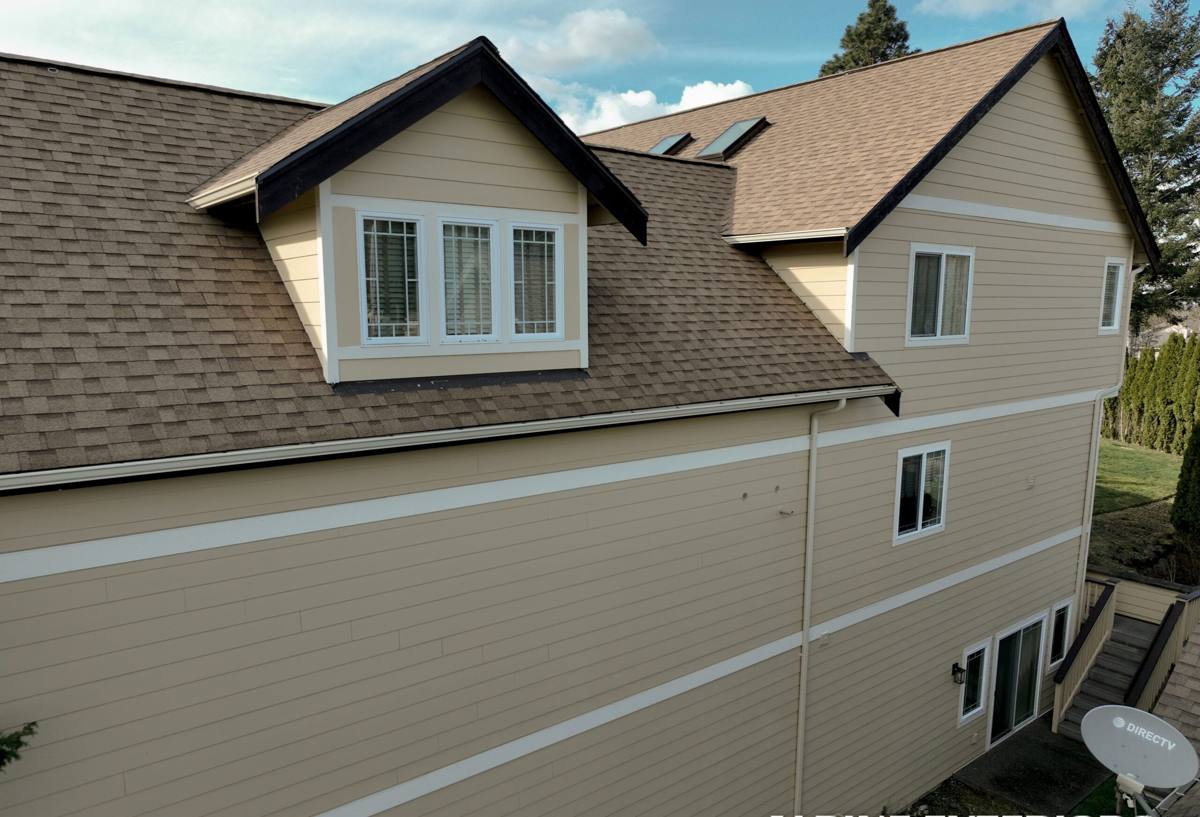
What Salt Air and Driving Rain Actually Do to a Window Over Time
Corrosion at the Hardware Level
Cranks, locks, hinges, and screws are usually the first casualties. Standard steel or lower-grade aluminum hardware pits and seizes up within a few years of direct coastal exposure. Once hardware binds, homeowners force it, and that's when frames crack or gaskets tear.
Water Intrusion Behind the Trim
Wind-driven rain doesn't just hit a window — it gets pushed up and under trim and into any gap in the flashing. If the flashing sequence wasn't done correctly (or wasn't done at all, which is common in older retrofits), water tracks behind the siding and rots sheathing long before anyone sees a stain on the interior wall.
Moss, Algae, and Prolonged Moisture
Shaded sills and frame corners that stay wet through our long wet season give moss and algae a place to establish. Beyond the cosmetic issue, that constant moisture accelerates wood rot in any untreated trim and breaks down caulk and sealant faster than manufacturers rate for.
What a Correctly Installed Window Involves Here
A window replacement in Point Roberts isn't just popping the old unit out and the new one in. The installation details matter more here than in a sheltered inland location, and skipping steps is exactly how a five-year-old window ends up with rot behind it.
- Removing old units carefully to expose the rough opening and check the sheathing and framing underneath for hidden water damage before anything new goes in
- Installing a proper sill pan flashing so any water that does get past the window has a way out, not a place to pool
- Sequencing flashing tape and building wrap so every layer overlaps correctly — water always sheds outward and downward, never trapped behind the next layer
- Using corrosion-resistant fasteners and hardware rated for coastal/marine exposure, not standard-grade hardware
- Sealing with a sealant system matched to the substrate and expected movement, applied in the right conditions (not rushed in the rain)
- Confirming the unit is plumb, level, and square before final fastening, so the sash operates smoothly for years rather than binding early
Any one of these steps done wrong doesn't usually show up as a problem right away. It shows up two or three winters later, as a soft spot in the sill or a draft that wasn't there before — by which point the fix is bigger and more expensive than it needed to be.
Choosing Materials That Actually Hold Up to This Exposure
There's no single "best" window material for every home — it depends on the home's exposure, the homeowner's maintenance appetite, and budget. What matters is being honest about the trade-offs rather than pushing whatever's easiest to install.
| Frame Material | Coastal Performance | Maintenance | Typical Trade-Off |
|---|---|---|---|
| Vinyl | Good corrosion resistance; won't rust or rot | Low — occasional cleaning | Can look less premium; limited color/repaint options |
| Fiberglass | Excellent — very stable in temperature swings and salt exposure | Low | Higher upfront cost than vinyl |
| Aluminum | Prone to corrosion and heat transfer unless thermally broken and marine-rated | Moderate | We're selective about where we'll use it near the water |
| Wood / Wood-Clad | Beautiful, but vulnerable if any cladding or seal fails and moisture gets to the wood core | Highest — regular inspection and finish maintenance | Best suited to sheltered elevations, not full marine exposure |
For homes with direct west or south-facing exposure to prevailing wind and rain, we lean toward vinyl or fiberglass with marine-grade hardware. For more sheltered elevations, wood-clad options can still make sense if the homeowner is prepared for the upkeep. Aluminum-framed windows are the one product category where we're most conservative about recommending it near the water, given how much faster untreated or lower-grade aluminum corrodes here compared to inland installations — that's a maintenance and longevity call, not a knock on the material in general.
Working in Point Roberts: A Logistics Reality Worth Knowing
Point Roberts is a bit of a geographic outlier — it's connected to the rest of Whatcom County and the mainland U.S. only by traveling through Canada. That's not a problem for us, since we already work this stretch of the coast, but it's worth homeowners knowing because it does shape how a project gets scheduled and supplied.
- Material orders and custom window sizes need to be planned with a bit more lead time, since deliveries and crossings take longer than a straight local run
- Crew scheduling is planned in blocks rather than quick single-day drop-ins, so we can make the most of a trip out to the peninsula
- Weather windows matter even more — since a rescheduled visit costs more travel time than it would for a job a few minutes down the road
Contractors who don't regularly work in Point Roberts often either avoid the area or pad the bid heavily to cover the unknowns. We build the logistics into the process up front instead, which is part of why working with a crew that already knows the area saves both time and money.
Our Process, Start to Finish
- On-site assessment: We look at the existing windows, the surrounding trim and sheathing, and the home's specific exposure to wind and rain before recommending anything.
- Honest scope and estimate: You get a clear breakdown of what's being replaced, what materials we're recommending and why, and a realistic cost range — no inflated "coastal surcharge" padding, just accurate scheduling and material planning.
- Scheduling around weather and logistics: We plan the install window with the peninsula's access and typical weather patterns in mind, so the job isn't rushed or exposed mid-install.
- Removal and structural check: Old units come out carefully, and we check the opening for hidden rot or water damage before installing anything new.
- Correct flashing and sealing sequence: This is the step that determines whether the window lasts five years or twenty-five in this climate — we don't skip it or rush it.
- Final adjustment and walkthrough: Every window is checked for smooth operation, proper seal, and square fit before we consider the job done.
- Cleanup: Old materials and debris hauled off, site left clean.
Signs Your Current Windows Are Already Losing the Fight
Coastal wear is gradual, so a lot of homeowners live with a failing window for a year or two before recognizing what they're looking at. Watch for:
- Cranks or locks that stick, grind, or need increasing force to operate
- Visible pitting or white/green corrosion on hardware or metal frame components
- Soft or spongy trim or sill wood, especially on north-facing or shaded windows
- Persistent moss or algae staining that returns quickly after cleaning
- Fogging or moisture between panes, indicating a failed seal
- Noticeable draft or cold spot near the frame during windy weather
- Paint or finish bubbling and peeling around the window perimeter
Any one of these on its own might just need a repair. Several together, especially on the same window, usually means the frame or flashing has already let water in and replacement is the more cost-effective path.
Maintenance That Actually Extends Window Life Here
Even a well-installed, well-matched window benefits from a bit of seasonal attention in this climate. A rinse of salt residue off frames and glass a few times a year, especially after storms, keeps corrosion from taking hold. Keeping gutters and nearby vegetation trimmed back reduces the shaded, damp conditions that let moss establish on trim and sills. Checking and re-caulking exterior seals every couple of years — before they fail, not after — is far cheaper than dealing with water damage behind the wall. None of this is complicated, but it does need to actually happen on a schedule, which is easy to let slide on a part-time or vacation property.
What Affects the Cost of a Point Roberts Window Project
| Factor | Why It Matters Here |
|---|---|
| Frame material chosen | Fiberglass and marine-grade hardware cost more upfront but reduce corrosion-related callbacks |
| Number and size of openings | Larger or custom-shaped windows require more precise ordering and flashing detail |
| Condition of existing framing | Hidden rot found during removal adds repair scope before the new window goes in |
| Exposure of the specific elevation | West/south-facing walls facing the water often warrant higher-spec materials than sheltered sides |
| Access and scheduling | Peninsula logistics factor into trip planning and lead time, not just drive distance |
We walk through these factors with every homeowner during the estimate so there are no surprises once work starts — you'll know what's driving the number, not just see a total.
Why Local, Repeat Experience in This Specific Area Matters
Point Roberts isn't a generic "coastal" job site — it has its own combination of wind exposure, access logistics, and moisture patterns that differ even from other parts of Birch Bay and the surrounding Whatcom County shoreline. A crew that's done this work here before knows which elevations need the higher-spec hardware, how to sequence a visit around the border crossing and weather, and what a Point Roberts sill actually looks like after a decade of salt and rain versus a textbook assumption. That experience shows up in fewer callbacks and windows that are still operating smoothly well past the point where a mismatched installation would already be failing.
If your windows are showing wear, or you're planning ahead for a home in Point Roberts, we're happy to take a look and give you a straight answer about what's needed and why. Reach out for a free, no-pressure estimate using the form below.