 Birch Bay Window
 Roof Repair for Marietta Homes, Built Around Birch Bay's Weather
Marietta sits close enough to the water that its roofs live a different life than roofs a few miles inland. Salt-laden air off the bay, near-constant winter rain, and a moss season that seems to start earlier every year all put extra wear on shingles, flashing, and the wood underneath them. A roof repair here isn't just patch-and-go work — it has to account for what the marine environment is doing to the materials, both on top of the roof and underneath it.
We work on roofs in and around Marietta regularly, which means we're not guessing at what the local climate does to a roof over time. We've seen how quickly moss can establish itself on a north-facing slope shaded by fir trees, how fast bare fasteners corrode in salt air, and where driving rain off the bay tends to find its way into a roof that looks fine from the ground. That local pattern recognition is a big part of what separates a correct repair from one that fails again in a year or two.
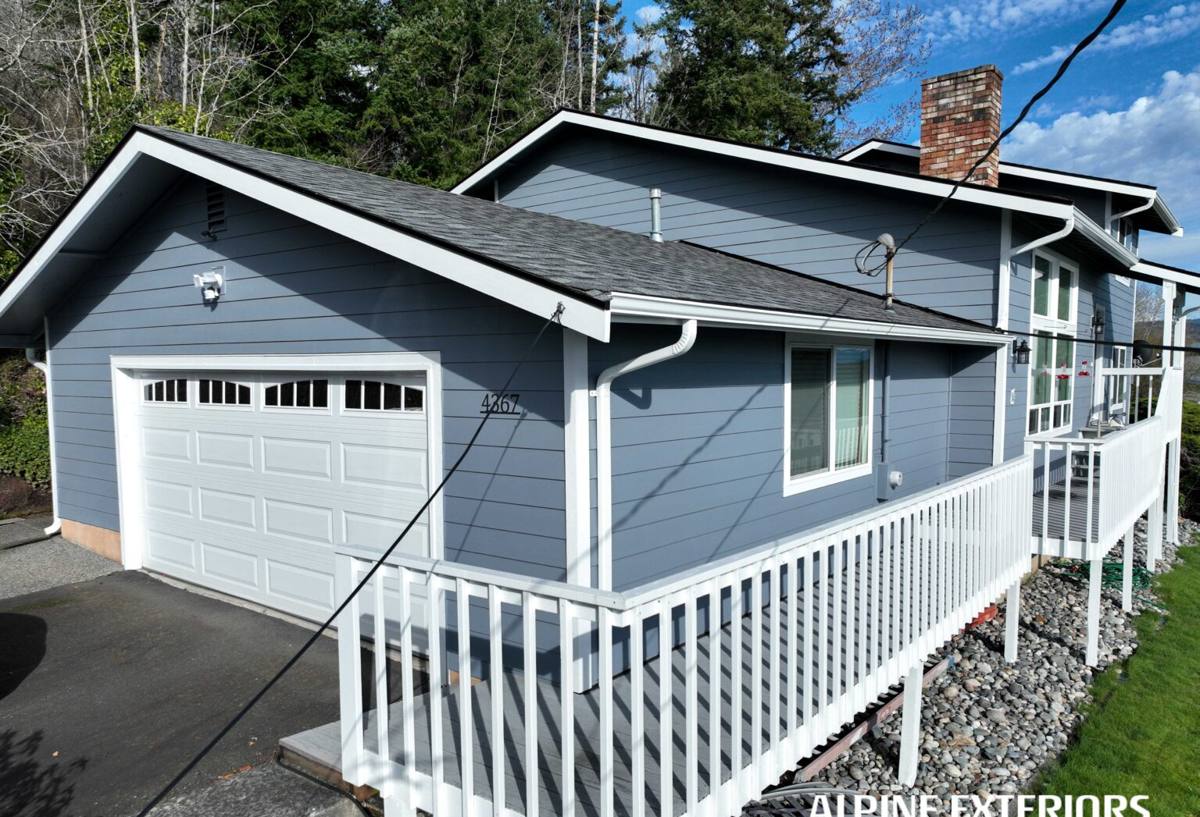
What Whatcom County's Coastal Climate Does to a Roof
Salt Air and Metal Fatigue
Any exposed metal on a roof — flashing, fasteners, drip edge, vent caps — is more vulnerable to corrosion this close to Birch Bay's shoreline than it would be further inland. Once a fastener or flashing seam starts to corrode, it loses its ability to hold a tight seal, and that's usually where a small leak begins. Salt exposure doesn't announce itself with a dramatic failure; it just quietly shortens the working life of anything metal on your roof.
Driving Rain and Wind-Driven Moisture
Birch Bay gets its share of storms that push rain sideways, not just straight down. That matters for roof repair because a lot of standard flashing and shingle work is designed around water running downhill — not water being forced sideways or upward under an edge. Repairs done without accounting for wind-driven rain often look fine in dry weather and fail the first time a real coastal storm rolls through.
The Long Moss Season
Cool, damp, and shaded conditions for much of the year make this a strong environment for moss growth on roofing, especially on north- and east-facing slopes. Moss isn't just a cosmetic issue — as it grows, it holds moisture against the roofing material and can lift shingle edges, creating small channels for water to get underneath. A roof repair that doesn't deal with existing moss, or the conditions letting it grow back, is only a temporary fix.
Signs a Marietta Roof Needs Repair, Not Just a Look
- Dark streaking or thick moss growth concentrated on shaded slopes
- Granules collecting in gutters or at downspout outlets
- Shingles that look lifted, curled, or cracked at the edges
- Rust staining around vent pipes, flashing, or metal fasteners
- Water stains on ceilings or in the attic after a windy rainstorm specifically
- Soft or spongy spots when walking the roof (a sign of underlying rot)
- Daylight visible through the roof deck from inside the attic
Any one of these on its own might be minor. Several at once, especially after a stretch of coastal storms, usually means water has already gotten past the surface layer and is working on the roof deck or framing underneath.
What a Correct Roof Repair Actually Involves
A repair that holds up in this climate is more than swapping out a few damaged shingles. Our process on Marietta roofs generally includes:
- Full-slope inspection — not just the reported problem area, since coastal wind and moss patterns often cause damage in more than one spot
- Moisture check at the deck — confirming whether the plywood or sheathing underneath has already absorbed water, which changes the scope of the repair
- Flashing and fastener review — checking anywhere metal meets the roof, since these are the most common failure points in salt air
- Moss and debris removal — cleared properly, not just scraped, so the repair isn't sealing moisture in underneath
- Matching materials — repaired sections should match the surrounding roofing in type, weight, and where possible, color and age
- Sealing and re-securing — proper fastener patterns and weather-appropriate sealants, not just caulk over a gap
Skipping any of these steps is how a roof ends up with the same leak again after the next big storm. It's also why a cheap, fast patch is sometimes more expensive over a few years than a repair done right the first time.
Common Roof Repair Scenarios We See in Marietta
Flashing Failures Around Chimneys and Vents
These are frequently the first thing to fail because they involve multiple materials meeting at one point — roofing, metal, and often masonry. Salt air accelerates corrosion here faster than on a flat run of shingles.
Moss-Related Shingle Lift
Especially common on tree-shaded, north-facing slopes typical of wooded Whatcom County lots. The fix usually involves careful moss removal, an assessment of the shingles underneath, and targeted replacement rather than a blanket approach.
Wind-Driven Leaks at Roof Edges
Homes with more open exposure toward the bay can develop leaks at eaves and rake edges where wind pushes rain up and under the shingle line — something a standard downhill-flow repair won't catch.
Deck Rot from Long-Term Slow Leaks
The slowest to notice and the most involved to fix. If moisture has been getting into the deck for a while, the repair has to include replacing the affected sheathing, not just the shingles above it.
Repair vs. Replacement: How We Help You Decide
Not every roof issue in Marietta needs a full replacement, and we won't push one when a targeted repair is the honest answer. But there's a point where patching repeatedly costs more over time than replacing a roof that's genuinely at the end of its useful life. Some of what we weigh:
| Factor | Leans Toward Repair | Leans Toward Replacement |
|---|---|---|
| Age of roofing | Under roughly 12–15 years | Near or past typical shingle lifespan |
| Extent of damage | Isolated area or single slope | Widespread across multiple slopes |
| Deck condition | Dry, sound sheathing | Soft spots or rot in multiple areas |
| Repair history | First or second repair | Repeated repairs to the same area |
| Moss/moisture pattern | Manageable with cleaning and maintenance | Chronic, recurring across the roof |
We'll walk you through where your roof falls on this before recommending anything, with straight talk about cost either way.
Materials and Maintenance Suited to a Bay-Adjacent Climate
For repairs and replacement flashing near Birch Bay, we lean toward corrosion-resistant metals and fastening systems rated for coastal exposure — the modest upfront cost difference is worth it against a fastener that starts rusting within a few years. On the shingle side, our standard is matching what's already on the roof where that's the sound choice, and steering toward algae- and moss-resistant products when a section is being replaced outright, since that reduces how often moss removal has to happen again.
A few maintenance habits go a long way between repairs in this climate:
- Keep gutters clear so wind-driven rain has somewhere to go besides under the shingle line
- Trim back overhanging branches to reduce shade and debris on moss-prone slopes
- Have moss professionally treated or removed before it establishes heavily, rather than after
- Schedule a roof check after any unusually severe coastal storm, not just on an annual schedule
Why a Crew That Already Works Marietta Matters
Roof repair advice that works for a dry inland climate doesn't always hold up on a roof exposed to Birch Bay's combination of salt air, wind-driven rain, and a moss season that runs much of the year. A crew that's already doing this work in Whatcom County knows which slopes in a neighborhood like Marietta tend to hold moisture, which flashing details need reinforcing against sideways rain, and which shortcuts simply don't last out here. That local familiarity shows up in a repair that's built for the conditions your roof actually faces, not a generic checklist.
It also means faster, more accurate assessments. We're not learning the regional climate on your roof — we already know what to look for and where to look for it.
Get a Straight Answer About Your Roof
If you're dealing with a leak, moss buildup, or storm damage on a Marietta roof, we're glad to take a look and give you an honest assessment — repair or replacement, whichever your roof actually needs. Reach out for a free, no-pressure estimate using the form below.