 Birch Bay Window
 Roof Repair Built for Point Whitehorn's Coastal Conditions
Point Whitehorn sits right where Whatcom County's shoreline weather meets the woods — salt-laden wind off the Strait of Georgia, driving rain that comes in sideways during winter storms, and enough shade from surrounding trees to keep roofs damp long after a storm passes. That combination is hard on a roof in ways that inland Whatcom County homes never have to deal with. Salt air accelerates corrosion on exposed metal fasteners and flashing. Moisture that lingers under tree cover feeds moss and algae growth for most of the year. And wind-driven rain finds every weak seam, nail pop, or lifted shingle edge and pushes water where it doesn't belong.
We do roof repair work specifically in this area, which means we're not guessing at what's failing on a Point Whitehorn roof — we've seen the same handful of failure patterns repeat house after house. This page covers what that actually looks like: what typically goes wrong here, what a correct repair involves, and how we handle the job from first look to final walk-through.
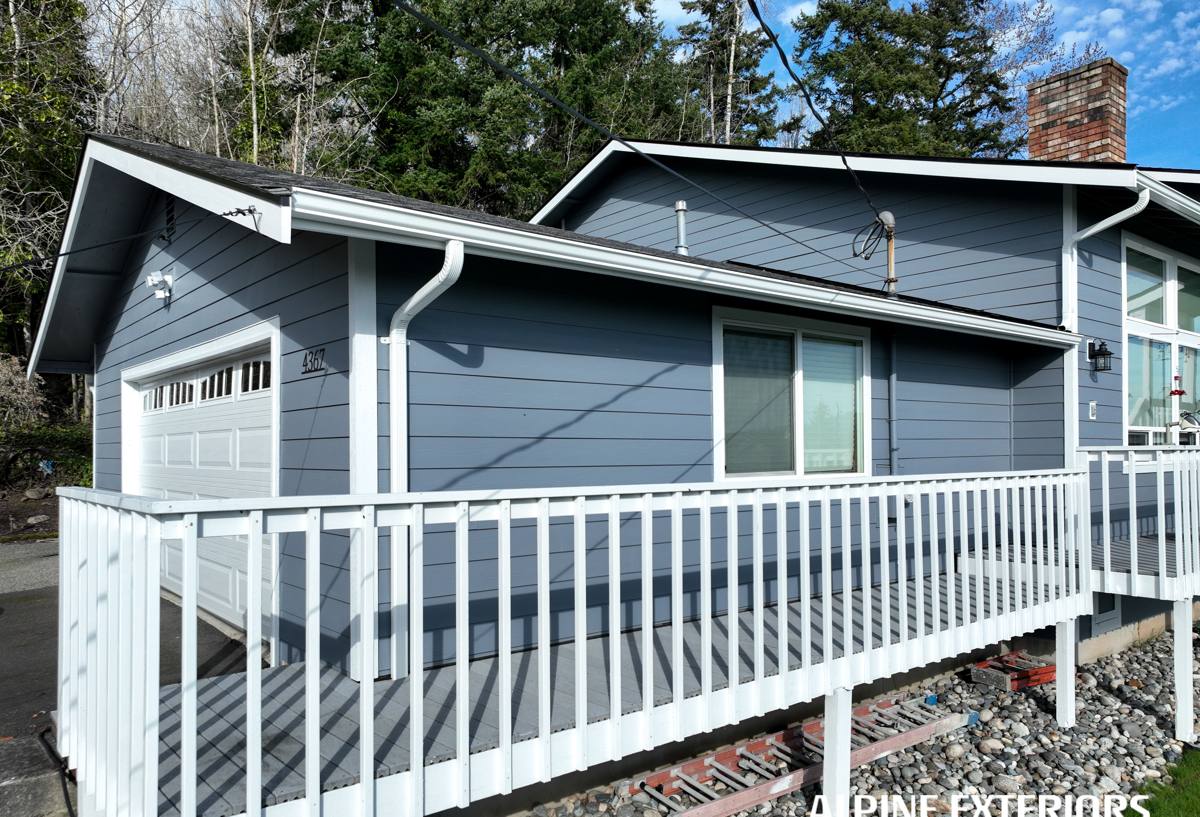
What Point Whitehorn's Climate Actually Does to a Roof
Salt Air and Metal Components
Homes closer to the water take the brunt of this. Salt in the air settles on exposed metal — flashing, drip edge, nail heads, gutter hardware — and speeds up corrosion compared to what you'd see even a few miles inland. Once metal flashing starts to rust and pit, it stops sealing properly, and that's usually where a small leak starts.
Moss and Algae Buildup
Point Whitehorn's tree cover and the region's long wet season mean roofs here rarely get a chance to fully dry out between rain events, especially on north-facing slopes. Moss doesn't just look bad — it lifts shingle edges as it grows, holds moisture against the roofing material, and works its way under tabs and around fasteners. Left alone through a full moss season, it can shorten the effective life of an otherwise sound roof by years.
Wind-Driven Rain
Storms coming off the water don't just drop rain straight down — they push it sideways and up under laps, ridge caps, and flashing that would be fine in a calmer climate. This is why so many "mystery leaks" in this area trace back to wind-driven intrusion at a valley, a chimney, or a roof-to-wall transition rather than a hole in the field of the roof itself.
Common Repair Calls We See in This Area
- Lifted or cracked shingles/tabs from wind combined with moss undermining the seal
- Rusted or failing flashing around chimneys, skylights, and roof-to-wall transitions
- Moss and organic buildup in valleys causing water to back up under shingles
- Nail pops and fastener corrosion from long-term salt exposure
- Clogged or sagging gutters contributing to water pooling at the roof edge
- Soft spots or staining on interior ceilings that trace back to a slow, hidden leak
- Ridge cap seams opening up after repeated wind-driven rain events
What a Correct Roof Repair Actually Involves
A roof repair that holds up in Point Whitehorn's conditions isn't just patching the spot where water is showing up inside the house. Water almost always travels before it shows itself, so tracing the actual entry point matters more than treating the symptom.
1. Find the Real Source, Not Just the Symptom
We start by inspecting the roof itself — not just the ceiling stain — looking at flashing, valleys, penetrations (vents, chimneys, skylights), and the shingles or roofing material around the suspected area. Interior staining can show up several feet from where water is actually entering, especially if it's running along a rafter or sheathing seam before dripping.
2. Address Moss and Organic Growth Properly
If moss is part of the problem — and in this area, it usually is to some degree — it needs to be removed carefully, not pressure-washed off, which can drive water under shingles and strip granules. We use methods that clear the growth without damaging the roofing material underneath, and we'll flag any spots where moss has already caused enough damage that patch-repair isn't realistic.
3. Replace Flashing, Not Just Caulk Over It
Caulk and roofing cement are short-term fixes, not repairs. Where flashing has corroded or pulled away, the correct fix is replacing it with new material properly lapped and sealed — not sealing over failing metal and hoping it holds through the next winter.
4. Match Materials and Technique to What's Already There
Repairs need to match the existing roofing system's material, age, and installation method as closely as possible. A patch that doesn't integrate properly with surrounding shingles or panels can actually create a new leak point by disrupting how water is meant to shed off the roof.
Repair vs. Replacement: How We Help You Decide
Not every roof issue in Point Whitehorn calls for a full replacement, and we're not going to push you toward one if a targeted repair will genuinely hold up. But we're also not going to keep patching a roof that's past the point where repairs make financial sense. Here's generally how we think through it:
| Factor | Leans Toward Repair | Leans Toward Replacement |
|---|---|---|
| Roof age | Under 15-20 years, good overall condition | Near or past expected lifespan for the material |
| Extent of damage | Isolated to one area (a valley, a flashing point) | Multiple failure points across different roof sections |
| Moss/algae history | Recent growth, caught early | Long-term moss damage with granule loss or rot underneath |
| Underlying decking | Solid, no soft spots found | Soft, spongy, or water-damaged sheathing |
| Frequency of leaks | First occurrence or single known cause | Recurring leaks in different spots each season |
We'll always give you a straight answer on which side of that line your roof falls on, along with why — not just a recommendation without the reasoning behind it.
Our Roof Repair Process
- Inspection: We look at the roof from both the exterior and, when accessible, the attic side to trace water paths and check for hidden damage like wet sheathing or rot.
- Diagnosis and explanation: We walk you through what we found, what's causing it, and what it will take to fix — in plain terms, before any work starts.
- Written estimate: You get a clear scope of work and price before we do anything, so there are no surprises mid-job.
- Repair work: Moss/debris removal, flashing replacement, shingle or panel repair, and sealing done to match the existing roof system.
- Cleanup and check: We clear debris from gutters and the ground, and confirm the repair area sheds water correctly before we consider the job done.
Preventing the Next Repair Call
A repair fixes what's wrong now. A little ongoing attention keeps the next issue from developing, especially given how long the moss season runs in this part of Whatcom County. A few things worth doing on a regular basis:
- Have gutters cleared at least twice a year, more often if you're under heavy tree cover
- Get a visual roof check after major wind storms, especially anything with sustained coastal gusts
- Watch for early moss growth on shaded, north-facing roof sections and address it before it spreads
- Check attic spaces periodically for any signs of moisture, staining, or unusual odor
- Don't ignore small interior stains — they rarely resolve on their own and tend to get more expensive to fix the longer they're left
Why Local Experience in Point Whitehorn Matters
A roofing crew that mostly works drier, inland areas isn't necessarily thinking about salt-air corrosion or how long moss has had to establish itself when they look at a Point Whitehorn roof. We work this specific stretch of Birch Bay and the surrounding Whatcom County coastline regularly, so we're not learning the local failure patterns on your roof — we already know what tends to go wrong here and what actually holds up against it long-term. That shows up in the details: which flashing details need extra attention near the water, how aggressive to be with moss removal without damaging the roof, and where wind-driven rain is most likely to find a way in on a home like yours.
What We Won't Do
We won't recommend a full roof replacement when a proper repair will hold. We also won't quietly caulk over a failing flashing detail and call it fixed — that kind of shortcut tends to fail again within a season or two in this climate, and it just delays a cost you'll end up paying anyway. Our standard is to fix the actual problem correctly the first time, even if that means a slightly bigger scope than you were expecting.
If you're dealing with a leak, visible moss buildup, or just want a roof checked before winter storms roll in, we're happy to take a look. Fill out the form below for a free, no-pressure estimate — we'll tell you honestly what we find and what it would take to fix it.