 Birch Bay Window
 Building a Deck That Actually Holds Up in Semiahmoo
Homes in and around Semiahmoo sit close enough to the water that the air itself is part of the construction problem. A deck built the way it might be built twenty miles inland — standard fasteners, minimal flashing, whatever decking looked good at the yard — tends to show its age fast out here. Salt-laden air corrodes hardware, driving rain finds its way behind ledger boards and railing posts, and the shade and moisture that come with a long Pacific Northwest moss season turn untreated or poorly sealed surfaces slick and green within a couple of seasons. None of this means a deck can't last decades in this location. It means the build has to account for the environment from the framing up, not just the decking on top.
This page covers what we actually do differently for a deck built for Semiahmoo and the surrounding Birch Bay shoreline area — material choice, fastener selection, drainage, and the details that separate a deck that needs major repair in eight years from one that's still solid in thirty.
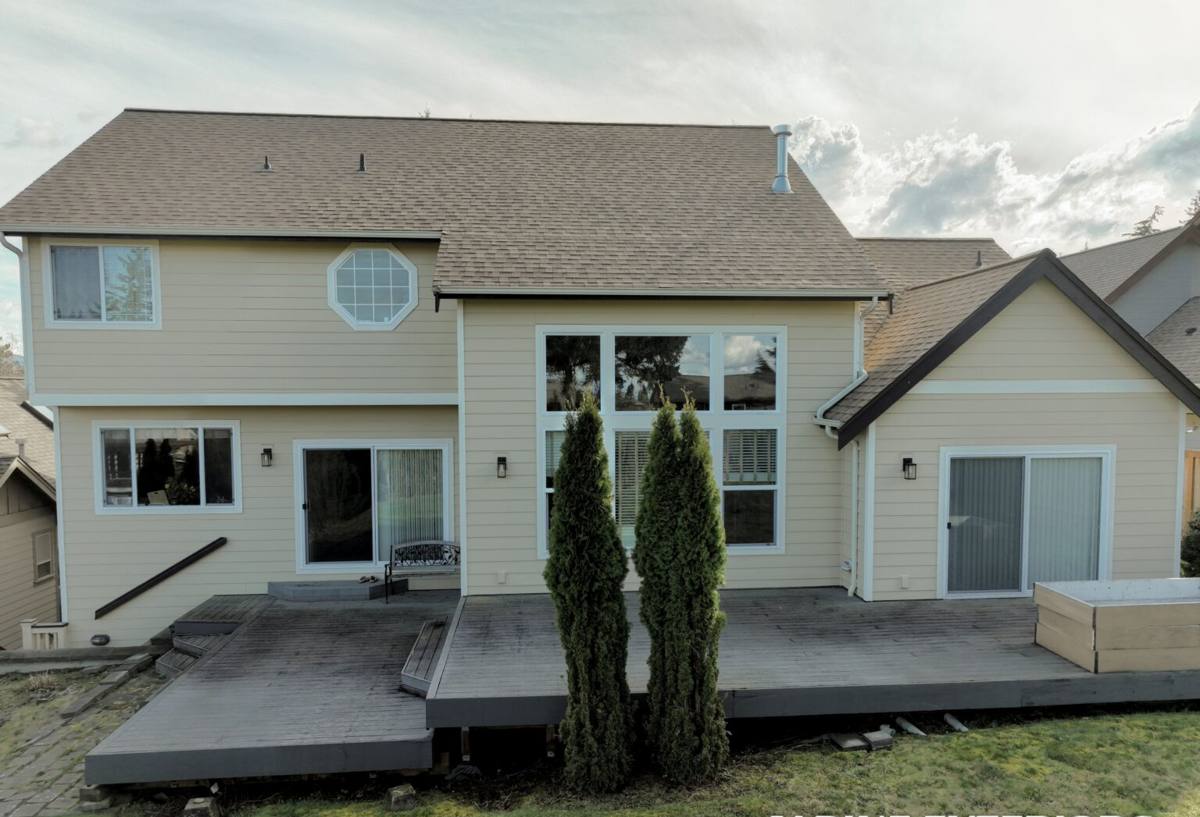
What Salt Air and Driving Rain Actually Do to a Deck
Fastener and hardware corrosion
Salt air accelerates corrosion on any exposed metal, and a deck has a lot of exposed metal: joist hangers, structural screws, railing brackets, post bases. Standard electro-galvanized fasteners — fine in a lot of the country — can start rusting within a few years this close to the water. The corrosion isn't just cosmetic; a rusted joist hanger or post base is a structural weak point, and it's the kind of failure that's invisible until it isn't.
Water intrusion at the ledger and posts
Whatcom County gets a lot of rain that doesn't fall straight down — wind-driven rain pushes water sideways into the joints where a deck meets the house, around railing post bases, and into any gap in the decking. The ledger board connection (where the deck attaches to the house) is the single most common failure point on decks in this climate, because water gets behind it and rots the house's rim joist from the inside, often for years before anyone notices.
Moss, algae, and surface degradation
Shaded, north-facing, or tree-covered decks in this area can grow a moss or algae film within a single wet season, especially on wood surfaces that don't get much direct sun. Beyond looking bad, that film holds moisture against the wood and turns the deck surface genuinely slippery — a real fall hazard on stairs and near entry doors.
Choosing the Right Decking Material for This Location
There's no single "best" decking material — the right choice depends on how much maintenance the homeowner wants to do, budget, and how exposed the deck is to rain and shade. Here's how the common options actually compare for a coastal Whatcom County property:
| Material | Moisture resistance | Moss/algae resistance | Maintenance | Typical lifespan here |
|---|---|---|---|---|
| Pressure-treated pine/fir | Good if properly sealed and re-sealed | Low — needs regular cleaning | Annual cleaning, re-stain/seal every 2-3 years | 15-20 years with upkeep |
| Cedar | Naturally decent, degrades faster if unsealed | Moderate — natural oils help some | Cleaning plus periodic oil/sealant | 15-20 years with upkeep |
| Composite (capped) | Excellent — doesn't absorb water | Moderate to good depending on brand/texture | Periodic washing only, no sealing | 25-30+ years |
| PVC decking | Excellent — fully synthetic | Good | Periodic washing only | 25-30+ years |
Composite and PVC cost more up front but skip the sealing cycle entirely, which matters a lot in a climate where wood decks realistically need attention every year or two to stay ahead of moisture. Wood is still a good choice for homeowners who like the look and are willing to keep up the maintenance — we're honest about that trade-off rather than steering everyone toward composite by default.
Framing and Fasteners: The Part You Don't See
Stainless steel and marine-grade hardware
For structural connections — joist hangers, ledger bolts, post bases, and the fasteners that hold them — we use stainless steel or hot-dip galvanized hardware rated for coastal exposure, not the standard electro-galvanized fasteners sold as a general-purpose default. It costs more per piece. On a deck's total budget, it's a small line item that determines whether the frame is still sound in twenty years.
Ledger flashing done properly
The ledger connection gets flashed with a proper drip cap and self-adhering waterproof membrane behind it, not just caulked and bolted. This is the single detail most responsible for keeping water out of the house structure itself, and it's also the detail most often skipped or done poorly on lower-bid deck work.
Footings suited to the soil
Ground conditions near the shoreline can vary between sandy, well-draining soil and heavier, wetter clay within a short distance. Footing depth and design need to match what's actually under the deck, confirmed on site rather than assumed from a standard plan — this is one of the things a permit and inspection process is there to catch.
Drainage, Grading, and Keeping Water Moving
Board spacing and surface drainage
Decking boards need consistent gapping so water sheds through rather than pooling on the surface. Too tight, and the deck holds water and grows moss faster; too wide, and small items fall through and the deck feels less finished. We set spacing based on the specific material's expansion behavior — composite and wood move differently with moisture and temperature.
Under-deck drainage for lower decks
For decks with usable space underneath — a patio, storage, or a lower entry — an under-deck drainage system channels water off the top surface and away from that space below, instead of letting it drip through indefinitely. It's an added cost that's worth discussing up front if the space underneath matters to how the homeowner actually uses the yard.
Railings, Wind Exposure, and Code Requirements
Open shoreline exposure near Semiahmoo means decks and their railings take more direct wind load than a typical inland property. Railing posts and connections need to be sized and fastened for that, not just built to minimum code and hoped to hold. Standard guardrail requirements apply — consistent height, baluster spacing that meets current Washington building code — and we build to those requirements as a floor, not a ceiling, on any deck with real wind exposure.
Our Process for a Semiahmoo Deck Build
- On-site assessment — we look at sun/shade exposure, wind exposure, existing drainage, soil, and how the deck connects to the house before proposing a design.
- Material and design discussion — honest trade-offs between wood and composite, sizing, and layout based on how the space will actually be used.
- Permitting — we handle the permit process with Whatcom County, including anything specific to shoreline-adjacent properties.
- Framing and flashing — structural connections, ledger flashing, and footings built to the standards above, inspected before decking goes down.
- Decking, railings, and finish work — installed with attention to spacing, drainage, and fastener corrosion resistance throughout.
- Walkthrough — we go over what maintenance the specific material and location will actually need, so there are no surprises in year three.
Maintenance Checklist for Coastal Decks
Whatever material a homeowner chooses, a few habits go a long way toward avoiding early repairs in this climate:
- Sweep and rinse the deck surface a few times a year to keep moss and algae from establishing, especially in shaded corners
- Check and re-seal wood decking every 2-3 years, sooner on south- or west-facing surfaces that take direct weather
- Inspect railing post connections annually for looseness or corrosion staining around hardware
- Keep gutters and downspouts clear so roof runoff isn't dumping extra water onto or near the deck
- Clear debris from between deck boards so water keeps draining through rather than pooling
- Watch for soft spots or discoloration near the ledger board — early signs of moisture getting behind it
Why a Crew That Already Works Semiahmoo Matters
A lot of what's described above isn't guesswork — it's what we've seen holds up and what doesn't on decks in this specific area over repeated jobs. A contractor who mostly works inland can build a technically sound deck and still get the material and hardware choices wrong for a shoreline climate, because the failure modes here are different from what shows up elsewhere in Whatcom County. Knowing which fastener grade actually matters, which ledger detail actually leaks, and which decking material actually needs babying in this much rain and salt air comes from building and repairing decks in this exact environment, not from a general specification sheet.
If you're planning a new deck or replacing one that's showing its age, we're happy to take a look and talk through what makes sense for your property. Reach out for a free, no-pressure estimate using the form below.