 Birch Bay Window
 Why Decks in Semiahmoo Wear Out Faster Than Homeowners Expect
Semiahmoo sits right up against the water, and that proximity is exactly what makes deck replacement a different job here than it is a few miles inland. Salt-laden air moves through this stretch of Whatcom County almost constantly, and it doesn't just make outdoor furniture feel sticky — it accelerates corrosion in every metal fastener, bracket, and connector holding a deck together. Add in Birch Bay's long wet season, where driving rain comes in sideways off the strait more often than straight down, and you've got moisture finding its way into every horizontal surface, seam, and joint on a deck's frame.
Then there's moss. Anyone who has lived here through a Pacific Northwest winter knows how quickly a shaded, north-facing deck board grows a slick green layer if it isn't cleaned. Moss doesn't just look bad — it holds moisture against the wood fibers for months at a time, which is exactly the condition that leads to soft, spongy decking and rot at fastener points. A deck that would last two decades in a drier inland climate can start showing structural problems in half that time out here if it wasn't built with this environment in mind.
Replacing a deck in Semiahmoo isn't just about swapping old boards for new ones. It's about correcting the parts of the original build that weren't specified for a salt-air, high-moisture environment in the first place — because in a lot of older decks, they weren't.
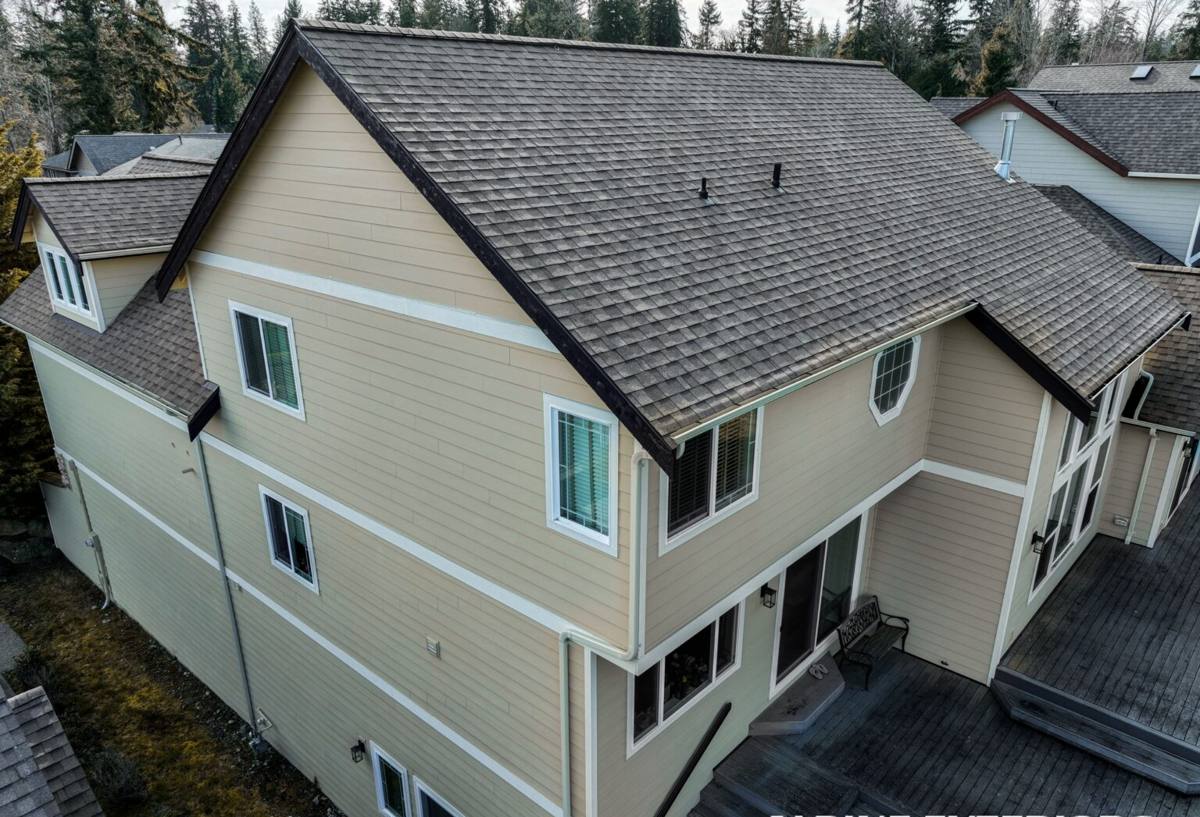
Signs a Deck Needs Replacement, Not Just Repair
Not every tired-looking deck needs to come out entirely. But there's a point where patching individual boards or re-securing a railing stops being cost-effective and starts being a stopgap that delays a bigger problem. Some of the clearest signs it's time for a full replacement rather than another repair:
- Soft or spongy spots in the decking surface, especially near the house or under planters where water sits longest
- Visible rust bleeding from screw heads or corroded connector hardware at the ledger board or joist hangers
- Gaps opening up between the deck and the house siding, which often points to a failing ledger connection
- Persistent moss or algae that returns within weeks of cleaning, suggesting the wood underneath is staying damp
- Railings or posts that flex or feel loose when leaned on, which is a structural issue, not a cosmetic one
- A deck more than 15-20 years old that was never rebuilt or had its framing inspected
If you're seeing two or more of these, it's worth having someone look at the framing underneath, not just the surface boards. A lot of decks look salvageable from the top and turn out to have compromised joists or ledger connections once the decking comes up.
What a Correct Deck Replacement Actually Involves
A deck replacement done right in this climate goes well beyond removing old boards and screwing down new ones. Here's what we consider non-negotiable for a job that's meant to last in a coastal Whatcom County setting.
Ledger Board and House Connection
The ledger board — where the deck attaches to the house — is the single most common failure point on decks near the water, because it sits directly against the building envelope where moisture wants to collect. A correct replacement includes proper flashing behind and over the ledger, a gap or drainage plane to let water escape rather than pool against the siding, and corrosion-resistant fasteners rated for the connection. This is also where we check for any hidden rot in the rim joist or sheathing behind the old ledger before anything new goes up.
Framing and Joists
Joist spacing, sizing, and hardware all need to match the actual load the deck will carry, not just replicate whatever was there before — especially if the original deck was built decades ago under older code assumptions. In a marine environment, we look closely at joist hangers and structural screws, since standard hardware corrodes noticeably faster within a few hundred yards of saltwater exposure.
Footings and Posts
Post bases that sit in standing water or direct soil contact are a common weak point on older Birch Bay-area decks. Replacement typically means resetting posts on proper footings with a post base that keeps the wood off the ground and out of standing moisture, which matters more here than in drier parts of the state.
Decking Surface and Railings
The visible surface is what most homeowners think about first, but it's the last piece that actually gets decided — because the framing and connection details underneath should be settled before material selection, not the other way around.
Choosing Decking Material for a Salt Air, High-Moss Environment
There's no single "best" decking material for every home — it depends on budget, how much maintenance a homeowner wants to take on, and how exposed the deck is to salt spray and shade. Here's an honest comparison of the main options we work with for coastal Whatcom County homes.
| Material | Moisture & Salt Air Performance | Maintenance | Typical Lifespan |
|---|---|---|---|
| Pressure-treated wood | Good with proper sealing; needs reapplication | Annual cleaning and re-sealing recommended | 10-15 years |
| Cedar | Naturally rot-resistant, handles moisture well | Periodic staining or sealing to maintain appearance | 15-20 years |
| Composite decking | Excellent — doesn't absorb moisture like wood | Occasional washing; no staining or sealing | 25-30 years |
| PVC/synthetic decking | Excellent — fully moisture-resistant | Lowest — soap and water cleaning only | 25-30+ years |
Composite and PVC decking have become popular choices for homes right up against the water precisely because they don't take on moisture the way wood does, which matters when you're dealing with driving rain and long stretches of overcast, damp weather. Wood is still a legitimate choice — it costs less up front and plenty of homeowners prefer the look and feel of a natural material — but it needs a real maintenance commitment out here to keep moss and moisture from getting ahead of it. We'll walk through the honest trade-offs of each option based on your deck's sun exposure, shade, and how much upkeep you actually want to do.
The Fastener and Flashing Details That Matter Most in This Climate
This is the part of a deck replacement that's invisible once the job is done, but it's the part that determines whether the deck is still solid in fifteen years or starting to fail in five. In a salt-air environment, standard galvanized fasteners corrode faster than they would inland — the salt in the air accelerates the breakdown of the zinc coating that protects the steel underneath. Once that coating is compromised, rust sets in, and a rusting fastener doesn't just look bad, it loses holding strength and can stain the surrounding wood or decking material.
For homes in Semiahmoo and along the Birch Bay shoreline, we default to stainless steel or heavy-duty coated fasteners rated for coastal exposure, along with flashing and connector hardware built for the same conditions. It costs more than standard hardware, but the cost difference is small relative to the price of redoing a deck's framing a decade early because the connectors failed.
Our Deck Replacement Process
We keep the process straightforward and communicate clearly at each stage, since a deck replacement disrupts your backyard for a stretch of time and you deserve to know what's happening and when.
- On-site assessment: We inspect the existing deck, framing, ledger connection, and footings to determine what's salvageable and what needs full replacement
- Material and design discussion: We go over decking material options, railing choices, and layout based on your budget and how you use the space
- Permitting: We handle the permit process where required so you don't have to navigate county paperwork yourself
- Demolition and disposal: Old decking, framing, and hardware are removed and hauled away
- Framing and structural work: New ledger flashing, joists, footings, and posts are installed to current code and rated for coastal exposure
- Decking, railing, and finish work: Surface material and railings go in last, once the structure underneath is confirmed solid
- Final walkthrough: We go over the finished deck with you and cover any maintenance recommendations specific to your material choice
Permits and Code Considerations for Whatcom County
Most deck replacement projects that involve rebuilding the structure — not just swapping decking boards on an already-sound frame — require a permit in Whatcom County, particularly for decks attached to the house or elevated more than a couple feet off grade. Requirements can vary depending on your specific property and whether Semiahmoo falls under county jurisdiction or a specific local district for your address, so we confirm what applies before work starts rather than assuming. Skipping a required permit can create real problems later — at resale, with insurance, or if the work doesn't hold up to inspection. We handle this step as part of the job so it isn't something you have to sort out on your own.
Maintaining a New Deck Through Birch Bay Winters
A correctly built deck still benefits from some seasonal attention, especially given how long the wet season runs here. A few habits go a long way toward protecting the investment:
| Task | Frequency | Why It Matters Here |
|---|---|---|
| Sweep off standing debris and needles | Monthly in fall/winter | Trapped debris holds moisture and feeds moss growth |
| Wash down surface (soap and water or gentle pressure wash) | 1-2 times per year | Removes salt residue and early moss before it takes hold |
| Inspect ledger and railing connections | Annually | Catches loosening or corrosion early, before it becomes structural |
| Reseal or re-stain (wood decking only) | Every 1-2 years | Maintains the wood's moisture barrier through the wet season |
None of this is complicated, but it does matter more here than it would in a drier climate. A little consistency keeps moss from establishing and keeps salt residue from sitting on hardware and fasteners between cleanings.
Why It Matters to Hire a Crew That Already Works This Area
A deck built to a generic regional standard can still fall short in Semiahmoo specifically, because the exposure here — close to the water, open to wind-driven rain, prone to shaded moss growth depending on lot orientation — isn't the same everywhere in Whatcom County, let alone everywhere in Washington. A crew that's replaced decks up and down this stretch of coastline already knows which fastener grades hold up, which ledger flashing details actually keep water out in a driving rain, and which decking materials homeowners in this specific area end up happiest with a few years down the line.
That local familiarity also means fewer surprises during the permitting process, since we already understand what Whatcom County typically expects for deck replacements in this area. It's the difference between a deck that's technically built to code and one that's actually built for where it sits.
If your deck in Semiahmoo is showing its age — soft boards, rusting hardware, persistent moss, or just years of wear from the salt air — we're happy to take a look and give you a straightforward assessment. Reach out for a free, no-pressure estimate using the form below, and we'll walk you through what a correctly built replacement would involve for your specific deck.