 Birch Bay Window
 Siding Built for Semiahmoo's Waterfront Exposure
Semiahmoo sits on the water, close to Birch Bay and the rest of Whatcom County's northern coastline, and that location shapes everything about how siding performs there. Homes here face a combination that inland Whatcom County properties simply don't deal with as often: salt-laden air coming off the water, wind-driven rain that hits walls sideways instead of falling straight down, and a long, damp moss season that keeps north- and west-facing walls wet for weeks at a stretch. Siding that would hold up fine in a drier, more sheltered part of the county can fail early out here — not because it's a bad product everywhere, but because it's the wrong product for this specific exposure.
We install James Hardie fiber cement siding exclusively, and Semiahmoo is exactly the kind of environment that explains why. This page walks through what a correct siding installation looks like for a waterfront home in this area, what goes wrong when it's done wrong, and how our process is built around the realities of this stretch of coastline.
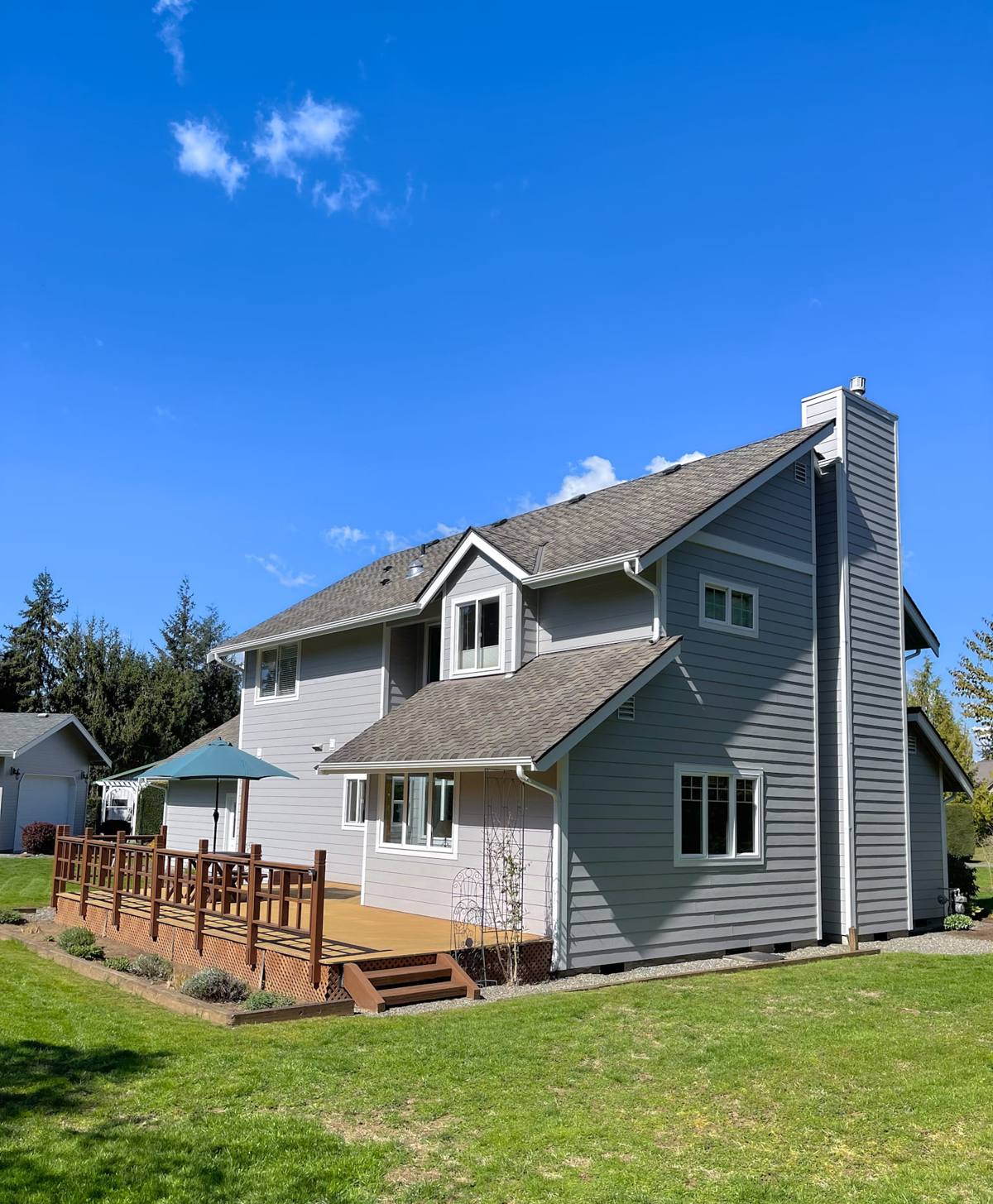
What Salt Air and Driving Rain Actually Do to Siding
It helps to understand the mechanism, not just the symptom. Salt air carries fine mineral particles that settle on exterior surfaces and accelerate corrosion of anything metal — fasteners, flashing, trim edges. On siding materials that aren't dimensionally stable, that salt film also holds moisture against the surface longer than plain rainwater would, which speeds up whatever moisture-related breakdown the material is already prone to.
Driving rain is a separate problem. When wind pushes rain horizontally into a wall instead of letting it run down and off, water gets forced into every seam, lap joint, and fastener penetration that isn't properly lapped or sealed. A siding system can be rated for normal rainfall and still take on water under wind-driven conditions if the laps, flashing, and joint details weren't built for it. This is a bigger factor in Semiahmoo than in more wind-sheltered parts of the county, simply because there's open water on more sides of the property.
Why Moss Season Matters More Here
Whatcom County's wet season is long, and waterfront exposure keeps humidity higher for more of the year on shaded and north-facing walls. Moss and algae need sustained moisture to establish, and once they take hold on a siding surface, they hold even more moisture against it — a feedback loop that ages the material faster and, on some products, opens the door to rot underneath. The finish matters as much as the substrate here: a surface that sheds water and resists organic growth will simply need less maintenance and last longer than one that doesn't.
Why We Install James Hardie and Nothing Else
We don't install vinyl, LP SmartSide, primed spruce, cedar, or other fiber cement brands, and that's a deliberate standard, not an oversight. James Hardie fiber cement is non-combustible, dimensionally stable in wet-dry cycling, and available in HZ5 and HZ10 formulations engineered specifically for wetter, harsher climates like the Pacific Northwest coastline. The factory-applied ColorPlus finish is baked on under controlled conditions, which gives it better adhesion and fade resistance than field-applied paint — a real advantage on a wall that's going to see more salt exposure and more moisture cycling than most.
Other products have real strengths. Vinyl is inexpensive and low-maintenance in mild climates. Engineered wood siding like LP SmartSide has a warmer, more traditional look and a lower material cost than fiber cement. Cedar has genuine aesthetic appeal for buyers who want a natural wood exterior. We're not dismissing those; we're saying that on a waterfront Whatcom County property, the trade-offs — vinyl's tendency to warp or become brittle under thermal and wind stress, engineered wood's reliance on an intact factory coating to keep moisture out, cedar's ongoing refinishing burden — cost homeowners more in maintenance and risk than they save up front. Fiber cement, and Hardie's version of it specifically, is what we've found holds up with the least drama over the longest stretch of time in this exact kind of exposure.
Product Comparison for Waterfront Exposure
| Factor | Vinyl | Engineered Wood | Cedar | James Hardie Fiber Cement |
|---|---|---|---|---|
| Moisture tolerance | Poor seams under wind-driven rain | Depends on intact coating | Needs regular sealing/staining | Engineered for wet climates (HZ5/HZ10) |
| Salt air durability | Can become brittle over time | Coating wear speeds moisture entry | Weathers, needs upkeep | Stable, factory-cured finish |
| Moss/algae resistance | Moderate | Moderate, coating-dependent | Low without treatment | Higher with ColorPlus finish |
| Fire resistance | Combustible | Combustible | Combustible | Non-combustible |
| Maintenance cycle | Low, but limited repair options | Recoat/repair as coating wears | Refinish every few years | Repaint interval much longer |
What a Correct Installation Involves
Material choice only matters if the installation respects it. On a Semiahmoo property, several details are non-negotiable, whether we're re-siding an existing home or working on new construction:
- Weather-resistant barrier installed and lapped correctly, shingle-fashion, so any water that gets past the siding drains down and out rather than into the wall assembly
- Flashing at every penetration and transition — windows, doors, roof-to-wall junctions, deck ledgers — sized and lapped for wind-driven rain, not just vertical rainfall
- Proper fastener selection — corrosion-resistant fasteners driven to Hardie's specified pattern and depth, since under- or over-driven fasteners are one of the most common causes of early siding failure
- Correct clearances from grade, roof lines, and decks so the siding never sits in standing water or gets buried under landscaping
- Caulking only where Hardie's install spec calls for it — over-caulking traps moisture just as badly as under-caulking lets it in
- Field-cut edges sealed per manufacturer spec to protect the cut face from moisture intrusion
Skipping any one of these doesn't usually cause an immediate problem — it causes a slow one, showing up as staining, soft spots, or paint failure two or three years later, by which point the fix is more invasive than it would have been at install time.
Our Process for a Semiahmoo Siding Project
1. On-Site Assessment
We walk the property and look specifically at exposure — which walls take the most wind-driven rain, where moss and algae are already established, where existing flashing or trim shows signs of past water intrusion. This shapes the install plan more than the general square footage does.
2. Tear-Off and Substrate Check
When we remove existing siding, we check the sheathing and weather barrier underneath before covering anything back up. On waterfront homes, it's common to find some degree of hidden moisture damage behind older or improperly installed siding — better to catch it now than seal it in behind new material.
3. Weather Barrier and Flashing Install
This is the step that determines how the whole system performs, and it happens before a single piece of visible siding goes up.
4. Hardie Panel or Lap Installation
Installed to manufacturer spec — correct fastener pattern, correct laps, correct clearances — using the HZ product line matched to this climate zone.
5. Final Detailing and Walkthrough
Trim, caulking where specified, and a walkthrough so the homeowner understands what maintenance (if any) the finish needs going forward.
Why Local Experience with This Exposure Matters
A crew that mostly works drier, more inland jobs doesn't necessarily think about wind direction, salt exposure, or moss-prone wall faces the same way a crew that regularly works Birch Bay and Semiahmoo does. Details like flashing lap direction relative to prevailing wind, or which elevation needs extra attention to moisture drainage, come from having actually seen how homes in this specific location age — not from a general installation manual. That local pattern-recognition is part of what separates a siding job that looks fine at handoff from one that still looks fine in fifteen years.
Cost Factors for a Semiahmoo Project
Every project is priced on its own specifics, but a few factors tend to move the number more here than elsewhere in the county:
| Factor | Why It Affects Cost |
|---|---|
| Existing moisture damage | Sheathing repair adds labor and material before new siding can go on |
| Wall exposure to wind-driven rain | May call for additional flashing detail on exposed elevations |
| Access and site conditions | Waterfront lots can have limited staging space or steeper grades |
| Existing siding type being removed | Some materials come off faster and cleaner than others |
| Trim and detail work | Homes with more window/door penetrations need more flashing labor |
Signs It's Time to Look at Your Siding
- Persistent moss or algae staining that returns shortly after cleaning
- Soft spots, bubbling, or visible warping anywhere on the wall surface
- Paint or finish failing faster than it used to, especially on wind-exposed walls
- Visible gaps opening up at seams, corners, or trim boards
- Staining below window sills or at roof-to-wall junctions, which often points to flashing failure rather than a siding problem itself
If your Semiahmoo home is showing any of these signs, or you're planning ahead for a re-side, we're glad to take a look and give you a straightforward, no-pressure estimate — just fill out the form below.