 Birch Bay Window
 Siding Replacement Built for Ferndale's Weather, Not Just Its Look
Ferndale sits close enough to the Salish Sea and the marine air moving in off Birch Bay and Bellingham Bay that siding here works harder than it does in drier parts of the state. Homes take on a steady diet of moisture, wind-driven rain, and salt-tinged air for most of the year, with a long stretch of low light and heavy shade that keeps north- and west-facing walls damp far longer than homeowners expect. If your siding is original to the house, patched more than once, or simply starting to look tired, a replacement is a chance to put something on the walls that's actually engineered for this climate instead of one that's just weather-resistant on a spec sheet.
This page is specifically about siding replacement for Ferndale homes. We work throughout Whatcom County, but the mix of coastal exposure, rural windbreaks, and older housing stock around Ferndale creates a fairly consistent set of problems we see over and over — and a fairly consistent set of fixes that actually hold up.
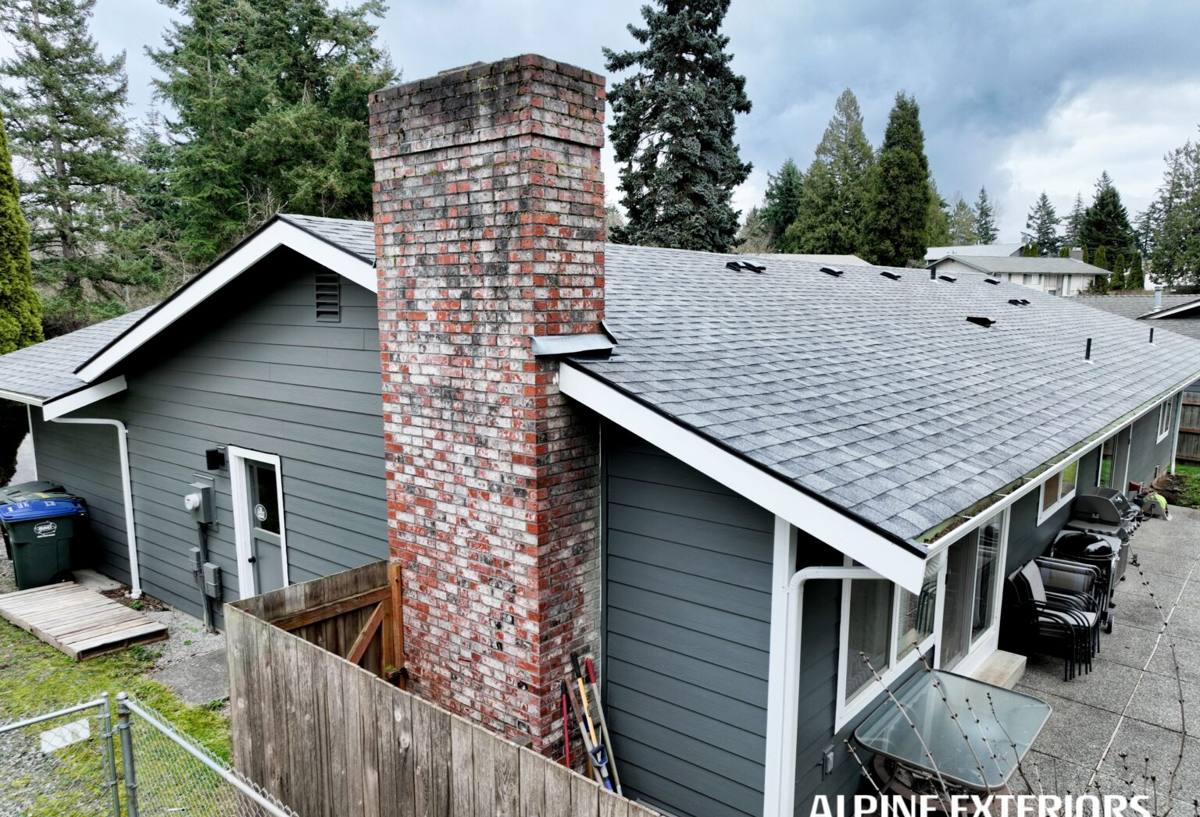
What Whatcom County's Climate Does to Exterior Siding
Three conditions do most of the damage to siding in this part of the state, and they compound each other over the years.
Salt Air and Moisture
Proximity to the water means airborne salt settles on exterior surfaces and holds moisture against them longer than it would inland. That moisture cycle — wet, slow-dry, wet again — is what breaks down paint film, softens wood fiber, and corrodes cheap fasteners over time. Siding that isn't built to shrug off repeated wetting will show it first at the bottom edges, seams, and anywhere caulk was relied on to do a job flashing should be doing.
Driving, Wind-Driven Rain
Storms coming off the Strait of Georgia don't just fall straight down — wind pushes rain sideways into walls, especially on west- and southwest-facing exposures. That kind of rain finds every gap in poorly lapped siding, undersized flashing, or caulk-dependent joints. It's also what turns a small installation mistake into a slow, hidden leak instead of an obvious one.
Moss and Organic Growth
Ferndale's tree cover and long damp season mean moss, algae, and lichen get a real foothold on shaded siding, especially north walls and anywhere near overhanging branches. Beyond looking bad, sustained moss growth holds moisture directly against the siding surface for months at a time, which accelerates whatever decay process is already underway underneath it.
Signs Your Ferndale Home's Siding Needs Replacing
Not every siding problem calls for full replacement — some are legitimately repairable. But certain signs mean the material itself, or the way it was installed, has reached the end of its useful service life.
- Soft or spongy spots when you press on the siding, especially near the bottom courses or under windows
- Paint that's peeling, bubbling, or needing repainting more often than every 7-10 years
- Persistent moss or algae staining that comes back within a season of cleaning
- Visible warping, buckling, or gaps opening up between boards or panels
- Cracked or delaminating boards, particularly on older wood, hardboard, or engineered wood siding
- Rising energy bills alongside cold or drafty walls, which can point to failed siding letting moisture into the wall assembly
- Visible rot or staining around window and door trim, a common early sign of water getting behind the siding
Why We Install Only James Hardie Fiber Cement
We've made a deliberate decision to install James Hardie fiber cement siding exclusively, rather than offering vinyl, engineered wood, or other fiber cement brands alongside it. That's not a marketing position — it's a response to what we see fail on homes in this exact climate.
Fiber cement as a category resists moisture, rot, and insects better than wood-based products because it isn't organic material at its core. James Hardie specifically engineers regional product lines (their HZ5 line, for example, is built for the wetter, colder climate zones the Pacific Northwest falls into) and backs installations with a factory-applied ColorPlus finish that's baked on rather than field-painted, which matters a lot in a region where repainting siding is genuinely disruptive to schedule around the rain. It's also non-combustible, which is worth something on its own regardless of climate.
None of that means Hardie is magic — poor installation can undermine any siding product, which is a big part of why our process below exists. But when it's installed to spec, it's the product we're comfortable standing behind on Ferndale homes long-term, and it's the only one we install.
What a Correct Siding Replacement Actually Involves
Siding replacement is often sold as a cosmetic upgrade, but the parts that actually determine whether a home stays dry for the next 30 years happen before a single new board goes up.
Tear-Off and Inspection
Old siding comes off in sections so we can inspect the sheathing underneath for rot, soft spots, or existing water damage before it's covered back up. This is the point where problems that have been hidden for years finally get found and fixed, rather than sealed in.
Water-Resistive Barrier
A properly lapped weather-resistive barrier goes over the sheathing, shingle-style, so water is always directed outward and downward. In a wind-driven-rain climate like Ferndale's, how this layer is lapped and taped matters as much as the siding itself.
Flashing at Every Penetration
Windows, doors, hose bibs, vents, and any other wall penetration get proper flashing integrated with the water-resistive barrier — not just caulked over. Caulk is a backup line of defense, not the primary one; treating it as the primary defense is one of the most common causes of the wall rot we find during tear-off.
Correct Fastening and Clearances
Fiber cement has specific nailing patterns, fastener types, and clearance requirements (ground clearance, roof-line clearance, gaps at butt joints) that James Hardie specifies for a reason. Skipping these is how you get premature cracking, moisture wicking, and warranty problems down the line.
Ventilation Behind the Siding
Depending on the wall assembly, a rain screen gap can help siding dry out faster between storms, which matters more in a marine climate with long damp stretches than it does in a dry one.
Our Process, Start to Finish
| Step | What Happens |
|---|---|
| Free on-site estimate | We walk the exterior with you, assess current siding condition, and talk through material and color options honestly, including whether repair is a reasonable option |
| Detailed written proposal | Scope, materials, timeline, and cost laid out clearly before any work starts |
| Tear-off and sheathing inspection | Old siding removed in sections; any hidden rot or damage identified and addressed |
| Water management install | Weather-resistive barrier and flashing installed and inspected before siding goes up |
| Hardie siding installation | Installed to manufacturer spec for fastening, clearances, and joint treatment |
| Final walkthrough | We review the finished job with you and address anything before calling it complete |
What Affects the Cost of a Siding Replacement
| Factor | Why It Matters |
|---|---|
| Home size and wall complexity | More corners, gables, and dormers mean more cutting, flashing, and labor time |
| Extent of hidden damage | Rot found during tear-off adds sheathing or framing repair before new siding can go up |
| Siding profile and finish | Lap width, texture, and color selection within the Hardie line can shift material cost |
| Trim and detail work | Window and door trim, corner boards, and fascia detailing add labor beyond flat wall coverage |
| Site access | Tight lots, slopes, or landscaping close to the house can affect setup and removal time |
We don't quote siding jobs over the phone with a rough square footage number — an accurate number requires seeing the walls, which is what the free estimate is for.
Why a Crew That Already Works Ferndale Matters
Siding installation is unforgiving of shortcuts, and a crew unfamiliar with the specific weather patterns here can make decisions that look fine on a dry day and fail during the first real winter storm season. A crew that already works this part of Whatcom County knows which exposures on a Ferndale home typically take the worst weather, where moss tends to establish first, and how to sequence a tear-off around the rain instead of leaving a home's sheathing exposed longer than it should be. That familiarity shows up in fewer callbacks, not in anything flashy — which is exactly what you want from an exterior that's supposed to protect the house for decades.
If your Ferndale home's siding is showing its age, or you're just trying to plan ahead before it becomes an emergency, we're happy to take a look and give you an honest read on where things stand. Reach out for a free, no-pressure estimate using the form below.