 Birch Bay Window
 Siding Replacement for Lummi Island Homes
Lummi Island sits just off the Whatcom County mainland, reachable only by a short ferry crossing, and that setting shapes both what the siding on an island home has to withstand and how a replacement project needs to be planned. Homes here take on salt-laden air coming straight off the water, wind-driven rain that doesn't fall politely straight down, and a moss and mildew season that can run most of the year on shaded, north-facing walls. On top of that climate load, every material delivery, disposal haul, and crew trip has to work around a ferry schedule instead of just driving down the road. This page focuses specifically on full siding replacement for Lummi Island properties: what the climate demands, what a correct tear-off and reinstall actually involves, and why the logistics of an island job are worth asking about before you hire anyone.
We install James Hardie fiber cement siding exclusively, and this is written as general guidance for the area rather than a description of any specific property. If you're weighing a full siding replacement on Lummi Island, the details below should give you a realistic sense of what's involved.
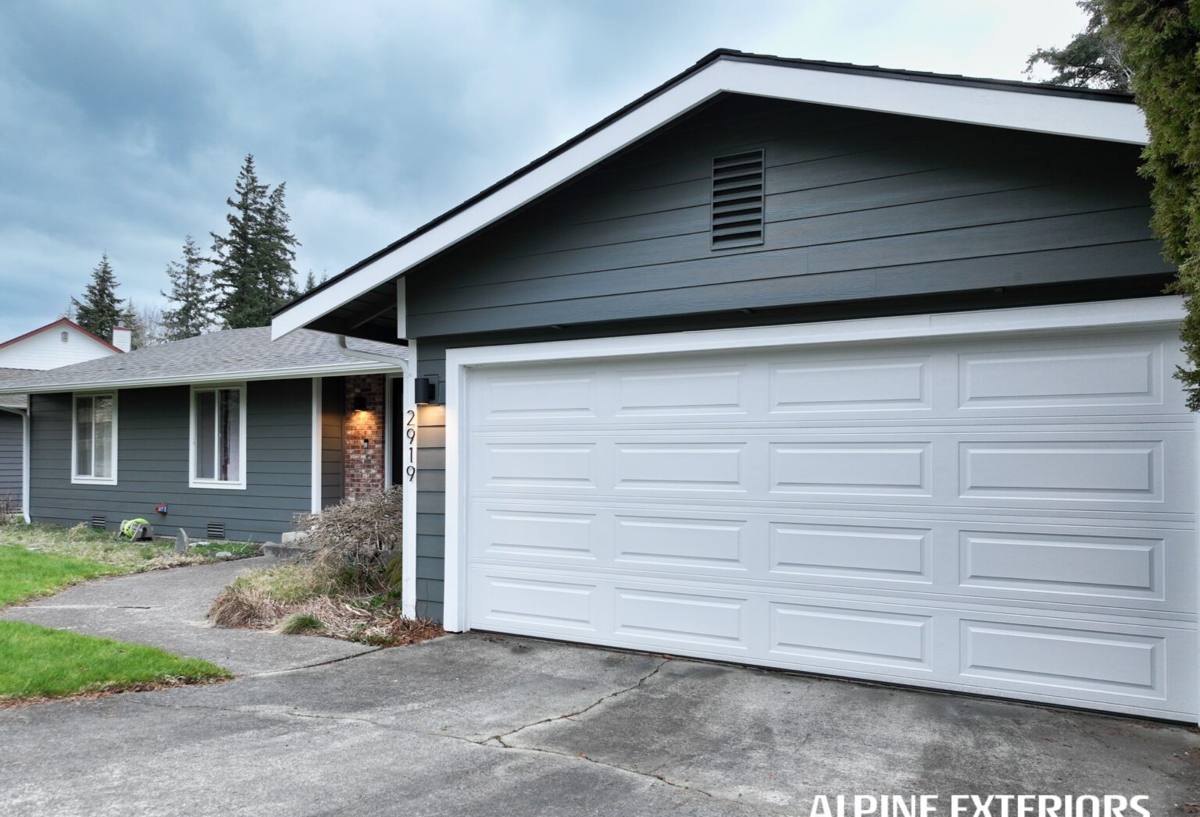
What Island Exposure Does to Siding
Salt Air, Every Day
Being surrounded by water means Lummi Island homes get a more consistent dose of salt-laden air than a comparable house set back a few miles inland. Salt accelerates corrosion of fasteners, flashing, and trim, and it breaks down lower-grade paint finishes faster than a drier climate would. Over years, that constant low-level exposure is often what separates siding that's still tight and clean at year twenty from siding that's chalky, cracked, or pulling away from the wall well before then.
Driving Rain and Wind
Open water means more wind, and wind pushes rain sideways into laps, seams, and trim joints instead of letting it run straight down and off the wall. That sideways load is harder on a siding system than a simple rainfall total suggests, because water is being driven into the same vulnerable spots — butt joints, corner boards, window and door transitions — over and over during a storm. Siding installed with only straight-down rain in mind tends to show leaks and staining at those joints first.
A Long Moss and Mildew Season
Mild temperatures, tree cover, and near-constant moisture add up to a moss and mildew season that can stretch across most of the year on shaded walls and anything tucked under overhanging branches. Porous or moisture-absorbent siding materials become growth surfaces over time, and once organic growth is established it holds moisture against the substrate underneath, which speeds up whatever damage is already happening. On a lot of island homes, the north-facing wall or the side closest to tree cover ages noticeably faster than the sun-exposed sides.
Signs Siding Needs Full Replacement, Not Just Repair
Not every siding problem calls for a full tear-off. But on an island property, where getting a crew back out for a second visit means working around the ferry again, it's worth knowing the difference between a spot repair and a job that really needs a full replacement.
- Soft or spongy spots when you press on the siding, which usually means the substrate underneath is already compromised
- Widespread cracking, cupping, or warping across multiple walls rather than one isolated board
- Persistent moss or mildew staining that returns quickly after cleaning, especially on north-facing walls
- Visible gaps at butt joints and corners that have opened up as boards have moved or shrunk
- Paint or finish failure — chalking, peeling, or fading — across most of the exterior rather than a single section
- Interior signs like water staining on walls near exterior siding, which often means moisture has been getting behind the siding for a while
A single damaged board or a localized flashing failure can often be repaired. Widespread moisture damage, systemic finish failure, or siding that's simply reached the end of its service life is a full-replacement situation, and on an island property it's usually worth doing the whole job in one mobilization rather than patching piecemeal and paying for repeat trips.
What a Correct Siding Replacement Involves
A siding replacement is more than pulling off old boards and nailing up new ones. The parts of the job that don't show once it's finished are usually what determine whether the new siding lasts twenty-five years or needs attention again in five.
Tear-Off and Substrate Inspection
Removing the old siding is also the point where hidden problems get found — rot in sheathing, damaged framing, or moisture trapped behind the old material. That substrate needs to be sound, dry, and properly repaired before anything new goes up. Skipping this step and installing new siding over a compromised wall just buries the problem again.
Weather-Resistive Barrier and Drainage Plane
A correctly installed weather-resistive barrier, with proper lapping and sealed penetrations, is what actually keeps bulk water out of the wall assembly. On a wind-exposed, wet climate like this, a drainage plane or rain-screen detail behind the siding gives any water that does get past the cladding a path to drain and dry out instead of sitting against the wall.
Flashing at Every Transition
Windows, doors, roof-to-wall intersections, and deck ledgers are where siding replacements most often fail if they're rushed. Each of those transitions needs flashing that's properly lapped and integrated with the weather-resistive barrier, not just caulked over and hoped for. In wind-driven rain, caulk alone is not a flashing detail.
Fastening and Clearances to Spec
James Hardie siding only performs the way it's engineered to when it's installed to the manufacturer's published specifications — correct fastener type and spacing, proper clearance from grade, roofing, and decks, and factory-mitered or properly sealed corners and joints. A quality product installed loosely will still develop problems in this climate; the installation details matter as much as the material itself.
Why James Hardie for This Job
We install James Hardie fiber cement exclusively on every siding replacement we do, including on Lummi Island. We don't install LP SmartSide, vinyl siding, Cemplank, Allura, primed spruce, or cedar. That's a professional standard, not a brand preference, and it comes from what we've consistently seen hold up — and what hasn't — in this kind of salt-air, wind-driven, moss-prone climate.
- Non-combustible core: Fiber cement doesn't feed a fire the way wood-based siding products can, which matters for household safety and can matter for insurance as well.
- Factory-applied ColorPlus finish: The color is baked on under controlled factory conditions rather than brushed on in the field, so it resists fading, chalking, and moisture damage far longer than site-applied paint.
- Climate-engineered HZ5 formulation: Built for regions with heavy moisture exposure and freeze-thaw cycling, which describes island Whatcom County well.
- Dimensional stability: Fiber cement doesn't swell, cup, or warp the way engineered wood siding can after repeated wet-season moisture cycles.
- Strong transferable warranty: Hardie backs its products with one of the more robust warranty structures in the industry, provided installation follows spec, which matters if the home changes hands later.
Every one of those other products has a legitimate place in the broader market, and plenty of homeowners are satisfied with them in less demanding climates. On an island property taking direct salt air and wind off open water, we'd rather stand fully behind one system we trust than offer a cheaper option and let the trade-offs land on the homeowner a few years down the road.
Comparing Siding Options for a Salt-Air, Island Climate
| Factor | James Hardie Fiber Cement | Vinyl | Engineered Wood / LP-Type Products |
|---|---|---|---|
| Salt air / corrosion resistance | Strong — inert material, factory finish resists breakdown | Moderate — can fade, chalk, and grow brittle over time | Weaker — moisture and salt exposure can accelerate finish and substrate wear |
| Moisture / moss resistance | Strong when installed with proper drainage detailing | Can trap moisture behind panels if not detailed well | More susceptible to swelling and substrate damage if moisture gets in |
| Fire resistance | Non-combustible core | Combustible | Combustible |
| Finish durability | Factory-applied ColorPlus, long fade resistance | Color molded through, can fade and chalk | Typically field- or factory-painted, depends on maintenance |
| Typical service life (this climate) | 25+ years with correct installation | Variable, often shorter in harsh coastal exposure | Shorter if moisture management isn't excellent |
Cost Factors for a Lummi Island Siding Replacement
We don't publish fixed pricing because every home is different, but the factors that actually move the number are consistent from project to project.
- Total square footage and wall complexity: More corners, dormers, and trim details mean more labor and material cuts.
- Substrate condition: Rot or moisture damage found during tear-off adds repair scope that isn't visible until the old siding is off.
- Siding profile and accessories: Lap width, trim style, and corner details all affect material cost.
- Access and staging: Steep sites, limited driveway space, or scaffolding needs affect labor time.
- Ferry logistics: Material deliveries and disposal hauls on and off the island need to be scheduled around ferry sailings, which affects project timeline more than raw cost, but it's part of planning a realistic schedule.
Our Process for an Island Siding Replacement
- On-site assessment of the existing siding and substrate, looking specifically for how the current material has handled moisture and salt exposure over time.
- A clear, written scope and timeline, with material deliveries and crew logistics planned around ferry sailings up front rather than figured out on the fly.
- Tear-off and substrate inspection, with any rot or damage found addressed before new material goes up.
- Installation of the weather-resistive barrier, flashing at every transition, and James Hardie siding to manufacturer spec.
- Final walkthrough and cleanup, with debris hauled off the island rather than left staged for a later trip.
Why a Crew That Already Works Lummi Island Matters
Siding replacement on an island isn't just a materials and installation question — it's a logistics question. A crew that hasn't planned around a ferry schedule before can end up burning a homeowner's project timeline on delays that a locally experienced crew plans for from day one: batching material deliveries into as few crossings as possible, sequencing tear-off and install so the wall isn't left exposed longer than necessary, and hauling debris off efficiently instead of letting it stage on-site. Beyond logistics, a crew that's worked island properties before has a feel for how salt air and wind behave on this specific stretch of water, which shapes practical decisions on install day — which walls need the most attention to flashing, which orientations stay wet longest, and where it's worth spending extra time so the homeowner isn't dealing with a callback after the first hard winter storm.
A Simple Checklist Before Hiring for Siding Replacement Here
- Ask what siding material they install and why, and whether they stand behind it with a written warranty
- Confirm current Washington state contractor licensing and insurance
- Ask specifically how they plan material delivery and disposal logistics around the ferry
- Ask how they detail flashing at windows, doors, and roof-to-wall transitions for wind-driven rain
- Get a clear, written scope of work, including a realistic timeline that accounts for island access, before signing anything
If you're weighing a siding replacement on Lummi Island, we're glad to walk the property with you and give an honest read on what it needs and what the project timeline realistically looks like. Reach out below for a free, no-pressure estimate.