 Birch Bay Window
 Storm Damage Roof Repair Built for Birch Bay Village Conditions
Birch Bay Village sits close enough to the water that every roof in the neighborhood is doing double duty — shedding whatever winter storms send off the Strait and holding up against the slow, steady wear of salt air the rest of the year. When a storm rolls through, the damage isn't always obvious from the driveway. A few lifted shingles, a strained flashing joint, or a soft spot where wind-driven rain found a way in can sit quietly for weeks before it shows up as a stain on a ceiling. This page covers what storm damage actually looks like on a Birch Bay Village roof, what a correct repair involves, and how we approach the job when we're called out.
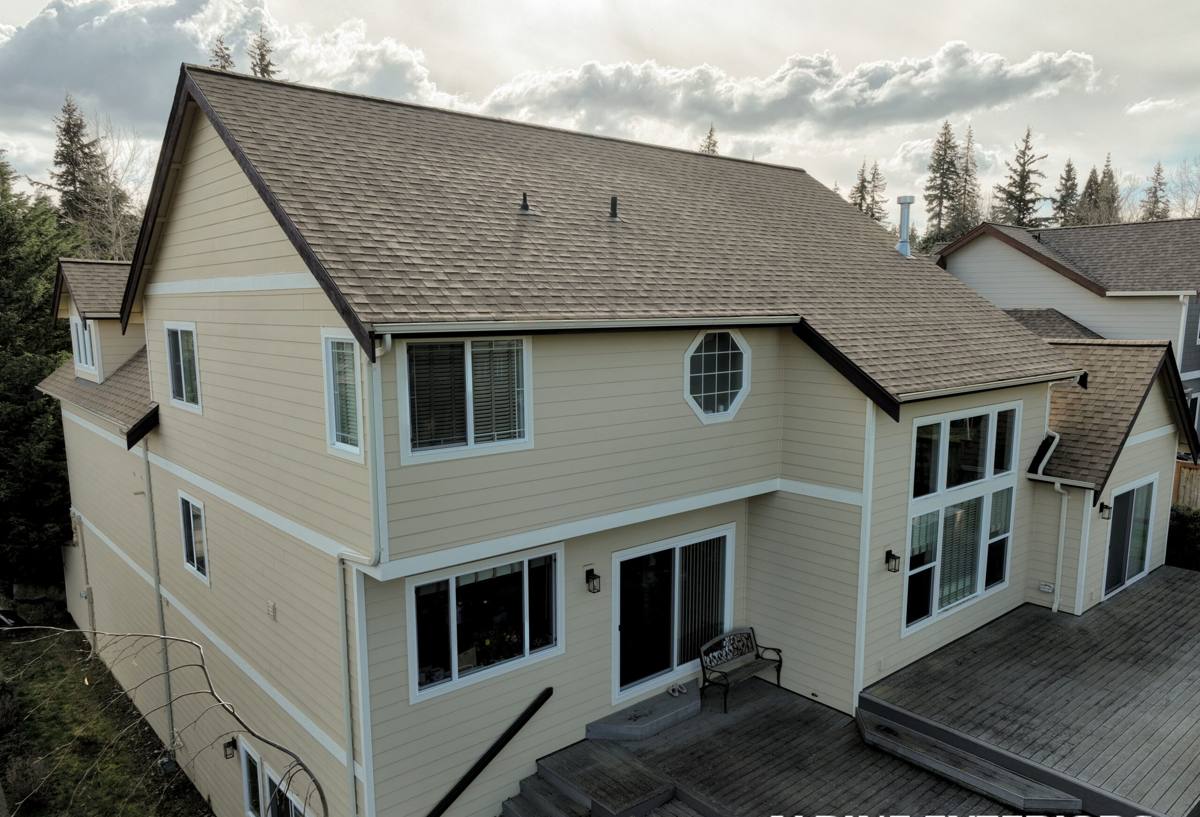
Why Storms Hit This Area's Roofs the Way They Do
Whatcom County's coastal weather pattern is a combination that's tougher on roofing than either piece alone. Wind off the water doesn't just apply pressure — it drives rain sideways, which means water can get pushed up and under shingle edges, into flashing laps, and along ridge and hip lines that would stay dry in a straight-down rain. Add the salt content in that air, which speeds up corrosion on exposed fasteners, flashing, and metal roof panels, and you get a roof that ages differently than one fifteen miles inland.
Then there's moss. Birch Bay's mild, damp climate gives moss a long growing season on north-facing slopes and shaded roof sections. Moss holds moisture against the roofing material, works its way under shingle tabs as it grows, and can lift tabs enough that wind gets underneath them during the next storm. A roof that's carrying moss going into a windstorm is more likely to lose material than a clean one — it's one of the quieter ways storm damage gets worse than it should.
What Actually Counts as Storm Damage
Storm damage isn't limited to obvious holes or missing sections. On the roofs we see around Birch Bay Village, it usually falls into a few categories:
- Wind damage: lifted, creased, torn, or missing shingles; bent or detached ridge caps; loosened metal panels or trim.
- Wind-driven rain intrusion: water pushed under shingle edges or through flashing that wasn't built to handle horizontal rain, often showing up as interior leaks with no visible exterior damage.
- Debris impact: dents, punctures, or granule loss from branches and wind-carried debris, common where mature trees overhang the roofline.
- Flashing failure: movement or separation at chimneys, vent pipes, skylights, and roof-to-wall transitions, usually made worse by the flexing that comes with strong gusts.
- Accelerated wear: a roof that was already weakened by moss, age, or a prior poor repair failing outright under storm stress it would have otherwise survived.
Signs Worth Checking After a Storm
You don't need to get on the roof to do a reasonable first check. A lot of storm damage is visible or detectable from the ground or from inside the attic:
- Shingles, shingle pieces, or granules in the gutters, yard, or driveway after wind events
- Visible gaps, curling, or discoloration in a roof slope viewed from the ground or a neighboring window
- New water stains on ceilings or upper walls, especially near chimneys, skylights, or where two roof planes meet
- Musty smell or visible moisture in the attic after a rain event
- Sagging or soft spots in the roof deck, visible from inside the attic space
- Loose or missing flashing around vents, chimneys, and roof edges
If you see any of these, the roof needs a proper inspection before the next storm arrives — not just a patch on the spot that's visible.
What a Correct Storm Damage Repair Involves
It Starts With Finding the Real Extent of the Damage
The visible damage is rarely the whole story. Wind-driven rain can travel several feet under shingles before it finds a gap in the underlayment or decking, so a leak that shows up in one room might trace back to a compromised area on a different part of the roof. A proper storm repair starts with tracing the water path, not just patching the spot where the stain appeared.
Matching Materials and Technique to What's There
Repairing storm damage means working with what's already on the roof — matching shingle profile and, where possible, color, tying new flashing into old correctly, and making sure the repair doesn't create a new weak point at the seam between old and new material. A repair that doesn't integrate cleanly with the existing roofing is often where the next leak starts.
Checking the Deck and Underlayment, Not Just the Surface
If water got past the shingles, the underlayment and roof deck underneath need to be checked for saturation or rot. Replacing shingles over a compromised deck is a short-term fix that fails again the next time the wind picks up.
Our Process for a Storm Damage Call
- Inspection: A full look at the affected area and the roof generally — storm damage in one spot is often a sign of wear elsewhere that's worth flagging while we're up there.
- Documentation: Photos and a written scope of the damage, useful for your own records and for an insurance claim if you're filing one.
- Straightforward scope of work: A clear explanation of what needs to be repaired, what's optional, and what we'd watch going forward — no upsell to a full reroof when a targeted repair will genuinely hold.
- Repair: Matched materials, proper flashing integration, and deck repair where needed.
- Cleanup: Debris, old material, and fasteners cleared from the yard and gutters before we leave.
Choosing the Right Scope of Repair
Not every storm-damaged roof needs the same response. The right scope depends on how much of the roof is affected, the roof's age, and what condition the rest of it is in.
| Approach | Best For | What to Consider |
|---|---|---|
| Targeted patch repair | Isolated wind or debris damage on an otherwise sound, reasonably new roof | Fast and cost-effective, but only worthwhile if the surrounding material is still in good shape |
| Partial re-roof (single slope or section) | Damage concentrated on one slope, or a roof with uneven wear from sun and moss exposure | Requires care to blend with the untouched sections and keep flashing transitions clean |
| Full roof replacement | An older roof where storm damage exposed problems that were already developing roof-wide | Higher upfront cost, but avoids repeat repair calls on a roof nearing the end of its service life |
We'll always tell you honestly which category your roof falls into rather than defaulting to the most expensive option.
Insurance Claims: What to Know Going In
Many storm damage repairs in this area are covered in part by homeowners insurance, but coverage depends on your specific policy, the cause of the damage, and how the claim is documented. We're not insurance adjusters and won't promise a specific outcome, but we can provide the photos, damage description, and repair scope that most insurers ask for, and we're happy to walk an adjuster through what we found if that's useful. Getting a professional inspection soon after a storm — rather than waiting — matters for a claim, since damage can worsen or become harder to distinguish from pre-existing wear the longer it sits.
Preventing the Next Round of Damage
A roof that's already stressed by moss, clogged gutters, or aging flashing takes more damage in the next storm than a well-maintained one. A short seasonal checklist goes a long way in a climate like this:
- Clear moss from north-facing and shaded roof sections before it has a chance to lift shingle tabs
- Keep gutters and downspouts clear so wind-driven rain has somewhere to go instead of backing up under the roof edge
- Trim back branches that overhang the roof, since they're the most common source of impact damage in wind events
- Have flashing around chimneys, skylights, and vents checked periodically — these are the first points to fail under repeated flexing from strong wind
- Address small leaks or lifted shingles promptly rather than waiting for the next storm to make the damage worse
Why It Matters That We Already Work in Birch Bay Village
A roof repair crew that works this shoreline regularly knows what wind-driven rain and salt air actually do to a roof over time, not just in theory. We know which flashing details tend to fail first in this kind of weather, which roof orientations hold moss longest, and what a repair needs to look like to actually survive the next storm season rather than just get the current leak stopped. That local pattern recognition is the difference between a repair that lasts and one that's back on the schedule in a year.
If your roof took a hit in a recent storm — or you just want a second opinion before the next one arrives — we're happy to take a look. Fill out the form below for a free, no-pressure estimate.