 Birch Bay Window
 Window Installation Built for What Sumas Weather Actually Does to a House
Whatcom County doesn't get dramatic weather so much as relentless weather. Homes around Sumas deal with long stretches of driving rain, salt-laden air moving in off the Sound, and a moss season that seems to start earlier and last longer every year. None of that is exotic — but all of it is hard on windows, and hard on window installations that were done fast rather than done right. If a window was set with too little flashing, the wrong sealant, or a shim pattern that lets the frame twist over time, this climate will find the weak point and work on it for years until it fails.
We install windows for homes in and around Sumas as part of our regular Birch Bay service area, not as an occasional side trip. That matters more than it sounds like it should — a crew that's used to this region's rain patterns and moisture behavior makes different, better decisions on flashing details and sealant choice than a crew installing the same window in a dry climate.
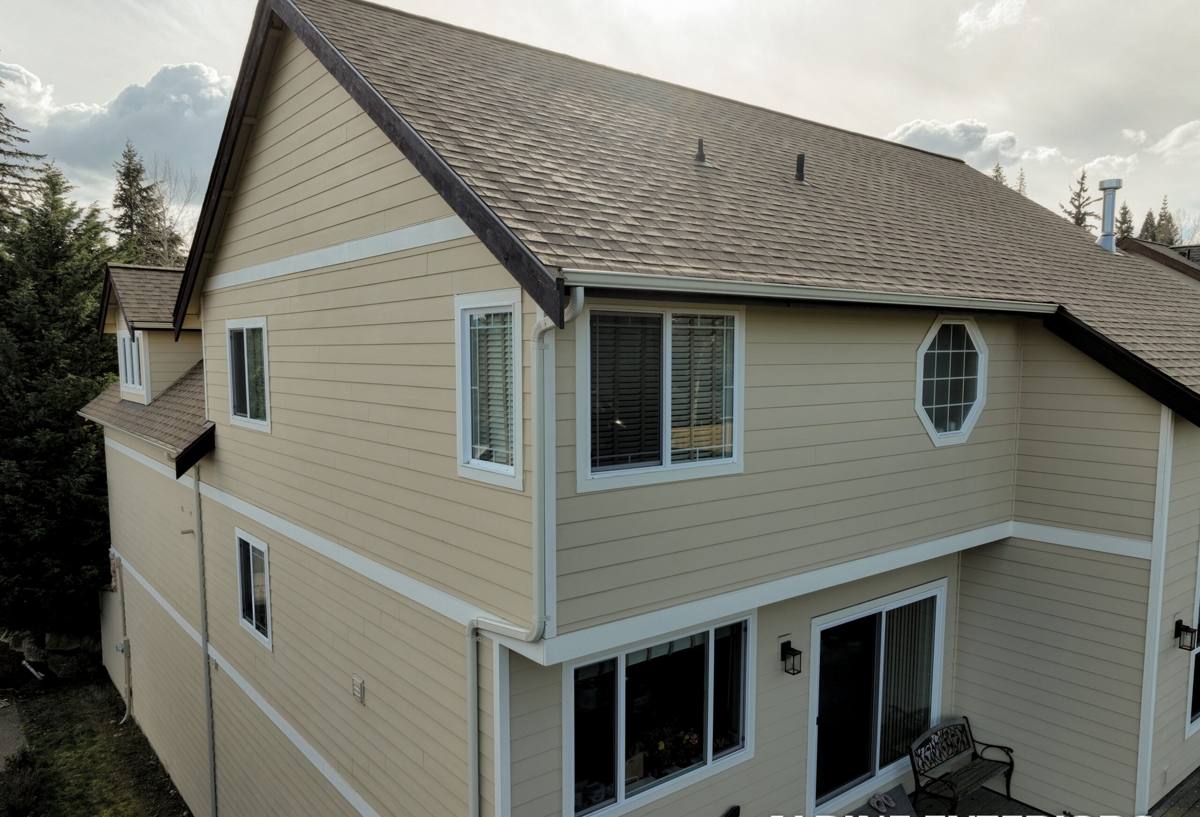
What "Correct" Window Installation Actually Involves
Window installation gets treated like a simple swap-and-seal job by some crews, and that's exactly how leaks start two or three winters later. A correct install is really a moisture-management system built around the window unit, not just the window itself. The pieces that matter most:
- Rough opening prep — the old window and any damaged sheathing or trim comes out, and the opening gets inspected for rot, soft wood, or prior water intrusion before anything new goes in.
- Flashing sequence — sill pan flashing, side flashing, and head flashing installed in the correct shingle-lap order so water is directed out and down, never trapped behind the window.
- Air and water barrier integration — the window's flashing has to tie into the house wrap or building paper correctly, not just get caulked over it.
- Shimming and leveling — the frame gets shimmed square and plumb at the right points so it doesn't rack, bind, or let the sash bind against the frame as the house settles.
- Insulation of the gap — the space between the frame and rough opening gets filled with a low-expansion foam or backer rod and sealant, not stuffed with fiberglass that does nothing to stop air movement.
- Interior and exterior sealant — a proper bead of the right sealant for the substrate, tooled correctly, not smeared on as an afterthought.
Skip or rush any one of these steps and the window itself — even an expensive one — doesn't matter much. Most of the water damage we find behind older windows traces back to a flashing or sealant mistake made at install, not a defect in the window unit.
Signs a Sumas Home's Windows Need Attention
Because failures build slowly, most homeowners don't realize a window has a problem until it's fairly advanced. Worth checking for:
- Fogging or a permanent haze between panes — the seal on the insulated glass unit has failed and moisture is trapped inside
- Soft or discolored wood on the interior or exterior trim around the frame
- Visible daylight or a draft you can feel with your hand along the frame edge on a windy day
- Moss or dark streaking building up on the sill or below the window — a sign water is running down the siding rather than being shed properly
- Difficulty opening, closing, or locking the sash, or a sash that no longer sits flush
- Paint that's bubbling or peeling specifically around the window frame and not elsewhere on the wall
Any one of these is worth a look. Several at once usually means the original installation has a flashing or sealant issue that a straight window replacement — without correcting the install details — will just repeat.
How We Approach a Sumas Installation
Assessment first
We start by looking at the existing windows and the wall assembly around them, not just measuring for new units. If there's hidden rot or a flashing problem, that gets identified and priced honestly before work starts, not discovered as a surprise mid-job.
Removal and opening prep
Old windows come out carefully to avoid unnecessary damage to siding and trim. Any soft sheathing or framing gets replaced — installing a new window into a compromised opening just moves the problem a few years down the road.
Flashing and installation
This is where the job is actually won or lost. We follow a consistent flashing sequence suited to this region's rain exposure, use sealants rated for the substrate and UV exposure, and set every window plumb, level, and square before final fastening.
Finish and cleanup
Interior and exterior trim gets restored or replaced, sashes get tested for smooth operation, and the site gets cleaned up. We walk the finished work with the homeowner before calling the job done.
Window Types: What Fits This Climate
Material choice matters less than installation quality, but it's still worth getting right for the maintenance load you're signing up for.
| Frame Material | Moisture Behavior | Maintenance | Typical Fit |
|---|---|---|---|
| Vinyl | Won't rot; handles moisture well if installed correctly | Low — occasional cleaning | Most common choice for full replacements |
| Fiberglass | Very stable in wet/dry cycling, minimal expansion or contraction | Low | Good for larger openings or higher-exposure walls |
| Wood (clad exterior) | Interior warmth with a protected exterior face | Moderate — interior finish upkeep | Homes prioritizing an interior wood look |
| Aluminum | Can conduct cold and condense in this climate without a thermal break | Low, but condensation risk without proper spec | Rare for residential replacement here; we're selective about where it makes sense |
We don't push one brand or material as the only right answer. What we push is matching the product to the wall, the exposure, and what the homeowner actually wants to maintain over the next fifteen or twenty years.
What Drives Cost on a Sumas Window Job
| Factor | Why It Matters |
|---|---|
| Number and size of openings | More units and larger glass areas mean more material and labor |
| Condition of the existing opening | Hidden rot or old flashing failures add repair scope before the new window goes in |
| Frame material and glass package | Higher-performance glass and premium frame lines cost more upfront |
| Access and site conditions | Second-story or hard-to-reach windows take more time and equipment |
| Trim and finish work | Matching existing interior/exterior trim adds labor beyond the window swap itself |
We don't publish blanket pricing because these variables genuinely change the number from house to house — but we'll walk through them plainly during a site visit so there are no surprises on the estimate.
Why a Crew That Already Works Sumas Is Worth Choosing
A window installer who works this area regularly has already seen how homes here age — where moss builds up, which wall orientations take the worst of the driving rain, and how salt air affects hardware and finishes over time. That experience shows up in small decisions: which sealant holds up, how much flashing overlap to use, where to add extra attention on a north- or west-facing wall. It's not something you can fully substitute with a generic install checklist.
Being local also means we're reachable after the job is done. If a window needs an adjustment or a question comes up a year or two later, you're calling a crew that's still working in the neighborhood, not chasing down a company that did one job in the area and moved on.
Permits and Code Basics
Window replacements in Whatcom County can require a permit depending on the scope of the work, particularly if the rough opening size is changing or structural framing is involved. Straight like-for-like replacements are often simpler, but egress requirements for bedroom windows and energy code requirements for glass performance still apply. We handle this conversation as part of scoping the job so nothing holds up the work or creates a problem at resale.
After Installation: Keeping Windows Performing
A correctly installed window still benefits from basic upkeep:
- Rinse accumulated grime and salt residue off frames and glass periodically, especially on walls exposed to wind-driven rain
- Check and clear weep holes at the sill so water can drain rather than pool
- Keep gutters and downspouts clear so roof runoff isn't dumping extra water onto window heads
- Watch for and remove moss or organic buildup on sills and nearby trim before it holds moisture against the wood or frame
- Have caulking and sealant checked every few years — it's a wear item, not a one-time application
None of this is complicated, but skipping it shortens the life of even a well-installed window.
If your Sumas home has windows showing any of the signs above, or you're planning a full replacement and want it done with the flashing and sealing details this climate actually requires, we're glad to take a look. Fill out the form below for a free, no-pressure estimate.