 Birch Bay Window
 Roofing in Terrell Creek: A Different Set of Rules
Terrell Creek sits close enough to the water that homes here take a different kind of weathering than roofs a few miles inland. Salt-laden air off Birch Bay works into fasteners, flashing, and shingle granules year-round. Add Whatcom County's long, wet winters and the shaded, moisture-holding conditions that let moss take hold on north-facing slopes, and you end up with roofs that age faster than their warranty paperwork suggests. A roof that's rated for 25 or 30 years in a dry inland climate can show real wear well before that mark out here if it wasn't installed with this specific environment in mind.
We install new roofs for homeowners throughout Terrell Creek and the surrounding Birch Bay area, and we build every job around three local realities: salt air corrosion, sustained wind-driven rain, and moss growth that never fully stops during the cooler months. None of that is exotic — it's just consistent, and a roofing job that ignores it tends to need attention again sooner than it should.
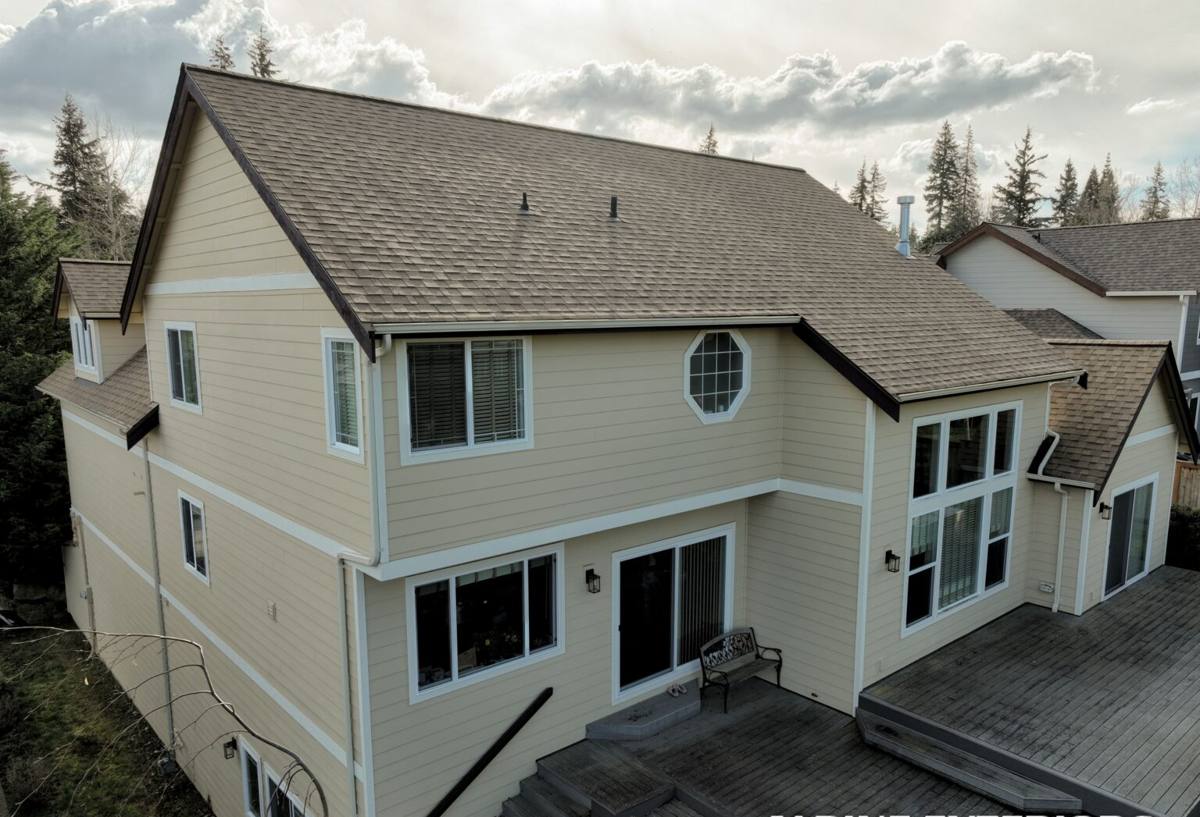
What Terrell Creek Homes Actually Need From a New Roof
Corrosion-Resistant Fasteners and Flashing
Standard galvanized fasteners hold up fine in a lot of the country. Near Birch Bay, salt air accelerates corrosion at every exposed nail head, flashing seam, and metal edge. We use fasteners and flashing rated for coastal exposure rather than the cheaper standard-grade materials that are fine 20 miles inland but start rusting at the surface within a few seasons here. This matters most at roof penetrations — vents, chimneys, skylights — where a small corrosion failure turns into a leak path.
Underlayment That Can Handle Driving Rain
Birch Bay doesn't just get rain — it gets rain pushed sideways by wind off the water. That kind of weather finds gaps that a calm, straight-down rain never would. A synthetic underlayment with a proper self-sealing membrane at eaves, valleys, and penetrations gives the roof a real second line of defense if wind-driven water gets past the shingles, which it eventually will during a hard winter storm.
Ventilation That Discourages Moss
Moss doesn't grow because a roof is old — it grows because a roof surface stays damp and shaded longer than it should. Poor attic ventilation makes this worse by trapping warm, moist air against the underside of the roof deck, which keeps the shingles above it from drying out fully between rains. Correct intake and exhaust ventilation, sized to the attic and roof design, is one of the most overlooked factors in how fast moss comes back after a roof is cleaned or replaced.
How We Approach a New Roof Installation
- On-site assessment. We look at the existing roof deck, current ventilation setup, flashing condition, and any moss or moisture staining that points to a chronic problem area rather than a one-time issue.
- Tear-off and deck inspection. Full removal of the old roofing so we can check the sheathing underneath for soft spots, rot, or prior water damage that needs to be addressed before new material goes down. Covering up a compromised deck is the single most common shortcut that leads to early roof failure.
- Deck repair as needed. Any damaged or spongy sheathing gets replaced, not patched over.
- Underlayment and flashing installation. Ice-and-water membrane at eaves and valleys, synthetic underlayment across the field, and new flashing at every wall, chimney, and penetration.
- Ventilation check and correction. We confirm intake and exhaust venting is balanced for the attic space, and adjust it if the existing setup is inadequate.
- Roofing material installation. Installed to manufacturer specification, with attention to nailing pattern and exposure — two details that affect wind resistance and warranty validity far more than most homeowners realize.
- Final walkthrough. We review the completed roof with the homeowner, including any ventilation or maintenance notes specific to the property.
Choosing Roofing Material for a Marine-Influenced Climate
There's no single "best" roofing material for every home — it depends on the roof's slope, the home's exposure to wind and salt air, and the homeowner's budget and maintenance preferences. What we won't do is install a product we know performs poorly under this area's specific moisture and salt exposure just because it's the cheapest option on the shelf. That's a maintenance burden we'd rather explain up front than let a homeowner discover in year six.
| Material | How It Handles Salt Air & Moisture | Moss Resistance | Typical Lifespan Here |
|---|---|---|---|
| Architectural asphalt shingle | Good, with coastal-rated fasteners and proper flashing | Moderate — benefits from ventilation and periodic cleaning | 20–25 years |
| Standing seam metal | Excellent when finished and fastened for coastal exposure | High — sheds moisture quickly, little surface for moss to grip | 40–50 years |
| Composite/synthetic shake | Good — doesn't absorb moisture like wood | Moderate to high | 30–40 years |
| Cedar shake | Requires diligent maintenance in this climate | Low without regular treatment — holds moisture | Highly maintenance-dependent |
Metal roofing tends to perform especially well close to Birch Bay because it sheds wind-driven rain fast and gives moss very little to hold onto, but it comes at a higher upfront cost. Architectural asphalt remains the most common choice for a reason: it's a solid, proven performer here as long as it's installed with the right underlayment and fastener spec, not treated like a generic inland install.
Cost Factors for a Terrell Creek Roof Replacement
Every roof is priced based on the specifics of the property, but a few factors move the number more than homeowners usually expect:
| Factor | Why It Matters Locally |
|---|---|
| Roof pitch and complexity | Steeper, multi-plane roofs take longer to flash correctly and cost more in labor |
| Deck condition | Hidden rot from long-term moss and moisture issues adds repair scope once tear-off begins |
| Material choice | Metal and composite systems cost more upfront than asphalt but need less attention over time |
| Ventilation upgrades | Adding or correcting intake/exhaust venting is a smaller line item during a full replacement than as a standalone retrofit |
| Access and site conditions | Tree cover, steep lots, and limited staging space (common in wooded Terrell Creek properties) affect labor time |
We provide a written estimate that breaks these factors out so homeowners can see what's driving the number, rather than a single lump figure.
Why It Matters That We Already Work This Area
A roofing crew that mostly works dry, inland jobs can install a roof correctly by the book and still miss the details that matter specifically near Birch Bay — the fastener grade, the flashing spec, the ventilation balance that keeps moss from coming right back. We work Terrell Creek and the surrounding Birch Bay neighborhoods regularly, which means we're not guessing at how a roof will hold up here — we're building to what we've already seen hold up and what hasn't.
That local familiarity also shows up in smaller ways: knowing which properties tend to have shaded, moss-prone north slopes, understanding how tree cover on a lot affects moisture retention, and recognizing early warning signs of salt-air corrosion at flashing points before they become active leaks.
Signs Your Terrell Creek Home May Need a New Roof Soon
- Granule loss showing up in gutters or at the base of downspouts
- Shingles that are curling, cupping, or lifting at the edges
- Moss or dark streaking that returns quickly after cleaning
- Rusted or visibly corroded flashing around chimneys, vents, or skylights
- Daylight visible through the roof deck from inside the attic
- Soft or spongy spots when walking the roof (a sign of deck damage, best assessed by a professional)
- Interior ceiling stains, especially after a period of heavy wind-driven rain
- A roof approaching or past its material's expected lifespan, especially if ventilation has never been evaluated
Any one of these on its own isn't necessarily an emergency, but a few together are usually a sign the roof is past the point where patch repairs make financial sense.
Maintenance That Extends a New Roof's Life Here
Even a correctly installed roof benefits from basic upkeep in this climate. Keeping gutters clear so water doesn't back up under the roof edge, trimming back tree limbs that shade sections of the roof and keep them damp, and having moss growth addressed before it spreads are all low-cost habits that protect the investment. We're happy to walk homeowners through a simple maintenance schedule after installation so the roof performs the way it's supposed to for its full expected lifespan.
If you're seeing signs of wear on your roof or planning ahead for a replacement, we'll come take a look and give you a straightforward, no-pressure estimate built around what your specific home in Terrell Creek actually needs. Use the form below to get started.