 Birch Bay Window
 Roofing in the Terrell Creek Area
The Terrell Creek area sits low and close to the water on Birch Bay's edge of Whatcom County, which means the roofs here work harder than roofs ten miles inland. Salt-laden air off the bay, wind-driven rain that comes in sideways during winter storms, and a moss season that can run eight or nine months out of the year all add up. A roof repair here isn't just patching a leak — it's addressing why that leak happened in the first place, and making sure the fix holds up against the same conditions that caused the damage.
This page covers roof repair specifically for homes in and around Terrell Creek — what tends to go wrong, what a proper repair looks like, and how we approach the work when we're on your roof.
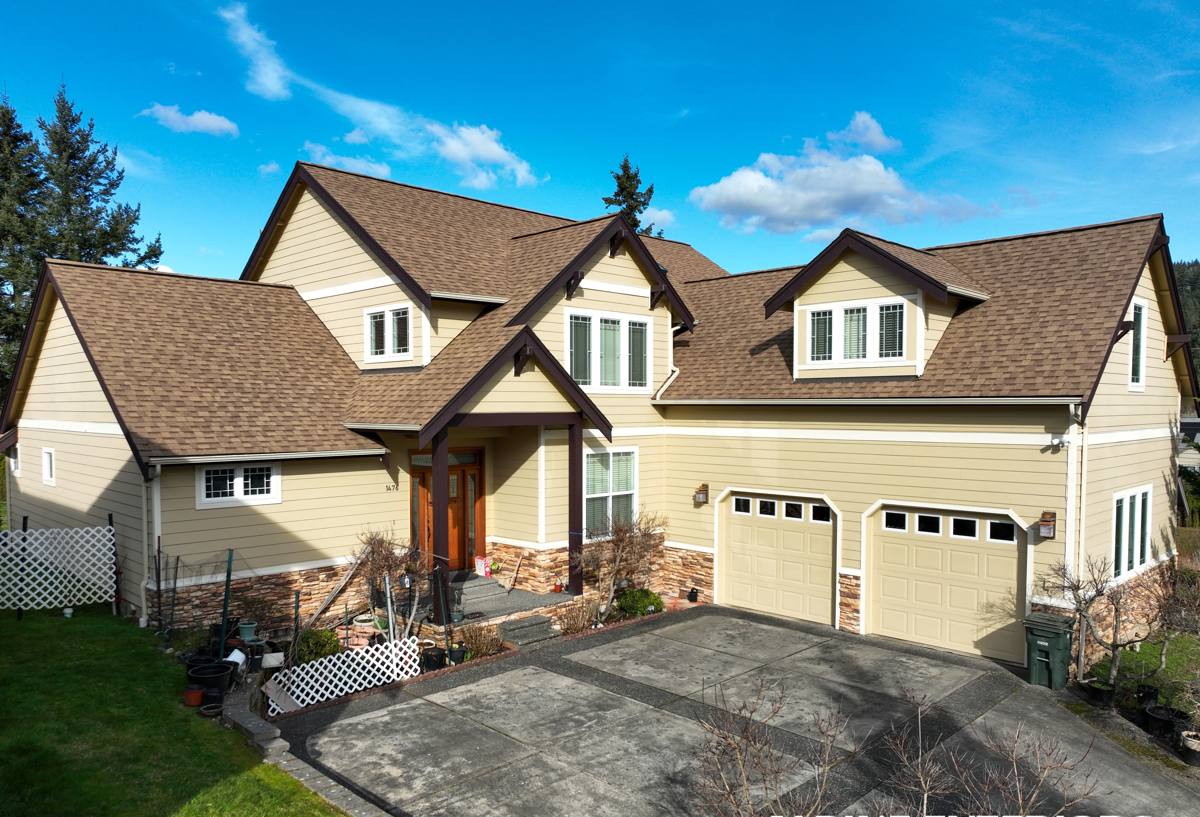
Why Terrell Creek Roofs Wear Differently
Three things drive most of the repair calls we get from this part of Whatcom County:
Salt Air and Metal Fatigue
Proximity to Birch Bay means airborne salt settles on everything, including roofing. Exposed fasteners, flashing seams, and metal drip edges corrode faster here than they would further inland. A nail that's supposed to last 20 years might start weeping rust streaks in half that time if it wasn't properly coated or capped to begin with.
Driving Rain
Storms coming off the water don't just fall straight down — they push rain sideways under shingle edges, into vent flashing, and through any gap that a calmer climate would never test. This is why so-called "minor" repairs on a Terrell Creek roof need to account for wind-driven water, not just standing water. A patch that would hold on a sheltered inland roof can still fail here if it doesn't seal against horizontal rain.
The Long Moss Season
Cool, damp, and shaded conditions for most of the year make this a prime environment for moss and algae growth. Moss doesn't just sit on the surface — its root structure lifts shingle edges, holds moisture against the roof deck, and accelerates granule loss. Left unmanaged, a moss problem becomes a leak problem within a few seasons.
Common Repair Issues We See Locally
- Lifted or cracked shingles along ridge lines and edges where wind uplift is strongest
- Corroded or failing flashing around chimneys, vents, and roof-to-wall transitions
- Moss wedged under shingle tabs, holding moisture against the deck
- Granule loss and thinning shingles from years of wind and rain exposure
- Soft or discolored decking under valleys, where water concentrates during heavy storms
- Clogged or undersized gutters causing water to back up under the roof edge
What a Correct Roof Repair Actually Involves
A repair that actually solves the problem — rather than just covering it up — follows a few consistent steps regardless of how small the job looks from the ground.
1. Find the Real Source
Water rarely shows up directly below where it entered. A stain on a ceiling might trace back to a flashing gap several feet away. We trace leaks to their actual origin point before touching anything, because patching the visible symptom without finding the source just means a repeat call in a year.
2. Check the Decking
Any repair that involves removing shingles is a chance to check the roof deck underneath. If plywood has gone soft from long-term moisture, that section needs to be replaced before new shingles or flashing go back down — otherwise you're fastening a repair to material that can't hold it.
3. Match Materials and Method Properly
Flashing, underlayment, and fasteners all need to be compatible with what's already on the roof and rated for coastal exposure. Using generic or mismatched materials is one of the more common reasons a "fixed" leak comes back.
4. Seal for Wind-Driven Water, Not Just Gravity
Given how much of our rain here comes in sideways, repairs need proper overlap, sealant at vulnerable seams, and correct fastening — not just a shingle laid back into place.
Our Roof Repair Process
| Step | What Happens |
|---|---|
| 1. Inspection | We walk the roof (or use a drone where access is limited) and check attic/decking condition from inside where possible |
| 2. Diagnosis | We identify the actual failure point — flashing, shingle, moss damage, or decking — and explain what we found in plain terms |
| 3. Written Estimate | You get a clear scope of work and price before anything is touched |
| 4. Repair | We remove and replace only what's failed, matching materials to what's already on the roof where reasonable |
| 5. Cleanup and Check | Debris cleared, gutters checked, and the repaired area reviewed with you before we leave |
Repair vs. Replacement: How We Decide
Not every roof problem needs a full replacement, and not every leak can be permanently solved with a patch. The honest answer usually comes down to the roof's overall age and condition, not just the one spot that's currently leaking.
| Factor | Leans Toward Repair | Leans Toward Replacement |
|---|---|---|
| Roof age | Under 15 years, materials still in good shape overall | Approaching or past expected lifespan for the material |
| Extent of damage | Isolated to one section (flashing, one valley, a few shingles) | Multiple areas failing or widespread granule loss |
| Decking condition | Solid, dry decking under the damaged area | Soft or rotted decking in multiple spots |
| Moss history | Recent, surface-level growth | Long-term moss damage affecting shingle integrity in several areas |
If a roof needs repair in one area but shows signs of broader wear, we'll tell you that directly rather than doing a patch that's likely to be followed by more patches next winter.
Managing Moss on a Long-Term Basis
Because moss season runs so long here, a one-time cleaning rarely solves the problem for good. What actually helps is a combination of removal, prevention, and periodic maintenance.
- Physically remove moss rather than just treating it — dead moss left on the roof still holds moisture
- Use zinc or copper control strips near the ridge, which allow rainwater to carry trace metals down the roof and discourage regrowth
- Keep overhanging branches trimmed back to reduce shade and debris buildup
- Clear gutters and valleys regularly so water isn't sitting against roof edges
- Schedule a moss check-up every year or two rather than waiting until it's visibly heavy
Why We're Careful About Pressure Washing
High-pressure washing can strip granules off asphalt shingles and force water up under laps, which creates the exact leak risk you're trying to prevent. We use lower-pressure methods and hand removal for moss, which takes longer but doesn't damage the shingle surface in the process.
Flashing and Fasteners: Where Coastal Homes Fail First
In our experience working this stretch of Whatcom County, flashing and fastener corrosion cause more repeat leaks than the shingles themselves. Standard galvanized fasteners can start showing rust streaks well before the shingles around them are due for replacement. When we repair flashing on a Terrell Creek roof, we use materials rated for coastal or marine-adjacent exposure and make sure exposed fastener heads are properly sealed — not just driven and left. It costs a bit more up front than using whatever's on the shelf, but it's the difference between a repair that lasts and one you're paying for again in three years.
What Repair Costs Typically Depend On
We don't publish flat repair prices because the range is genuinely wide — a single flashing reseal is a very different job from replacing rotted decking under a valley. Cost generally depends on:
- How much of the roof is affected and how hard it is to access
- Whether decking needs to be replaced, not just shingles
- Roof pitch and height
- Material matching — some older shingle profiles are harder to source than others
- Whether moss removal or gutter work is needed alongside the structural repair
We give a written estimate after inspecting the actual roof, not a phone quote based on guesswork, because guessing on a coastal roof is how homeowners end up underpaying for a fix that doesn't hold.
Why Local Experience Matters for This Neighborhood
A crew that regularly works the Terrell Creek and broader Birch Bay area already knows which flashing details tend to fail first on homes exposed to bay wind, which materials hold up against the salt air, and how aggressive the moss season really gets here compared to more sheltered parts of Whatcom County. That's not something you get from a crew that's only seen the area a handful of times — it shows up in fewer callbacks and repairs that are sized correctly the first time, instead of a patch that's really a placeholder for a bigger problem.
A Quick Pre-Winter Checklist
Whether or not you're ready to call for a repair, these are worth checking before the wet season sets in:
- Look for lifted, curled, or missing shingles from the ground with binoculars
- Check gutters and downspouts are clear and draining away from the foundation
- Look for moss buildup, especially on north-facing or shaded slopes
- Check attic insulation and rafters for damp spots or staining after a heavy rain
- Note any daylight visible through the roof deck from inside the attic
If you find something on that list, it's worth having it looked at before winter storms turn a small issue into a bigger one.
If you're dealing with a leak, moss buildup, or just want a straight answer on your roof's condition, we're happy to take a look. The estimate is free, there's no pressure to book anything on the spot, and you'll get a clear explanation of what we find — use the form below to get started.