 Birch Bay Window
 Marietta's Waterfront Exposure Changes What "Correct" Window Installation Means
Marietta sits close to the water in the Birch Bay area of Whatcom County, and that location shapes everything about how windows should be installed here. A window that performs fine a few miles inland, shielded from salt air and steady onshore wind, can fail early on a home that takes the full brunt of marine weather. That's not a knock on any particular window brand — it's a reality of installation. The frame, the flashing, the sealant, and the fastening schedule all have to account for moisture pushing at the building envelope far more often than in a typical inland neighborhood.
When we talk about window installation for Marietta homes, we're talking about a job that has to be right the first time. A window that leaks or fogs two years after install isn't just an inconvenience — on a shoreline-exposed home, it's usually the start of hidden rot in the framing around it, and that's a much more expensive fix than the window itself.
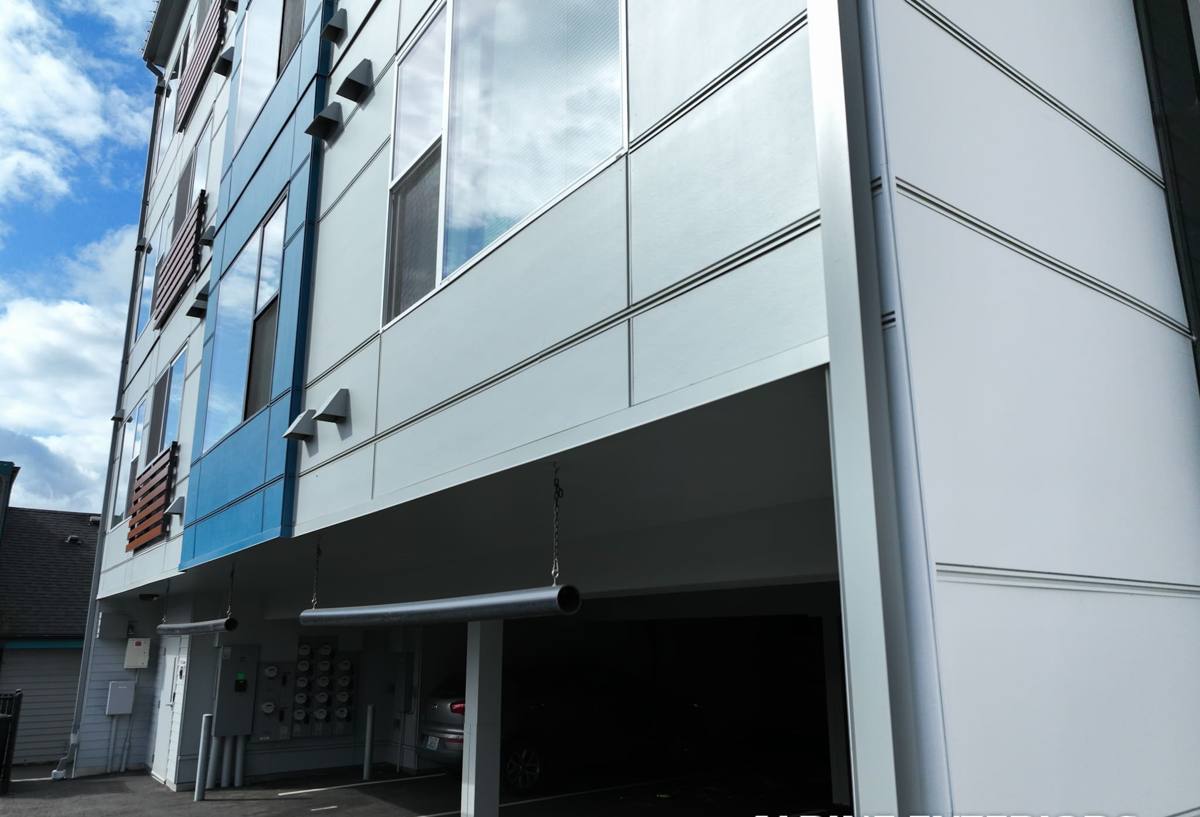
The Three Climate Stresses We Design Around
Salt Air and Corrosion
Airborne salt is corrosive to unprotected metal — hardware, screws, weep system components, and some window balances included. Over years, salt exposure can pit finishes and accelerate wear on hinges and locking hardware faster than a manufacturer's standard warranty testing assumes. We factor this into hardware choices and installation details so the parts that see the most weather aren't the first parts to fail.
Wind-Driven Rain
Birch Bay gets its share of storms where rain doesn't just fall, it's driven sideways into the wall. A window opening that relies only on the window's own seal — without proper flashing integration into the wall's water-resistive barrier — will eventually let water track behind the frame. This is one of the most common failure points we find when we remove old windows: the window itself may have been fine, but the flashing detail around it was never built to shed wind-driven rain.
The Long Moss Season
The extended damp season in this part of Whatcom County keeps siding, trim, and window sills wet for long stretches, and that's exactly the environment moss and algae need to take hold. Moss holds moisture against wood trim and caulking joints, which shortens the life of exterior finishes and can mask early signs of a seal failure until the damage is already underway.
What a Correct Window Installation Actually Involves
Window installation is often treated as a swap-and-caulk job. Done correctly, especially in a marine-exposed area like Marietta, it's closer to a small building-envelope repair every time. A correct installation includes:
- Removing the old window and inspecting the rough opening and surrounding framing for hidden water damage before anything new goes in
- Repairing or replacing any damaged sheathing or framing found during that inspection, not covering it up
- Installing flashing in the correct shingle-lap sequence (sill, jambs, then head) so water is directed out and down, never trapped behind the window
- Integrating that flashing properly with the existing weather-resistive barrier so the whole wall assembly sheds water as one system
- Using sealants and backer rod rated for exterior exposure, applied at the joints that actually need them — not a bead of caulk around the whole perimeter as a substitute for flashing
- Shimming and fastening the window plumb, level, and square so it operates correctly and seals evenly for its full service life
- Insulating the gap between the window frame and rough opening without overpacking it, which can bow the frame
- Finishing interior and exterior trim so the completed opening looks right and sheds water on the outside
Skip any one of these steps and the window can still look fine on install day. The problems that show up are usually two to five years out, once water has had time to work its way in.
Choosing a Window Built for This Exposure
There's no single "best" window for every home, but some frame materials handle salt air, rain exposure, and long damp seasons more predictably than others. The table below reflects general trade experience with how common frame materials behave in a marine climate, not brand rankings.
| Frame Material | Salt Air / Corrosion | Moisture Behavior | Maintenance Burden |
|---|---|---|---|
| Vinyl | Not affected by salt corrosion directly | Good, but seals and hardware still need quality installation | Low — occasional cleaning |
| Fiberglass | Very stable, minimal expansion/contraction | Excellent dimensional stability in wet-dry cycles | Low |
| Aluminum | Prone to corrosion and pitting near salt air unless well-coated | Conducts moisture and cold; condensation risk | Moderate to high near the water |
| Wood or wood-clad | Cladding protects wood but exposed wood elements are vulnerable | Needs a sound exterior seal to keep moisture out of the wood core | Highest — refinishing and seal checks needed regularly |
We don't install every product on the market as a matter of professional standard — some options carry a maintenance burden or moisture sensitivity that we think is a poor match for this specific climate, and we'd rather steer a homeowner toward something that will hold up than sell whatever's easiest to install.
Our Installation Process for Marietta Homes
The steps don't change home to home, but the amount of attention paid to flashing and moisture management is higher here than it would be on a job further inland.
- On-site assessment: we look at existing window condition, siding type, and any visible signs of past water intrusion around openings before quoting anything
- Measurement and product selection: exact opening sizes are taken and window options are discussed against your exposure, budget, and how the home is oriented to wind and rain
- Opening prep on install day: old windows come out, and we inspect the framing before installing anything new — this is where hidden problems get caught
- Flashing and weatherproofing: sill pan, jamb, and head flashing go in, integrated with the existing wall barrier
- Setting the window: shimmed level, plumb, and square, fastened per the manufacturer's schedule
- Sealing and insulating: exterior sealant at the right joints, interior insulation without overpacking
- Trim and cleanup: interior and exterior trim finished, site cleaned, old windows hauled away
- Final walkthrough: operation checked on every window, and we point out anything a homeowner should keep an eye on going forward
Signs Your Current Windows Are Already Losing the Battle
Because Marietta's exposure accelerates wear, it's worth knowing what to look for before a small issue becomes a framing repair. Walk your exterior and check for these:
- Soft or discolored trim or sill wood around the window frame
- Moss or dark streaking building up on sills, trim, or the siding just below a window
- Fogging or moisture between panes of double-glazed windows, which means the seal has failed
- Drafts you can feel at the frame edge on a windy day
- Difficulty opening, closing, or locking a window that used to operate smoothly
- Visible gaps, cracked caulk, or daylight showing at the frame perimeter
- Paint or finish bubbling or peeling near the window, which often points to moisture behind the surface
Any one of these on its own isn't necessarily an emergency, but on a home with this level of weather exposure, they're worth having looked at rather than watched.
What Window Installation Costs in Marietta, and Why
Costs vary by window count, size, product tier, and what's found once an old window comes out. As a general guide, homeowners should expect the following to move the number up or down:
| Cost Factor | Why It Matters |
|---|---|
| Frame material and product tier | Vinyl typically costs less upfront than fiberglass or wood-clad; higher-tier products often carry better hardware and warranty coverage |
| Hidden framing repair | If water damage is found around an opening, repairing the sheathing or framing adds labor and material before the new window goes in |
| Window size and configuration | Larger windows, bay or bow configurations, and custom shapes cost more to fabricate and install than standard single or double-hung sizes |
| Number of openings | Whole-house replacements typically bring a better per-window rate than one or two openings at a time |
| Exterior finish work | Trim replacement, repainting, or matching existing siding around the new window adds to the scope |
| Access and story height | Second-story or hard-to-access windows take more time and equipment than ground-floor openings |
We give honest, itemized estimates rather than a single flat number, so you can see exactly what's driving the price and where there's room to make choices.
Why Hiring a Crew That Already Works Marietta Matters
A contractor who mostly works drier, inland neighborhoods doesn't build the same instincts for flashing detail, sealant choice, and framing inspection that a shoreline-exposed job demands. It's not that the trade knowledge is different — it's that the habits change when the consequences of skipping a step show up faster. A crew that regularly works Marietta and the rest of the Birch Bay shoreline has already seen what happens when a flashing detail is skipped on a home like this, and builds every installation as if that same exposure is waiting to find the weak point.
That local experience also means a more accurate estimate up front. We know roughly what to expect when we open up a wall on a home in this area, which means fewer surprise change orders once the work is underway.
After Installation: Keeping Windows Performing Through Moss Season
A correctly installed window still benefits from basic upkeep in this climate. Keep gutters and downspouts clear so water isn't sheeting down the wall past window openings. Rinse sills and trim periodically to keep moss and algae from taking hold, especially on north-facing or shaded elevations that stay damp longest. Check exterior caulk lines once a year for cracking or gaps, and address them early — a small bead of new sealant is a much smaller job than repairing water damage that develops behind a failed one. None of this requires special products or a maintenance contract, just a regular look during the wetter months.
If you're weighing window replacement for a home in Marietta or elsewhere around Birch Bay, we're happy to take a look and give you a straightforward, no-pressure estimate — just fill out the form below and we'll go from there.